Florida plumbing issues often start quietly. A small leak under a sink, a gradual drop in water pressure, or an unusually high water bill may not seem urgent at first. But in Florida homes, moisture, heat, shifting soil, salt air, and heavy rain can turn minor plumbing problems into expensive repairs faster than many homeowners expect.
That is why Florida plumbing deserves a more proactive approach than people use in milder climates. The state’s weather and housing conditions create a unique mix of stress on pipes, drains, fixtures, water heaters, and sewer lines. Add in older homes, seasonal occupancy, and storm-related wear, and it becomes clear why routine attention matters.
If you own a home in South Florida or anywhere else in the state, the goal is not to become a plumbing expert overnight. It is to recognize common warning signs early, understand what climate-related issues can do behind the walls, and know when simple maintenance can save you from a disruptive emergency later.
Why Plumbing in Florida Needs Extra Attention
Florida homes deal with constant humidity, strong storms, warm temperatures, and soil conditions that can all affect plumbing systems over time. Even well-built homes can develop issues if maintenance gets delayed.
Unlike obvious structural problems, plumbing trouble often develops out of sight. A pipe can corrode slowly, a slab leak can spread unnoticed, or a drain issue can worsen until a backup happens at the worst possible moment.
Climate Speeds Up Wear in Unexpected Ways
The Florida environment can be rough on plumbing materials and fixtures. Corrosion, condensation, and mineral buildup all show up differently depending on the home’s age, location, and water quality.
It helps to understand how weather and environment create pressure on the system. It gives useful context for why local plumbing maintenance cannot be treated like an afterthought.
Seasonal Occupancy Can Make Problems Worse
Florida has many part-time residents, vacation properties, and homes that sit empty for stretches of the year. When a home is vacant, small leaks or pressure issues can go unnoticed for weeks. By the time someone returns, the repair may involve flooring, drywall, cabinetry, or mold remediation in addition to the plumbing itself.
That makes regular inspections and shutoff awareness especially important for seasonal homeowners.
The Warning Signs You Should Never Ignore
Plumbing systems usually send signals before a major failure. The challenge is that people often dismiss those signals because the home still seems functional.
A High Water Bill Is Often Telling You Something
If your water bill climbs without a clear reason, there is a good chance water is being lost somewhere in the system. Running toilets, leaking irrigation lines, hidden pipe leaks, and slab-related issues can all cause steady increases.
Slow Drains Are More Than a Minor Annoyance
A drain that moves slowly in one fixture might point to a local clog. If multiple drains are acting up, the issue could involve a larger obstruction or venting problem. Either way, repeated slow drainage is a sign that the system is not working as it should.
Store-bought drain cleaners may seem convenient, but repeated use can damage pipes and mask the real cause. Persistent drainage problems need proper diagnosis, not just temporary relief.
Damp Spots, Warm Floors, or Musty Odors Need Quick Attention
Florida homeowners should be alert to subtle moisture clues. A musty smell, damp baseboards, bubbling paint, or warm spots on the floor can all indicate a hidden leak. Because moisture spreads quickly in humid conditions, time matters.
Slab Leaks Are a Serious Florida Concern
Many Florida homes are built on concrete slabs, which makes slab leaks especially important to catch early. A leak beneath the foundation can waste water, damage flooring, undermine structural stability, and trigger mold growth if ignored.
The challenge is that slab leaks are not always obvious at first. You may notice a water bill increase, reduced pressure, sound of running water, or unexplained moisture long before you see visible damage.
Common Clues of a Slab Leak
A few signs tend to show up repeatedly: hot spots on flooring, cracks, unexplained moisture, and water usage that does not match your habits. If any of those appear together, a professional inspection is worth scheduling.
Homeowners who are unsure what to watch for can review how to tell if you have a slab leak to better understand the early pattern of symptoms.
When an Issue Becomes a Plumbing Emergency
Not every plumbing problem is an emergency, but some situations should be treated that way immediately. Burst pipes, sewer backups, major leaks, overflowing toilets that will not stop, and no water service where it should exist can all require same-day help.
In Florida, emergency plumbing situations also become more urgent because water damage spreads quickly in warm, humid conditions. Carpets, baseboards, cabinets, and drywall can absorb moisture fast.
Know When to Stop Waiting
A lot of homeowners wait too long because they hope a problem will settle down on its own. That usually leads to higher repair costs and a bigger mess. Knowing the tipping point matters.
Shutoff Awareness Is a Basic Home Skill
Every homeowner should know where the main water shutoff valve is located. That one piece of knowledge can reduce major damage during an unexpected leak. If you are not sure, find it before you need it.
It is also smart to label important shutoffs and show family members where they are.
Preventive Plumbing Care Saves Money
One of the most overlooked parts of homeownership is routine plumbing maintenance. People service their air conditioning because they know Florida heat is relentless, but they often ignore plumbing until something fails.
That reactive approach is costly. Preventive care helps catch problems while they are still manageable.
Annual Inspections Are Worth It
A professional checkup can identify leaks, pressure issues, corrosion, fixture wear, water heater concerns, and drain problems before they become expensive projects. That is especially useful in older Florida homes or properties with a history of plumbing work.
If you want a practical overview of why this matters, annual plumbing inspection explains how regular service can help avoid larger surprises.
Maintenance Habits That Actually Help
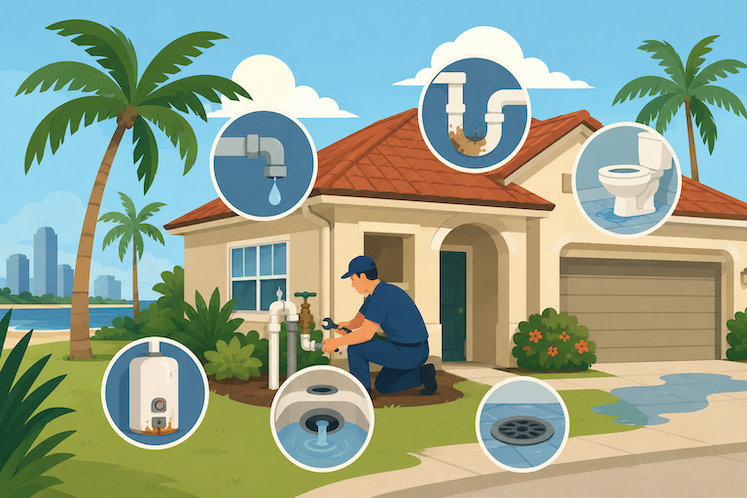
Homeowners can reduce risk by avoiding grease down drains, fixing running toilets quickly, checking under sinks periodically, and paying attention to pressure changes. It also helps to inspect hose bibs, water heater areas, and exposed plumbing after major weather events.
These habits are simple, but over time they make a real difference.
Florida Homes Have Different Plumbing Risk Profiles
Not every home faces the same kind of plumbing stress. The age of the property, local water quality, occupancy pattern, and construction style all affect what owners should watch.
Older Homes
Older Florida homes may have aging supply lines, worn shutoff valves, dated fixtures, or plumbing materials that are nearing the end of their service life. If your home has not had a thorough plumbing review in years, it is worth being proactive.
Coastal Properties
Homes near the coast can deal with harsher environmental exposure, including salt air that contributes to corrosion over time. Coastal humidity can also make moisture-related warning signs harder to ignore.
Newer Homes
Newer does not always mean trouble-free. Poor installation, settling, manufacturer defects, and maintenance neglect can still create early problems. New construction should still be monitored, especially after the first few years of occupancy.
How to Choose the Right Response
The best response depends on the type of problem, but delay is rarely a money-saving strategy. Minor issues are usually cheapest to fix when they first appear. Once flooring, cabinetry, walls, or foundations become involved, the repair scope changes fast.
Start With Observation, Not Panic
If you notice low pressure, noise in the walls, recurring clogs, or damp areas, take notes. When did it start? Is it isolated to one fixture? Has the water bill changed? Those details help a plumber diagnose the issue more efficiently.
Then Move Quickly
Observation is useful, but waiting too long is not. Florida conditions reward early action. The sooner a leak or blockage is identified, the lower the chance of secondary damage.
Final Takeaway
Florida plumbing problems are common, but many of the worst outcomes are preventable. A home does not have to be old or neglected to develop leaks, drainage issues, or pressure problems. It just has to be exposed to normal wear in a demanding environment.
The smartest approach is a steady one: notice warning signs early, understand how climate affects the system, schedule preventive inspections, and treat moisture clues seriously. That mindset protects both your plumbing and the parts of your home that water can damage quietly.
A little attention now is almost always cheaper than a major repair later.
FAQ
Why do Florida homes have so many plumbing issues?
Florida homes face humidity, heavy rain, heat, soil movement, and in some areas salt exposure. Those conditions can accelerate wear on pipes, fixtures, and drainage systems.
Is a high water bill always a plumbing problem?
Not always, but unexplained increases often point to leaks, running toilets, irrigation issues, or hidden pipe problems. It is worth investigating quickly.
What are common signs of a slab leak?
Warm spots on floors, unexplained moisture, higher water bills, reduced water pressure, or the sound of running water when nothing is on can all be warning signs.
Should I wait on a small leak if it seems manageable?
Usually no. Small leaks can spread moisture into cabinets, walls, flooring, and substructures. In Florida’s humid conditions, delays often make repairs more expensive.
How often should a Florida home have a plumbing inspection?
A yearly inspection is a smart baseline for many homes, especially older properties, seasonal homes, or homes that have had prior plumbing issues.