Florida’s warm, tropical climate is a major draw for homeowners, but it also creates unique challenges for residential plumbing systems. Constant humidity, intense heat, heavy rainfall, and seasonal storms put year-round stress on pipes, fixtures, and water lines.
Unlike colder states where freezing temperatures are the main concern, plumbing problems in Florida tend to develop quietly. Moisture, soil movement, and heat-related wear often cause damage long before homeowners realize something is wrong. Understanding how Florida’s climate affects plumbing is key to preventing leaks, water damage, and expensive repairs.
Why Florida’s Climate Is Hard on Plumbing Systems
Plumbing systems in Florida don’t just age — they’re constantly reacting to environmental stress.
High Humidity Leads to Constant Moisture Exposure
Florida’s humidity stays high most of the year, especially in coastal and southern regions. Cold water pipes naturally attract condensation, and in humid environments, that moisture never fully dries.
Over time, condensation accelerates corrosion on metal pipes, weakens joints, and damages nearby drywall and wood framing. These conditions also make small leaks far more dangerous, since ongoing moisture allows damage to spread quickly and silently. Many homeowners underestimate how ignoring small leaks can lead to major structural repairs in Florida’s climate.
Humidity also creates ideal conditions for mold growth, especially inside walls where leaks often go unnoticed.
Heat Causes Expansion and Faster Wear
Florida’s heat puts plumbing systems under constant thermal stress. Pipes expand and contract daily, loosening connections and wearing out seals much faster than in cooler climates.
Plastic pipes can warp over time, while rubber washers and gaskets dry out and crack. These issues usually result in slow, hidden leaks rather than obvious pipe bursts, making them harder to detect until damage is already done.
Heavy Rainfall and Underground Plumbing Problems
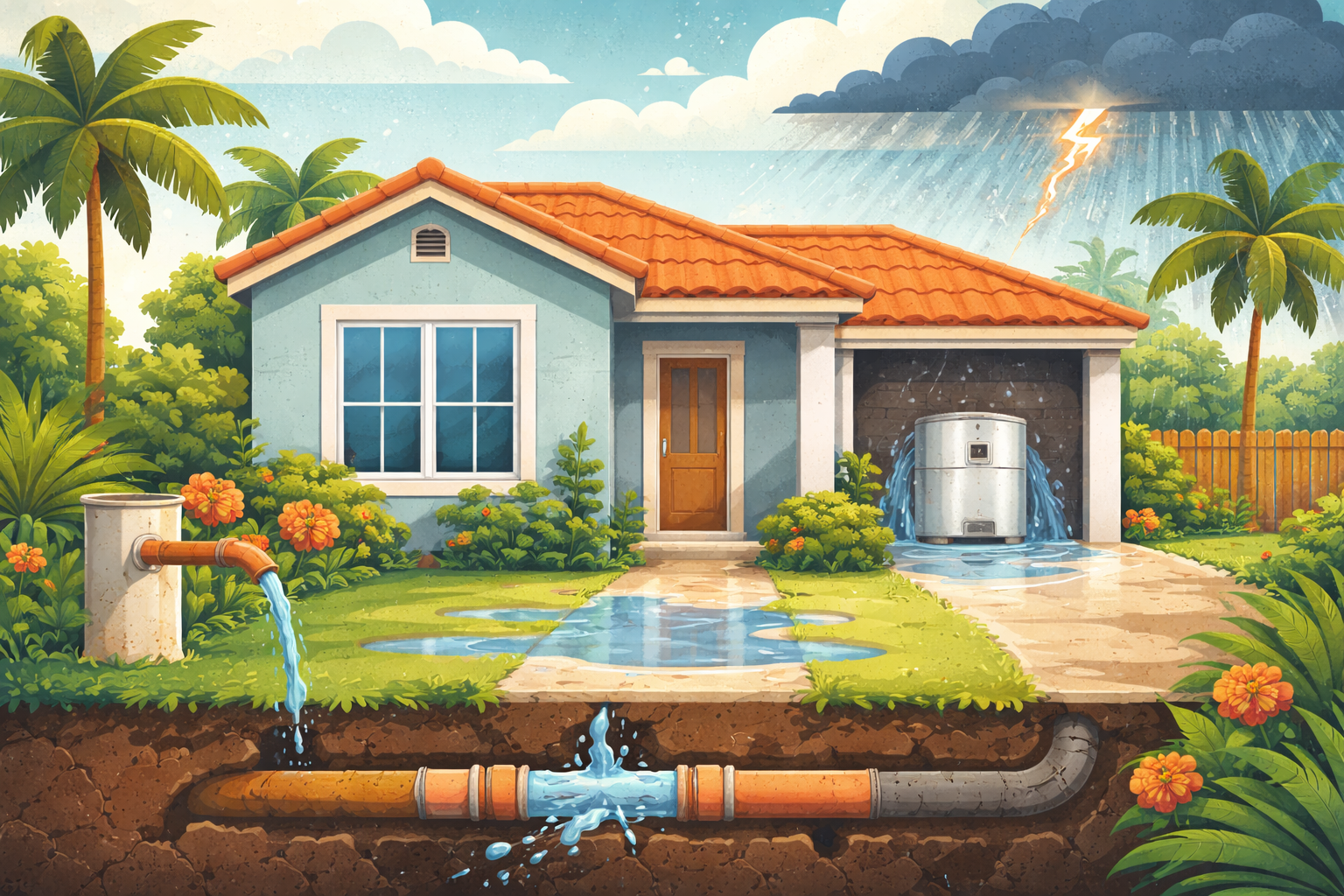
Florida’s frequent rainstorms don’t just affect roofs and yards — they also impact what’s happening underground.
Soil Saturation Shifts Pipes
Prolonged rainfall saturates the soil, causing it to expand and shift. This movement places pressure on buried sewer lines and water supply pipes, increasing the risk of cracks, separations, and collapses.
Because underground damage isn’t visible, homeowners often miss the early warning signs. Discolored walls, unexplained odors, or sudden increases in water bills can all point to hidden signs of underground leaks caused by soil movement.
Flooding Raises Backflow Risks
In low-lying areas, heavy rain can overwhelm municipal sewer systems. When this happens, wastewater can flow backward into homes through drains or toilets.
Without proper backflow prevention, contaminated water can enter your plumbing system, creating serious health hazards and costly cleanup situations. Homes built before modern plumbing codes are especially vulnerable during hurricane season.
Cold Snaps Still Pose a Threat in Florida
While freezing temperatures are rare, they can still cause serious plumbing damage when they occur.
Pipes Aren’t Built for Freezing Weather
Most Florida homes lack pipe insulation because freezing conditions are uncommon. When temperatures suddenly drop, exposed pipes in garages, attics, and exterior walls can freeze.
The real damage often happens when pipes thaw. Pressurized water rushes through weakened sections, leading to burst pipes and significant interior flooding.
Hard Water Adds Another Layer of Stress
Water quality plays a significant role in plumbing durability across Florida.
Mineral Buildup Reduces Efficiency
Many areas in Florida have hard water with high mineral content. Calcium and magnesium deposits gradually build up inside pipes, narrowing their diameter and increasing water pressure.
This buildup shortens the lifespan of fixtures, appliances, and water heaters. Over time, reduced flow and increased pressure make leaks more likely throughout the system.
Coastal Homes Face Salt Air Corrosion
Living near the coast comes with added plumbing challenges.
Salt Accelerates Pipe Deterioration
Salt particles in the air settle on exposed plumbing components, speeding up corrosion. Outdoor spigots, hose bibs, and even indoor pipes near ventilation areas are affected.
This rapid corrosion means leaks can develop much sooner than homeowners expect, especially in coastal Florida communities.
Why Climate-Related Leaks Often Go Undetected
Many plumbing problems in Florida remain hidden until damage becomes severe.
Subtle Interior Warning Signs
Slow leaks don’t always produce visible puddles. Instead, homeowners may notice peeling paint, warped flooring, soft drywall, or persistent musty odors.
Because Florida homes already feel humid, these symptoms are often dismissed. Unfortunately, that delay allows moisture damage and mold to spread behind walls and under floors.
Mold Growth and Plumbing Failures Are Closely Linked
Florida’s climate makes mold a serious concern when plumbing issues arise.
Moisture and Heat Create Ideal Conditions
Even a minor leak can support mold growth in Florida’s warm, damp environment. Mold spreads quickly behind walls, damaging materials and affecting indoor air quality.
Bathrooms, kitchens, and laundry rooms are particularly vulnerable, making early leak detection essential for protecting both your home and your health.
Water Heaters Take a Beating in Florida
Water heaters often fail sooner in Florida than in other states.
Sediment and Heat Reduce Lifespan
Hard water sediment settles at the bottom of the tank, forcing the heater to work harder and overheat. Combined with high ambient temperatures in garages, this stress increases the risk of leaks and tank failure.
Routine flushing and inspections are critical for extending water heater lifespan in Florida homes.
Preventive Plumbing Maintenance for Florida Homes
Proactive maintenance is the best defense against climate-related plumbing damage.
Annual Inspections Catch Problems Early
Regular plumbing inspections help identify corrosion, condensation issues, and developing leaks before they escalate. After hurricane season, inspections are especially important to assess storm-related damage.
Outdoor plumbing, irrigation lines, and hose connections should be checked just as carefully as indoor pipes.
Insulation Works Year-Round
Pipe insulation reduces condensation during humid months and offers protection during unexpected cold snaps. It’s a simple upgrade that delivers long-term benefits in Florida’s climate.
When Plumbing Issues Become Emergencies
Some plumbing problems can’t wait.
Knowing When to Act Fast
Burst pipes, sewer backups, and sudden pressure loss require immediate professional attention. Delaying repairs in Florida often leads to rapid water damage and mold growth.
Understanding when to call an emergency plumber can save homeowners from extensive repairs and restoration costs.
Long-Term Plumbing Protection in Florida
Florida’s climate isn’t changing, but your plumbing strategy can.
Smart Upgrades for Durability
Upgrading to corrosion-resistant materials like PEX piping, installing pressure regulators, and adding leak detection systems can significantly extend the life of your plumbing system.
These improvements are especially valuable for homes in humid, flood-prone, or coastal areas.
Climate Awareness Protects Your Home
Florida’s heat, humidity, rainfall, and salt air place unique demands on home plumbing systems. Understanding these environmental pressures allows homeowners to spot warning signs earlier and take preventive action.
With proactive maintenance and timely repairs, you can protect your plumbing investment and avoid costly damage — even in one of the most challenging climates in the country.