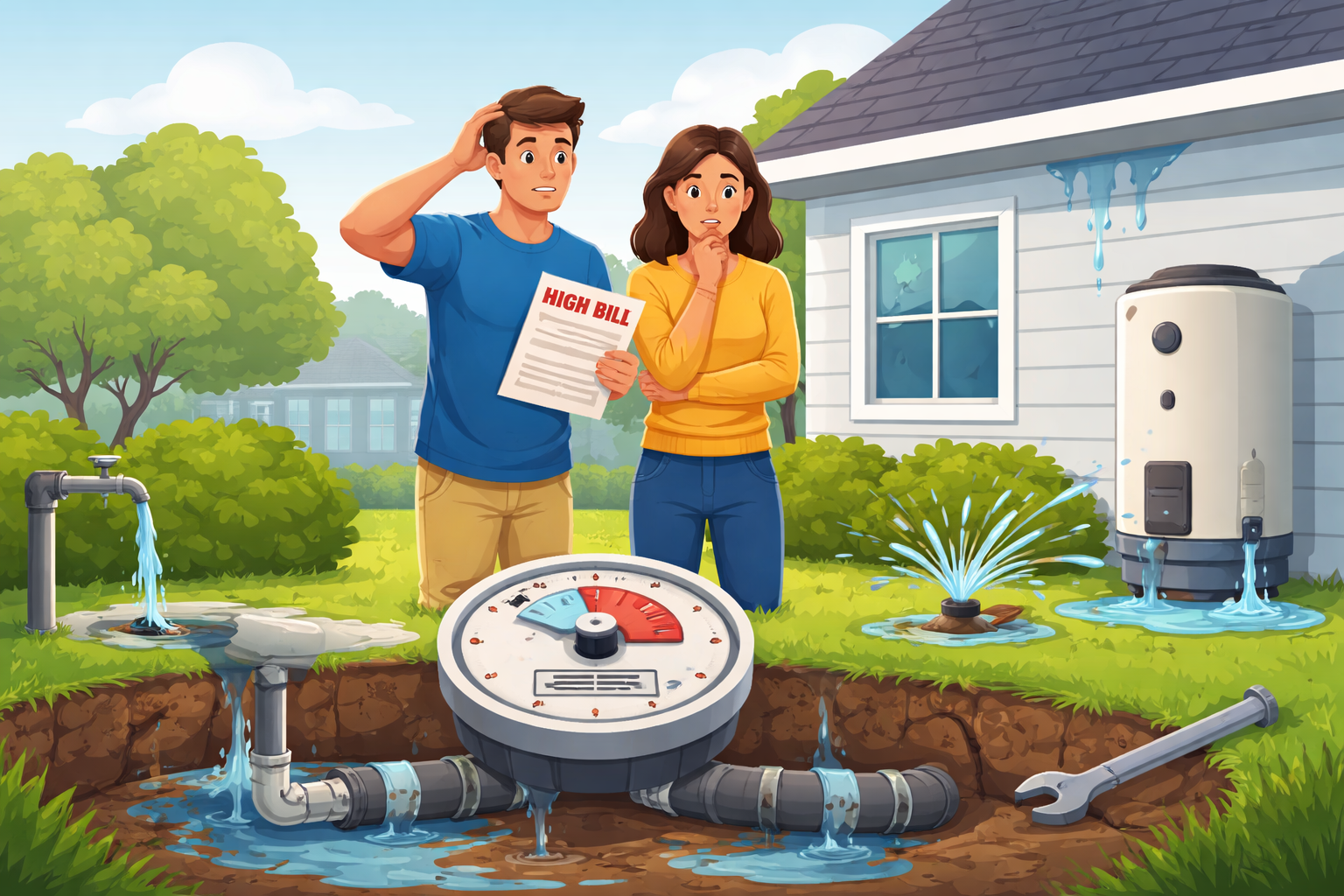
If you’ve opened your latest utility statement and felt that sudden shock, you’re not alone. Many homeowners notice water bills creeping up without any obvious change in usage. You’re not watering the lawn more, not filling a pool, and not running laundry nonstop — yet the cost keeps rising.
In many cases, the cause isn’t usage at all. It’s hidden plumbing problems quietly wasting water behind walls, underground, or inside fixtures you rarely inspect. Small leaks, pressure issues, or aging infrastructure can drive bills higher month after month.
Understanding the hidden plumbing causes behind high water bills is the first step toward fixing the problem and protecting your home from larger damage. Let’s break down where the extra cost usually comes from and how to spot it early.
Common Hidden Plumbing Causes of High Water Bills
Silent Toilet Leaks
Toilets are one of the most common sources of unnoticed water loss. A worn flapper valve or faulty fill mechanism can allow water to continuously flow from the tank into the bowl.
This type of leak is dangerous because you won’t usually hear it. The toilet appears normal, but it can waste hundreds of gallons per day.
Signs to Watch For
- Toilet refilling randomly
- Faint running water sounds
- Water movement inside bowl when not flushing
A simple dye test using food coloring can confirm a leak. If color appears in the bowl without flushing, water is escaping constantly.
Underground Pipe Leaks
Underground supply lines can crack due to soil shifting, corrosion, or tree root intrusion. Because these pipes are buried, leaks can go undetected for months.
Unlike visible plumbing failures, underground leaks often show indirect symptoms rather than obvious water pooling.
Warning Signs
- Sudden spikes in water bill
- Wet patches in yard
- Mold or moisture smell near foundation
- Lower water pressure
If you suspect underground issues, scheduling a professional inspection through a trusted plumbing service can help locate leaks using pressure testing or acoustic detection.
Dripping Faucets and Fixtures
A dripping faucet might seem minor, but the math adds up fast. One drip per second can waste over 3,000 gallons per year.
Multiply that across multiple fixtures, and you could be paying significantly more than necessary.
Common Causes
- Worn washers
- Corroded valve seats
- Loose internal seals
- Mineral buildup from hard water
Regular fixture maintenance is one of the simplest ways to control water costs long term.
Pressure Problems That Increase Water Usage
High Water Pressure
Many homeowners assume strong water pressure is a good thing. But excessive pressure can actually increase water usage and damage pipes, fittings, and appliances.
High pressure forces more water through every fixture, meaning you’re using more water than you realize.
Ideal Pressure Range
- 40–60 PSI: Optimal
- 60–80 PSI: Acceptable but high
- 80+ PSI: Risk for leaks and high bills
Installing a pressure regulator can stabilize usage and extend plumbing lifespan.
Failing Pressure Regulators
If your home already has a regulator but it’s failing, pressure can slowly increase without you noticing. This is especially common in older homes.
If you suddenly notice stronger showers or faster faucet flow combined with higher bills, your regulator might be failing.
Appliance-Related Water Waste
Aging Water Heaters
Older water heaters often develop internal sediment buildup. This forces the unit to use more water and energy to maintain output.
Additionally, internal corrosion can cause slow leaks that evaporate before becoming visible.
Washing Machines and Dishwashers
Older appliances can use double the water of modern high-efficiency units. If your appliances are more than 10–15 years old, they could be major contributors to rising bills.
Seasonal Factors Most Homeowners Miss
Many homeowners don’t realize how seasonal plumbing issues affect water costs.
For example, storm season in coastal regions can create pipe stress, ground movement, and small foundation shifts that lead to hidden leaks. Reviewing your home’s storm-readiness can help prevent seasonal plumbing damage before it raises your utility costs.
Irrigation and Outdoor Water Loss
Broken Sprinkler Heads
A single damaged sprinkler head can waste thousands of gallons per month.
Check For:
- Water pooling near sprinkler zones
- Uneven lawn watering
- Sprayers shooting sideways
Hidden Irrigation Line Leaks
Underground irrigation lines are easy to forget about — until they start leaking.
If parts of your lawn look greener or grow faster, that may signal an underground irrigation leak.
How to Diagnose a High Water Bill at Home
Step 1: Check Your Water Meter
Turn off all water inside and outside the house. If the meter continues moving, you likely have a leak.
Step 2: Compare Monthly Usage Trends
Look for gradual increases over several months. Sudden spikes often mean leaks. Gradual increases often indicate fixture or pressure problems.
Step 3: Inspect High-Risk Areas
Focus on:
- Toilets
- Under sinks
- Water heater base
- Hose bibs
- Irrigation connections
When to Call a Professional Plumber
If you notice ongoing high usage with no visible cause, it’s time to act quickly. Delaying leak repairs often leads to structural damage, mold growth, and expensive emergency repairs.
If you need fast diagnostics or repair help, you can call today at (786) 709-0426 to speak with a plumbing professional who can help identify hidden water loss sources.
Long-Term Strategies to Keep Water Bills Low
Annual Plumbing Inspections
Preventive inspections can catch small issues before they become expensive ones.
Upgrade to Water-Efficient Fixtures
Modern fixtures use advanced aeration and pressure optimization to reduce water use without reducing performance.
Install Smart Leak Detection
Smart leak monitors can alert you to abnormal water usage patterns before damage occurs.
Monitor Water Usage Monthly
Tracking usage trends helps you catch problems early and maintain consistent utility costs.
The Real Cost of Ignoring Hidden Plumbing Issues
Ignoring small leaks or pressure issues doesn’t just increase water bills. It can lead to:
- Foundation damage
- Mold remediation costs
- Structural wood rot
- Appliance damage
- Emergency plumbing repairs
Early detection always costs less than emergency restoration.
Take Control of Your Water Costs
A high water bill rarely happens without a reason. In most cases, hidden plumbing issues are the real cause. The good news is that most of these problems are fixable — and preventable — with routine inspections and timely repairs.
If your water bill keeps climbing and you can’t explain why, the smartest move is to investigate early. Fixing small plumbing issues today can prevent thousands in repairs tomorrow while keeping your monthly costs predictable.