
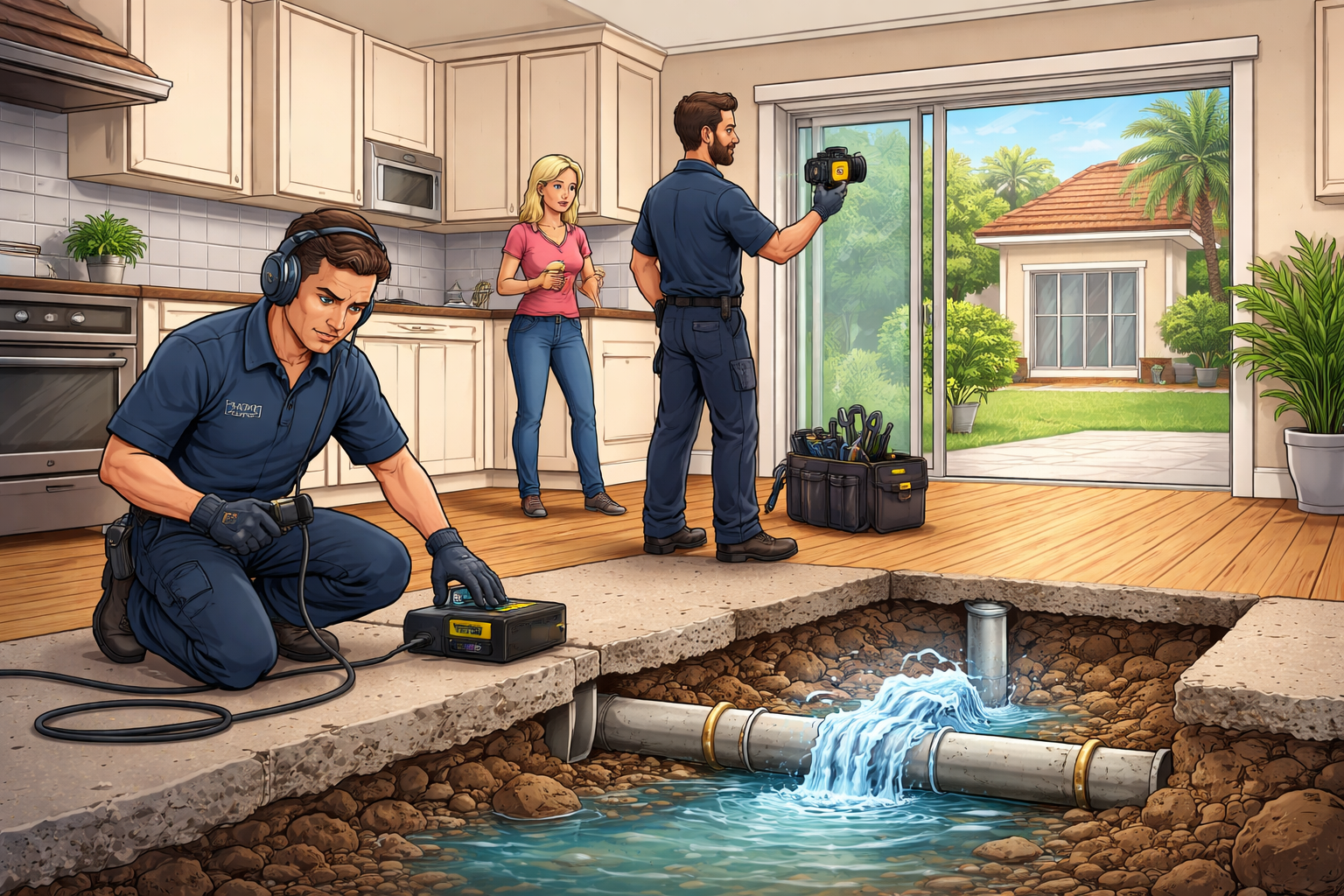
A slab leak is one of the most serious plumbing problems a homeowner can face — and it often starts silently. If you’ve noticed a sudden spike in your water bill, damp flooring, or unexplained cracks in your walls, you may have a leak beneath your foundation.
Knowing how to tell if you have a slab leak early can prevent structural damage, mold growth, and expensive repairs. In this guide, we’ll break down the warning signs, causes, detection methods, and what to do next so you can protect your home with confidence.
What Is a Slab Leak?
A slab leak occurs when a water line running beneath your home’s concrete foundation begins leaking. These pipes are typically part of your hot or cold water supply system and are embedded directly in or below the slab.
Unlike visible leaks under sinks or behind walls, slab leaks are hidden. That’s what makes them dangerous. They can cause significant structural damage before you even realize there’s a problem.
In South Florida homes, soil conditions, shifting foundations, and aging pipes make slab leaks more common than many homeowners expect.
Common Signs You May Have a Slab Leak
Slab leaks don’t always show obvious signs at first. Instead, they create subtle but consistent warning signals.
Unexplained Increase in Water Bills
If your water usage hasn’t changed but your bill keeps rising, that’s often the first red flag. A slab leak can waste hundreds of gallons per day without visible pooling.
You can test this by turning off all water fixtures and checking your meter. If it continues to move, there may be a hidden leak.
If you’re unsure how to interpret the results, a professional evaluation through comprehensive plumbing repair services can confirm whether the issue is beneath your slab.
Warm Spots on Floors
Hot water line leaks often create noticeable warm areas on tile, laminate, or hardwood floors. You may feel warmth concentrated in one part of your home.
This typically indicates a hot water pipe leak under the foundation.
Damp Flooring or Carpet
Moisture may seep upward through cracks in the slab. You might notice:
- Warped flooring
- Damp carpet padding
- Bubbling vinyl
- Musty odors
Persistent dampness without a visible source is never normal.
Professional leak detection services can pinpoint the exact source without tearing apart your flooring.
Cracks in Walls or Foundation
Water leaking under the slab can erode soil and destabilize the foundation. Over time, this pressure shift may cause:
- Interior drywall cracks
- Exterior stucco fractures
- Uneven flooring
- Doors that no longer close properly
Foundation movement is serious and requires immediate attention.
Sound of Running Water
If you hear water running when no fixtures are on, it could be a slab leak. The sound may resemble a faint hissing or rushing beneath the floor.
This is often more noticeable at night when the house is quiet.
Why Slab Leaks Happen
Understanding the root cause helps prevent future damage.
Pipe Corrosion
Older copper pipes can corrode due to soil chemistry and mineral content. Over time, pinhole leaks form.
Foundation Shifts
Florida soil expands and contracts with moisture changes. This movement places stress on underground water lines.
Poor Installation
Improper pipe placement or inadequate insulation can cause friction against concrete, eventually weakening the pipe.
High Water Pressure
Excessive pressure strains joints and pipe walls. Over time, this accelerates failure.
Slab Leaks and Water Heaters
Hot water slab leaks are especially common. If your water heater is running more frequently or struggling to maintain temperature, it may be compensating for pressure loss underground.
Before replacing your unit, it’s wise to consult experienced technicians specializing in water heater installation services to rule out hidden slab leaks.
Misdiagnosing the issue can lead to unnecessary equipment replacement.
How Professionals Detect Slab Leaks
Modern plumbing technology makes detection far more precise than it used to be.
Electronic Leak Detection
Acoustic sensors detect pressure changes and water movement beneath concrete.
Thermal Imaging
Infrared cameras identify temperature differences caused by hot water leaks.
Pressure Testing
Plumbers isolate sections of piping to identify where pressure drops occur.
Camera Inspection
For deeper pipe evaluation, a professional pipe camera inspection allows technicians to visually assess underground piping conditions without invasive demolition.
Early detection minimizes repair costs and structural disruption.
Repair Options for Slab Leaks
The appropriate repair method depends on the severity and pipe condition.
Spot Repair
If the leak is isolated, a small section of slab may be opened to repair the pipe directly.
Pipe Rerouting
In many cases, rerouting water lines through walls or ceilings is less invasive and more reliable long term.
Full Repipe
If multiple leaks exist or pipes are heavily corroded, replacing the system may be the most cost-effective long-term solution.
An experienced plumbing team can assess the best strategy based on your home’s structure and pipe material.
How to Confirm a Slab Leak at Home
Before calling a plumber, you can perform a basic test:
- Turn off all water fixtures.
- Locate your water meter.
- Record the reading.
- Wait 30–60 minutes without using water.
- Recheck the meter.
If the reading changes, you likely have a leak somewhere in your system.
However, this test won’t tell you where the leak is — only that one exists.
Why You Should Act Quickly
Ignoring a slab leak can lead to:
- Foundation settlement
- Mold growth
- Flooring damage
- Structural instability
- Increased utility bills
The longer the leak continues, the more expensive repairs become.
Prompt professional evaluation protects both your property and your finances.
If you suspect a slab leak, schedule an inspection through the schedule plumbing inspection page to have your home professionally assessed.
Preventing Future Slab Leaks
While not all slab leaks are preventable, proactive steps help reduce risk:
- Maintain proper water pressure (under 70 PSI)
- Schedule routine plumbing inspections
- Upgrade aging copper pipes
- Address minor leaks immediately
Regular maintenance protects your foundation and extends the life of your plumbing system.
Final Thoughts
Slab leaks are serious, but they are manageable when caught early. The key is recognizing warning signs and acting before structural damage occurs.
Warm floors, unexplained water bills, cracking walls, and persistent dampness are not minor issues. They are signals that something may be happening beneath your foundation.
Modern leak detection tools and experienced technicians make diagnosis and repair more efficient than ever.
If something feels off, trust your instincts and have your plumbing system evaluated promptly.