Drain clogs are one of the most common plumbing problems homeowners face in Kendall, FL. From slow kitchen sinks to recurring shower backups, clogged drains can quickly become frustrating, messy, and expensive if left untreated. In many Kendall neighborhoods, the issue goes beyond simple buildup. Older plumbing systems, tree root intrusion, hard water, and everyday habits all contribute to recurring drain problems.
South Florida’s climate and infrastructure create unique plumbing challenges that many homeowners don’t realize until water starts backing up into sinks, tubs, or toilets. Understanding why these drain clogs happen is the first step toward preventing serious plumbing damage and avoiding costly emergency repairs.
In this guide, we’ll break down the most common reasons Kendall homes experience frequent drain clogs, warning signs to watch for, and what homeowners can do to keep their plumbing systems flowing properly year-round.
Older Plumbing Systems in Kendall Homes
Many homes throughout Kendall were built decades ago, and aging plumbing systems are a major reason recurring drain clogs happen so often.
Older drain pipes naturally deteriorate over time. Cast iron pipes, which are common in older South Florida homes, begin to corrode internally after years of exposure to moisture and waste. As corrosion builds inside the pipe walls, the diameter of the drain line narrows, making it easier for debris to get trapped.
Even a small amount of grease, soap residue, hair, or food waste can eventually create stubborn blockages inside aging pipes.
Cast Iron Pipe Corrosion
Corroded cast iron pipes create rough interior surfaces that catch debris constantly. Unlike smooth PVC piping, deteriorated cast iron acts almost like sandpaper inside the drain system.
This is one reason homeowners may experience recurring clogs even after clearing the drain several times.
Signs of cast iron drain issues include:
- Frequent drain backups
- Slow draining sinks or tubs
- Sewage odors indoors
- Gurgling sounds from drains
- Water pooling around floor drains
In many cases, professional camera inspections are necessary to determine how severe the pipe deterioration has become.
Grease and Food Waste Build-Up
Kitchen drains are one of the biggest clog culprits in Kendall homes.
Cooking grease, oils, coffee grounds, starches, and food scraps slowly build up inside drain lines over time. Even when homeowners use garbage disposals regularly, grease still hardens inside pipes and traps other debris.
Many homeowners don’t realize how damaging certain household habits can be until recurring clogs begin appearing throughout the kitchen plumbing system.
Learning common sink disposal mistakes can help prevent major drain issues before they start.
Why Grease Is Worse in South Florida
South Florida’s warm climate causes grease to move farther through the plumbing system before cooling and hardening. This often means larger blockages form deeper inside the drain line, making DIY drain cleaners ineffective.
Once grease combines with soap residue and food waste, it can create thick sludge that severely restricts water flow.
Hard Water Mineral Buildup
Kendall homes frequently deal with hard water, which contains elevated levels of calcium and magnesium minerals.
Over time, mineral deposits collect inside pipes and gradually reduce water flow. While hard water buildup develops slowly, it becomes a serious contributor to recurring drain clogs and poor plumbing performance.
Signs of Hard Water Problems
Homeowners may notice:
- Slow drains throughout the house
- White residue around faucets
- Reduced water pressure
- Soap scum buildup
- Appliances wearing out faster
Mineral buildup becomes especially problematic in older galvanized or cast iron piping systems because rough pipe surfaces allow scale deposits to accumulate even faster.
Tree Roots Invading Sewer Lines
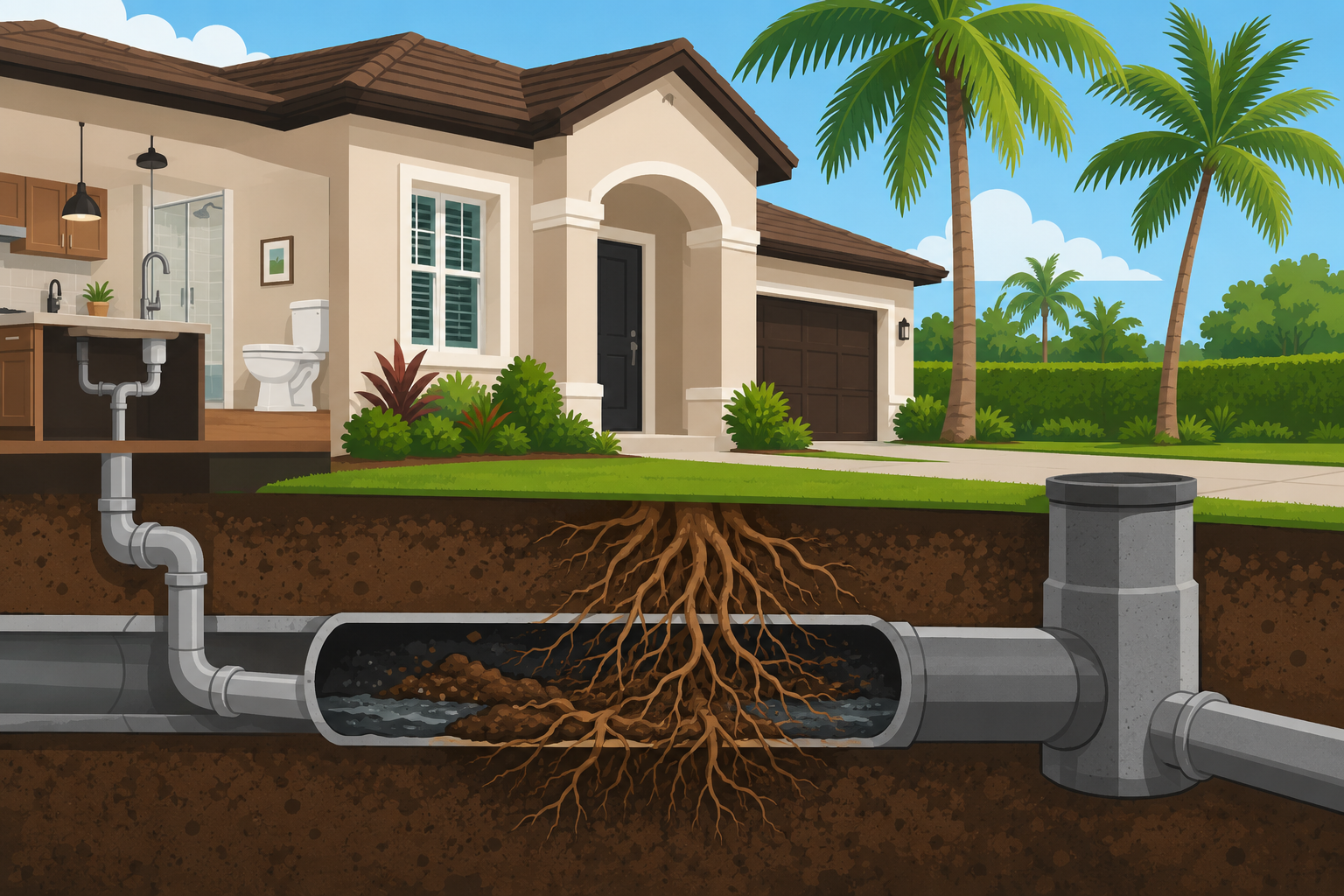
Large trees are beautiful additions to Kendall properties, but underground roots are notorious for damaging sewer lines.
Tree roots naturally seek moisture. Even tiny cracks in underground drain pipes release enough water vapor to attract roots. Once roots enter the sewer line, they continue expanding and trapping debris until severe blockages occur.
Warning Signs of Root Intrusion
Tree root sewer problems often cause:
- Multiple drains backing up at once
- Toilets bubbling or gurgling
- Sewage odors outside
- Slow drains throughout the home
- Wet patches in the yard
Root intrusion is one of the most common causes of major sewer backups in South Florida neighborhoods with mature landscaping.
Heavy Rainfall and Flooding
Kendall’s rainy season puts significant pressure on residential plumbing systems.
During periods of heavy rain, municipal sewer systems can become overloaded. Excess groundwater may also infiltrate aging sewer pipes through cracks or damaged joints. This creates additional pressure that slows drainage and increases the risk of backups inside homes.
Homes with poor drainage or older sewer systems are especially vulnerable during storms.
Storm-Related Plumbing Issues
Heavy rainfall can lead to:
- Sewer line backups
- Yard drain overflow
- Slower household drains
- Increased pipe pressure
- Foundation moisture issues
South Florida homeowners should pay close attention to plumbing performance during hurricane season because recurring slow drains may indicate larger sewer problems developing underground.
Improper Items Flushed Down Drains
One of the simplest causes of drain clogs is also one of the most common.
Many household products labeled “flushable” actually create severe plumbing blockages over time. Items like wipes, paper towels, feminine hygiene products, and cotton swabs do not break down properly inside pipes.
Over time, these materials snag on buildup inside the drain system and create stubborn clogs.
Bathroom Drain Issues
Bathroom drains commonly clog from:
- Hair buildup
- Soap scum
- Toothpaste residue
- Hygiene products
- Excess toilet paper
Even small daily habits can eventually contribute to major drain problems.
Sewer Line Bellies and Pipe Shifting
Soil movement is another hidden cause of recurring drain clogs in Kendall homes.
Over time, underground sewer pipes may begin sagging or shifting due to soil erosion, heavy rainfall, or natural settling. When a section of pipe sinks lower than the rest of the line, it creates what plumbers call a “belly.”
Water and debris collect inside these low spots, increasing the likelihood of recurring clogs.
Why Pipe Bellies Cause Repeat Backups
Pipe bellies trap:
- Grease
- Waste solids
- Paper products
- Sediment
- Root intrusion
Because debris accumulates repeatedly in the same area, homeowners often experience recurring clogs despite multiple cleanings.
DIY Drain Cleaners Often Make Things Worse
Many homeowners turn to chemical drain cleaners as a quick solution. Unfortunately, these products often cause more harm than good.
Harsh chemicals can corrode older pipes, especially cast iron plumbing systems already weakened by age. Chemical cleaners may temporarily punch a small hole through the blockage without actually removing the buildup.
This means the clog often returns quickly.
Professional Drain Cleaning Is More Effective
Professional drain cleaning methods like hydro jetting remove buildup more thoroughly without relying on damaging chemicals.
For recurring clogs, scheduling a professional inspection is usually far more cost-effective than repeated DIY attempts.
If drains are already backing up regularly, scheduling professional clog removal services can help prevent larger sewer issues from developing.
Pinpoint leaks fast—before they cause major damage.
(786) 709-0426
Commercial and Main Line Problems Can Affect Homes
Some Kendall neighborhoods experience drain problems tied to larger municipal or shared plumbing infrastructure.
When nearby commercial systems or main sewer lines begin failing, residential properties may notice slower drains and increased backup risks.
Understanding main sewer warning signs can help homeowners recognize when the issue may extend beyond their individual plumbing system.
South Florida Plumbing Codes Matter
Many older homes in Kendall were built under outdated plumbing standards that may no longer meet current code requirements.
Improper pipe slopes, outdated materials, and aging installations all contribute to recurring drain problems.
Modern plumbing upgrades improve drainage efficiency while helping homes stay compliant with evolving regulations. Reviewing current plumbing requirements can help homeowners better understand why older systems experience more frequent issues.
Preventing Drain Clogs in Kendall Homes
While some plumbing issues require professional repairs, homeowners can still take several steps to reduce the risk of recurring clogs.
Be Careful What Goes Down the Drain
Avoid putting:
- Grease or cooking oil
- Coffee grounds
- Eggshells
- Pasta or rice
- Flushable wipes
- Paper towels
- Hair buildup
Simple habit changes can dramatically improve drain performance.
Schedule Preventive Drain Cleaning
Routine drain maintenance helps remove buildup before major clogs develop.
Professional inspections can also identify hidden problems like root intrusion, pipe corrosion, or sewer line damage before they become emergencies.
Install Drain Screens
Drain screens help catch hair, food particles, and debris before they enter the plumbing system.
This small investment can significantly reduce common household clogs.
Watch for Early Warning Signs
Don’t ignore:
- Slow drains
- Gurgling sounds
- Sewer odors
- Frequent backups
- Rising water bills
Minor drain issues often become much larger plumbing repairs if left untreated.
When to Call a Professional Plumber
Some drain clogs go far beyond simple household buildup.
If multiple drains are backing up simultaneously, sewage odors are present, or clogs keep returning despite repeated cleaning attempts, the issue may involve the main sewer line.
Professional plumbers use specialized equipment like sewer cameras and hydro jetting systems to identify and remove hidden blockages safely.
Ignoring recurring drain problems can eventually lead to:
- Sewer line damage
- Water damage
- Mold growth
- Foundation issues
- Expensive emergency repairs
Early intervention almost always saves homeowners money in the long run.
Pinpoint leaks fast—before they cause major damage.
(786) 709-0426
Final Thoughts
Frequent drain clogs are a common issue for Kendall homeowners because of aging plumbing systems, hard water buildup, grease accumulation, tree roots, and South Florida’s unique environmental conditions.
While occasional clogs are normal, recurring drain problems usually indicate a deeper plumbing issue that shouldn’t be ignored. Understanding the causes behind these clogs helps homeowners take preventive steps before small problems become major repairs.
Routine maintenance, smarter drain habits, and professional inspections all play an important role in protecting your plumbing system and keeping drains flowing properly throughout the year.
FAQ
Why do my drains keep clogging in my Kendall home?
Recurring drain clogs are often caused by aging pipes, grease buildup, hard water deposits, tree root intrusion, or sewer line damage. Older plumbing systems are especially vulnerable to repeat blockages.
Are chemical drain cleaners safe for pipes?
Chemical drain cleaners can damage older pipes over time, especially cast iron plumbing systems common in South Florida homes. Professional drain cleaning is usually safer and more effective.
What are signs of a sewer line problem?
Common signs include multiple drains backing up, sewage odors, slow drains throughout the home, bubbling toilets, and wet spots in the yard.
How often should drains be professionally cleaned?
Many homeowners benefit from annual drain inspections and cleanings, especially in older homes or properties with recurring plumbing issues.
Can tree roots really clog sewer lines?
Yes. Tree roots commonly enter underground sewer pipes through small cracks and continue expanding inside the line, eventually causing severe blockages and backups.
Why are kitchen drains more likely to clog?
Kitchen drains accumulate grease, food particles, soap residue, and cooking oils over time. These materials harden inside pipes and restrict water flow.