Your kitchen sink may seem like an easy place to rinse, dump, and wash away everyday messes, but not everything belongs in your drain. In fact, many serious plumbing problems start with small habits: pouring grease after cooking, rinsing coffee grounds, or letting food scraps slip down the sink.
Over time, these materials can stick to your pipes, create stubborn clogs, cause foul odors, slow your drainage, and even lead to expensive plumbing repairs. The good news is that most sink problems are preventable once you know what should never go down the drain.
If you want to protect your pipes, avoid emergency calls, and keep your plumbing system working smoothly, here is what not to pour down your sink ever.
Why Your Sink Drain Is Not a Trash Can
Your sink is designed to move water and small amounts of residue, not handle thick liquids, sticky substances, food waste, or chemicals. Even if something looks harmless when it goes down, it can harden, clump, expand, or cling to the inside of your pipes.
The problem usually builds slowly. At first, you may notice water draining a little slower. Then odors appear. Eventually, your sink may stop draining altogether.
That is why being careful with what goes down the drain is one of the simplest ways to prevent expensive plumbing repairs before they start.
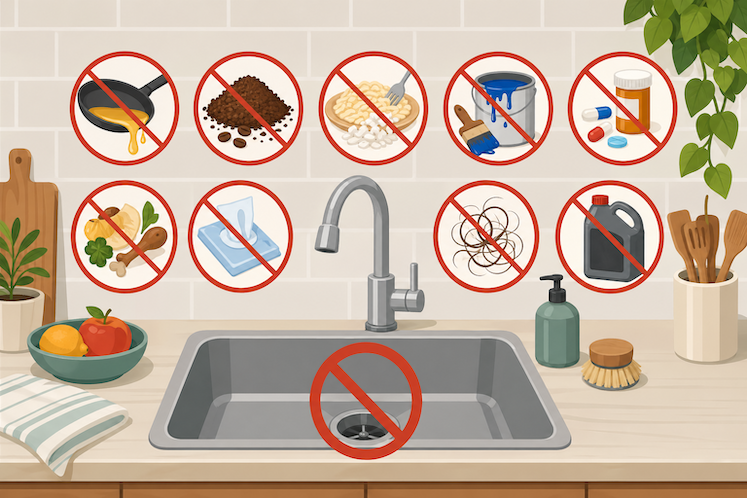
1. Grease, Cooking Oil, and Fat
Grease is one of the worst things you can pour down your sink. When hot, it looks like liquid and may seem easy to rinse away. But once it cools, it thickens and sticks to the inside of your pipes.
Over time, grease traps food particles, soap residue, and other debris. This creates a sticky blockage that can become very difficult to remove.
Common grease sources include bacon fat, cooking oil, butter, gravy, pan drippings, and shortening.
Instead of pouring grease down the drain, let it cool in a container, then throw it in the trash.
2. Coffee Grounds
Coffee grounds may look small, but they do not dissolve in water. Instead, they collect inside your drain and mix with grease or soap residue.
This creates a dense, gritty buildup that can slow your sink and eventually clog the line.
A better option is to throw coffee grounds in the trash or use them in compost if appropriate.
3. Pasta, Rice, and Starchy Foods
Pasta and rice continue to absorb water even after cooking. When they go down the drain, they can swell inside your pipes and create a sticky blockage.
Starchy foods also tend to clump together, especially when mixed with grease or food scraps.
Scrape leftover pasta, rice, potatoes, oatmeal, and similar foods into the trash before rinsing dishes.
4. Flour and Dough
Flour may seem harmless, but when it mixes with water, it becomes a paste. That paste can coat the inside of your pipes and trap other debris.
Dough is even worse because it is sticky, thick, and difficult to flush through a drain.
If you bake often, wipe excess flour or dough from bowls and utensils before washing them.
5. Eggshells
Some people believe eggshells sharpen garbage disposal blades, but that is a common plumbing myth. Eggshell fragments can combine with grease and food particles, forming a rough buildup inside the drain.
The thin membrane inside the shell can also wrap around disposal parts or contribute to clogs.
Throw eggshells in the trash or compost instead.
6. Paint and Paint Water
Paint should never be poured down your sink. Even small amounts can coat pipes, harm plumbing components, and create environmental concerns.
Latex paint can dry and stick inside the drain. Oil-based paint is even more problematic because it contains solvents that do not belong in household plumbing.
Check local disposal guidelines for paint, stains, solvents, and related materials.
7. Harsh Chemical Drain Cleaners
It may sound strange, but many drain cleaners are bad for your plumbing. Chemical drain cleaners can generate heat and damage certain pipe materials, especially with repeated use.
They may also fail to fully clear the blockage, leaving you with a weakened pipe and a clog that returns.
If your sink keeps clogging, it may be time to look deeper into the cause. Pipe material, age, and condition all matter, especially when comparing PEX and copper pipes in older or upgraded plumbing systems.
8. Medication
Never pour unused medication down the sink unless official disposal instructions specifically say to do so. Many medications can enter the water system and create environmental risks.
The safest option is to use a pharmacy take-back program or local medication disposal site.
This applies to pills, liquid medicine, supplements, and prescription products.
9. Food Scraps
Even with a garbage disposal, your sink should not be treated like a food waste bin. Large food scraps can overwhelm your disposal and clog your drain.
Problem foods include vegetable peels, fruit skins, bones, seeds, corn husks, celery, onion skins, and fibrous leftovers.
Scrape plates into the trash before washing dishes. Your sink will drain better, smell fresher, and last longer.
10. Stickers from Fruits and Containers
Small produce stickers often end up in the sink while washing fruits and vegetables. They may seem harmless, but they do not dissolve in water.
These stickers can stick to pipe walls, disposal parts, or filters. Over time, they can contribute to buildup.
Remove stickers before washing produce.
11. Cleaning Wipes and Paper Towels
Even if a product seems thin, it does not mean it belongs in the sink. Cleaning wipes, paper towels, cotton pads, and similar items do not break down like toilet paper.
They can catch inside pipes and create stubborn clogs.
Throw these items in the trash every time.
12. Hair and Grooming Products
Bathroom sinks often suffer from hair buildup. Hair binds with soap, toothpaste, shaving cream, and oils, creating a thick blockage.
Even small amounts of hair can cause slow drainage over time.
Use a drain screen in bathroom sinks and clean it regularly. It is a simple habit that prevents a lot of frustration.
13. Soap Scum and Thick Personal Care Products
Soap is meant to wash away, but certain products leave residue behind. Thick conditioners, shaving creams, face masks, oils, and scrubs can cling to pipe walls.
Products with clay, charcoal, glitter, or heavy oils are especially risky.
Use only what you need, rinse with plenty of water, and avoid washing thick product waste into the sink.
14. Dirt, Soil, and Sand
After gardening, beach trips, or outdoor projects, it is tempting to rinse dirt and sand in the sink. But these materials settle inside pipes because they are heavier than water.
Once they collect in bends or low points, they can restrict water flow.
Shake dirt outside, wipe tools first, and use outdoor cleanup areas when possible.
15. Motor Oil, Gasoline, and Automotive Fluids
Automotive fluids should never go down a sink, toilet, storm drain, or household drain. These substances are hazardous and can damage plumbing while creating serious environmental risks.
Motor oil, brake fluid, transmission fluid, coolant, and gasoline require proper disposal.
Take them to an approved recycling or hazardous waste facility.
Signs You May Already Have a Sink Drain Problem
Even if you are careful now, past habits may have already created buildup. Watch for signs such as slow drainage, gurgling sounds, unpleasant odors, recurring clogs, water backing up, or bubbling when another fixture is used.
These symptoms can point to a local sink clog or a larger drain line issue.
In some South Florida homes, drainage issues may also connect to underground problems. For example, tree root intrusion can affect sewer lines and cause repeated backups that seem like simple clogs at first.
What to Do Instead of Pouring Waste Down the Sink
The best solution is to create simple household habits. Keep a small container for grease. Scrape plates before rinsing. Use sink strainers. Throw coffee grounds and food waste in the trash. Dispose of chemicals properly.
These habits take only a few seconds but can save you from major plumbing headaches.
For kitchen cleanup, wipe greasy pans with a paper towel before washing. For bathroom sinks, remove hair before it reaches the drain. For household projects, never rinse paint, grout, cement, or adhesives into your plumbing.
When a Clog Keeps Coming Back
A single slow drain may be caused by surface buildup. But if your sink keeps clogging again and again, the problem may be deeper in the line.
Repeated clogs can be caused by grease buildup, pipe corrosion, poor pipe slope, damaged pipes, root intrusion, or main line restrictions.
You may also notice other symptoms, such as weak flow from fixtures. When multiple fixtures are affected, low water pressure may be part of a larger plumbing issue that needs professional attention.
When to Call a Professional Plumber
Call a plumber if your sink is fully blocked, smells bad even after cleaning, backs up frequently, drains slowly after multiple attempts, or makes gurgling sounds.
You should also get help if chemical cleaners did not work. Adding more chemicals can make the situation worse and create safety risks.
A professional plumber can inspect the line, identify the real cause, and clear the drain safely. If you need help now, you can get an estimate from a local plumbing team before the problem turns into a bigger repair.
FAQ
Can I pour boiling water down the sink?
Boiling water can sometimes help loosen minor grease residue, but it is not a fix for serious buildup. It may also stress certain pipe materials, especially if used often. Warm water with proper prevention is better than relying on boiling water.
Is it okay to pour small amounts of grease down the drain?
No. Even small amounts of grease can build up over time. Wipe greasy pans before washing and dispose of cooled grease in the trash.
Are garbage disposals safe for all food waste?
No. Garbage disposals are helpful, but they are not designed for everything. Avoid bones, grease, pasta, rice, fibrous vegetables, eggshells, coffee grounds, and large food scraps.
Why does my sink smell bad?
Bad sink odors often come from food buildup, grease, bacteria, or a clog forming inside the drain. If cleaning does not solve the smell, there may be a deeper plumbing issue.
What is the safest way to prevent sink clogs?
Use a drain strainer, avoid pouring grease or food scraps down the sink, rinse with plenty of water, and schedule help when slow drains keep returning.
Conclusion
Your sink drain is one of the most used parts of your home, but it is also one of the easiest to damage through everyday habits. Grease, coffee grounds, starchy foods, chemicals, hair, and thick products can all create problems that build slowly and become expensive later.
The best approach is simple: keep solids, oils, and harsh substances out of your drain. A few small changes can protect your pipes, prevent clogs, reduce odors, and help your plumbing system last longer.