
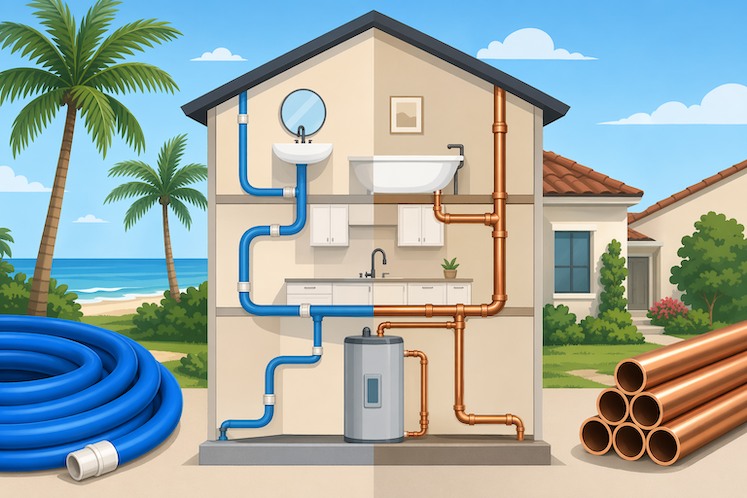
Choosing between PEX and copper pipes in South Florida is not just about price. It is about how each material handles heat, humidity, hard water, salt air, and the demands of daily use in coastal homes.
South Florida plumbing systems face conditions that can shorten the life of the wrong pipe material. Hard water can leave mineral scale inside plumbing lines, while salty coastal air and moisture can speed up corrosion on metal components.
So, which lasts longer: PEX or copper? The honest answer is that both can last for decades, but in many South Florida homes, PEX often has the advantage because it resists corrosion, handles movement well, and is less affected by aggressive water conditions.
Understanding PEX and Copper Pipes
PEX and copper are two of the most common materials used for residential plumbing. Both can be excellent choices when installed correctly, but they perform differently.
Copper is a rigid metal pipe that has been used in homes for generations. It is strong, heat-resistant, and known for long service life. Many older homes in Miami, Boca Raton, Fort Lauderdale, and nearby communities still rely on copper water lines.
PEX, short for cross-linked polyethylene, is a flexible plastic piping material. It has become popular because it is easier to install, resistant to corrosion, and more forgiving in tight spaces.
The real question is not whether one material is “good” and the other is “bad.” It is which material makes more sense for South Florida’s climate and water conditions.
Why South Florida Plumbing Conditions Matter
Plumbing in South Florida deals with challenges that homes in cooler, drier regions may not face as often.
The region’s warm, humid climate can create ideal conditions for corrosion, especially when metal pipes, fittings, valves, or water heater components are exposed to salty air. Coastal salt and moisture can contribute to pipe deterioration, leaks, and fixture damage over time.
Hard water is another major factor. South Florida water often contains minerals such as calcium and magnesium. These minerals can build up inside pipes, faucets, valves, and water heaters, reducing flow and adding stress to plumbing systems.
That is why pipe material matters. A pipe that performs well in a dry inland area may not age the same way in a coastal South Florida home.
Copper Pipes: Strengths and Weaknesses
Copper has a long-standing reputation for durability. When water chemistry is favorable and installation is done properly, copper can last a very long time.
It also handles heat well, which makes it a common choice for hot water lines. Copper is rigid, clean-looking, and widely accepted by plumbers and building professionals.
But copper is not invincible. In Florida homes, copper pipes can still corrode under certain conditions. Water chemistry, high chlorine levels, low pH, mineral content, and environmental exposure can all contribute to pitting, corrosion, and pinhole leaks.
Where Copper Performs Well
Copper can be a strong option when:
The water quality is stable.
The pipe is protected from exterior salt exposure.
The home already has copper lines in good condition.
The installation is done by an experienced plumber.
The homeowner wants a proven material with a long track record.
Copper is also valued because it is naturally rigid and does not sag when properly supported. For exposed plumbing in garages, utility rooms, or mechanical areas, some homeowners prefer the clean, structured look of copper.
Where Copper Can Struggle in South Florida
Copper’s biggest concern in South Florida is corrosion risk.
Salt air can affect exposed metal plumbing components, and high humidity can make that exposure worse. Copper may also develop pinhole leaks when water chemistry is aggressive or when corrosion starts inside the pipe wall.
Hard water can also affect copper systems. Mineral buildup can restrict water flow, increase pressure stress, and contribute to plumbing issues over time.
For older homes, this matters even more. If the copper system is already decades old, it may not fail all at once. Instead, homeowners may notice recurring leaks, low water pressure, water stains, or small repairs that keep adding up.
PEX Pipes: Strengths and Weaknesses
PEX has become popular because it solves several common problems that homeowners face with older plumbing systems.
The biggest advantage is corrosion resistance. Since PEX is not metal, it does not rust or corrode the same way copper or galvanized steel can. That makes it especially appealing in humid and coastal environments.
PEX is also flexible. It can bend around corners, fit through tight spaces, and reduce the need for as many fittings. Fewer fittings can mean fewer potential leak points when the system is installed correctly.
Where PEX Performs Well
PEX can be a smart choice for South Florida homes because it resists corrosion, handles mineral-heavy water better than metal piping, and works well in repiping projects.
Its flexibility is helpful in homes with slab foundations, older layouts, or difficult access points. Instead of opening large sections of walls, plumbers may be able to route PEX more efficiently.
PEX can also expand slightly under pressure changes. That flexibility gives it an advantage in situations where rigid piping may be more vulnerable to stress.
Where PEX Has Limitations
PEX is not perfect.
It should not be exposed to direct sunlight for long periods because UV light can damage the material. That means it needs to be properly protected in outdoor or semi-exposed areas.
PEX also requires proper fittings, approved connections, and careful installation. A poor installation can still lead to leaks, even if the pipe material itself is durable.
Some homeowners also prefer copper because it feels more traditional. That is understandable, especially in homes where the existing plumbing system is already copper and still in good condition.
Which Pipe Lasts Longer in South Florida?
In many South Florida homes, PEX may last longer than copper because it is not vulnerable to corrosion in the same way metal piping is.
That does not mean copper is a poor choice. Copper can still perform well for decades under the right conditions. But South Florida’s mix of humidity, salt air, and hard water gives PEX a practical advantage, especially in homes near the coast or properties with recurring copper pipe leaks.
For inland homes with well-maintained plumbing and stable water chemistry, copper may still be a strong option. For coastal homes, older properties, slab leak concerns, or whole-home repiping projects, PEX is often the more flexible and corrosion-resistant solution.
PEX vs Copper for Hard Water
Hard water is one of the biggest reasons South Florida homeowners deal with plumbing problems.
Minerals in hard water can create scale that builds up in pipes, fixtures, valves, and water heaters. Over time, this can reduce water pressure and make appliances work harder.
Copper pipes can be affected by mineral buildup and corrosion, especially if water chemistry is not ideal. PEX does not corrode like copper, so it usually handles mineral-heavy water better.
That said, hard water can still affect fixtures, water heaters, showerheads, and appliances even if the home has PEX piping. A water treatment system may still be worth considering if the home has heavy scale buildup, cloudy glassware, stiff laundry, or recurring fixture problems.
PEX vs Copper for Coastal Homes
Coastal homes in South Florida need special attention.
Salt air can settle on exposed plumbing components, fixtures, hose bibs, water heaters, and metal fittings. Over time, that exposure can weaken metal and cause corrosion.
PEX has an advantage because the pipe itself does not corrode. However, the fittings and valves still matter. Even with PEX, metal shutoff valves, connectors, and fixtures need to be chosen carefully and inspected regularly.
Copper can work in coastal homes, but it needs proper protection and maintenance. If a home already has older copper piping and the owner keeps dealing with leaks, it may be time to consider replacement options.
For homeowners comparing materials during a remodel, it is also smart to think about fixtures and layout. A bathroom remodel is a good time to evaluate water lines, shutoff valves, and access points, especially when planning bathroom plumbing upgrades in an older South Florida home.
PEX vs Copper for Slab Homes
Many South Florida homes are built on concrete slabs. That can make plumbing problems more difficult to detect and repair.
When pipes run under the slab, leaks may go unnoticed until the homeowner sees warm flooring, water stains, high water bills, moldy odors, or low water pressure.
Copper pipes under slabs can be vulnerable if corrosion develops over time. PEX is often used in repiping because it can sometimes be routed through walls, ceilings, or attics instead of under the slab.
This does not mean every slab home automatically needs PEX. The right solution depends on the layout, the age of the plumbing, the leak history, and where the existing lines are located.
Cost Differences Between PEX and Copper
PEX is usually less expensive to install than copper.
The material often costs less, and the installation can be faster because PEX is flexible and requires fewer fittings. That can make a big difference during whole-home repiping.
Copper tends to cost more because the material is more expensive and installation is more labor-intensive. It requires more cutting, fitting, soldering, and support.
However, cost should not be the only deciding factor. A cheaper installation done poorly can become expensive later. The quality of the plumber matters just as much as the pipe material.
If your home has recurring leaks, low water pressure, or aging pipes, the best first step is to get an estimate from a licensed local plumber who understands South Florida conditions.
Water Pressure and Flow Performance
Both PEX and copper can provide strong water pressure when sized and installed correctly.
Copper has a rigid interior and has long been trusted for reliable flow. PEX also performs well, but the system design matters. If the wrong pipe size is used, or if fittings are poorly selected, water pressure can suffer.
In South Florida homes, reduced water pressure is often not just a pipe material issue. It can come from mineral buildup, fixture restrictions, corroded valves, leaks, or clogged supply lines.
Drain problems can also make homeowners think they have a larger plumbing issue. If sinks, showers, or tubs are draining slowly, the issue may be in the waste line rather than the water supply line. In that case, signs like recurring backups, gurgling drains, and standing water may point toward professional drain cleaning instead of pipe replacement.
Which Material Is Better for Repiping?
For many South Florida repiping projects, PEX is often the more practical choice.
It is flexible, corrosion-resistant, and easier to route through existing homes. That can reduce wall damage and installation time compared to copper.
Copper may still be preferred in certain situations, especially when matching an existing copper system, installing exposed lines, or meeting specific homeowner preferences.
The best repiping choice depends on:
The age of the home.
The condition of the existing pipes.
Whether the home is near the coast.
The water quality.
The location of leaks.
The homeowner’s budget.
The long-term maintenance plan.
A qualified plumber should inspect the system before recommending a full repipe. Sometimes only a section needs replacement. Other times, repeated leaks are a sign that the entire system is nearing the end of its useful life.
What About Commercial Properties?
Commercial plumbing brings different demands than residential plumbing.
Restaurants, offices, retail spaces, medical buildings, and multi-unit properties often have higher water usage, larger pipe systems, and stricter performance needs. The choice between PEX and copper may depend on code requirements, fixture load, access, and building type.
Drainage is also a major concern in commercial spaces. High-use kitchens, restrooms, and shared facilities can create clogs faster than a typical home. That is why property owners often compare commercial drain cleaning needs differently from routine residential service.
For commercial pipe replacement or upgrades, the material decision should always be based on usage, compliance, accessibility, and long-term maintenance costs.
Signs Your Pipes May Need Replacement
You do not always need to know what type of pipe you have to recognize a problem.
Common warning signs include:
Low water pressure throughout the home.
Discolored water.
Recurring pinhole leaks.
Water stains on walls or ceilings.
Musty odors near floors or cabinets.
Hot spots on flooring.
Unexplained increases in the water bill.
Frequent plumbing repairs.
Corrosion on visible pipes or fittings.
If you notice one small leak, it may be an isolated issue. If leaks keep happening in different areas, the plumbing system may be aging out.
South Florida homeowners should pay close attention to recurring issues because humidity can make water damage worse. A slow leak behind a wall can quickly lead to mold, damaged drywall, cabinet swelling, or flooring problems.
How to Choose the Right Pipe for Your Home
The right choice depends on your home, not just the material.
PEX is often the better fit if you want corrosion resistance, flexible installation, and a practical option for repiping an older South Florida home.
Copper may be the better fit if you prefer a traditional metal pipe, need exposed piping in certain areas, or already have a copper system in strong condition.
Before making a final decision, ask these questions:
Is the home near salt air?
Has the home had pinhole leaks?
Is the water hard?
Are pipes under the slab?
Is this a partial repair or whole-home repipe?
Will the pipes be exposed to sunlight?
What does local code allow for this installation?
A good plumber will not recommend pipe material based on trend alone. They will look at the home’s layout, water conditions, access points, and long-term risk.
Final Verdict: PEX or Copper?
For many South Florida homes, PEX is the better long-term choice because it resists corrosion, works well in repiping projects, and handles the region’s humid, mineral-heavy conditions better than metal piping.
Copper is still durable and proven, but it can be more vulnerable to corrosion, especially in coastal environments or homes with aggressive water chemistry.
If your home already has copper and it is performing well, there may be no urgent reason to replace it. But if you are dealing with repeated leaks, slab leak concerns, or aging pipes, PEX may offer a more practical and cost-effective path forward.
The best material is the one that fits your home’s conditions, your budget, and your long-term maintenance goals.
FAQ
Is PEX better than copper in South Florida?
PEX is often better for South Florida homes because it does not corrode like copper. This makes it a strong option in humid, coastal, and hard-water environments.
Does copper pipe last longer than PEX?
Copper can last for decades in ideal conditions, but South Florida’s salt air, humidity, and water chemistry can shorten its lifespan. PEX may last longer in homes where corrosion is a concern.
Is PEX safe for drinking water?
Yes, approved PEX piping is commonly used for residential potable water systems. It should always be installed according to local code and manufacturer requirements.
Why do copper pipes get pinhole leaks in Florida?
Copper pinhole leaks can be caused by corrosion, water chemistry, high chlorine levels, low pH, poor installation, or long-term wear. Coastal exposure and humidity can also contribute to metal deterioration.
Is PEX good for hot water lines?
Yes, PEX is commonly used for hot and cold water lines when rated for the application. Proper installation and temperature limits must be followed.
Should I repipe my South Florida home with PEX?
PEX may be a good choice if your home has recurring leaks, aging copper lines, slab leak issues, or corrosion concerns. A plumber should inspect your system before recommending a full repipe.
Can PEX be used outside?
PEX should not be left exposed to direct sunlight for extended periods. If used in outdoor or semi-exposed areas, it must be properly protected.
Which is cheaper: PEX or copper?
PEX is usually less expensive to install because the material is often cheaper and the labor can be faster. Copper typically costs more due to material price and installation time.