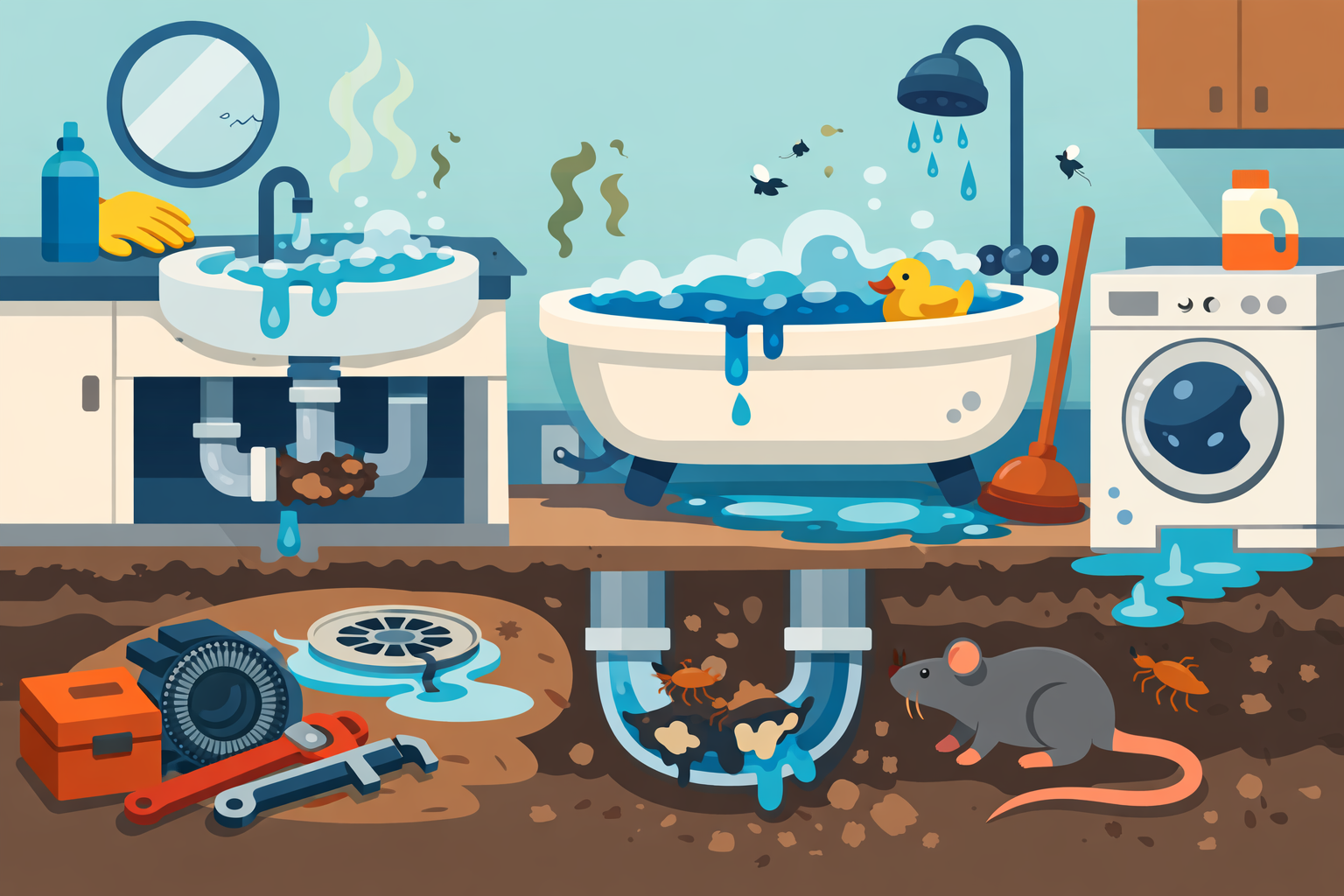
Drain issues rarely show up out of nowhere. In most cases, your plumbing gives off warning signs long before a full blockage or backup happens. The problem is that many homeowners ignore those signs, hoping a plunger or store-bought cleaner will solve everything.
Professional drain cleaning is not just about fixing a clog. It’s about restoring proper flow, preventing pipe damage, and protecting your home from costly plumbing emergencies. Knowing when to call a professional can save you time, money, and stress.
Below are the most common signs your drains need expert attention—and why acting early matters.
Slow Drains That Never Fully Clear
A slow drain is often the first sign of trouble. Water may eventually go down, but it lingers longer than it should.
Why slow drains happen
Over time, debris builds up inside your pipes. Soap residue, grease, food particles, hair, and mineral deposits gradually narrow the pipe’s interior. The result is restricted flow that worsens with continued use.
Why DIY fixes stop working
Chemical cleaners might offer short-term relief, but they rarely remove the full blockage. In many cases, they push debris further down the line, making future cleaning more difficult. When slow drains persist despite repeated attempts, it’s time to rely on professional plumbing services that address the entire pipe, not just the surface issue.
Frequent Clogs in Multiple Fixtures
A clogged sink once in a while is normal. Frequent clogs across different fixtures are not.
What multiple clogs are telling you
If your kitchen sink, bathroom sink, and shower all clog regularly, the issue is likely deeper in your plumbing system. This often points to a blockage in the main drain line rather than a localized problem.
Why this needs professional attention
Main line clogs require specialized tools and expertise. Ignoring them increases the risk of sewage backups and pipe damage. An experienced residential plumbing team can identify the blockage source and clear it safely without harming your pipes.
Gurgling Sounds Coming From Drains
Unusual noises are one of the most overlooked warning signs.
What causes gurgling drains
Gurgling occurs when air becomes trapped in your pipes due to a partial blockage. As water tries to pass through, it pulls air with it, creating bubbling or gurgling sounds.
Why noises should never be ignored
These sounds often appear before a complete blockage forms. Addressing the issue early can prevent more serious drainage problems and eliminate pressure buildup that could lead to cracked or leaking pipes.
Water Backing Up Into Sinks, Tubs, or Toilets
Backups are a clear sign that something is wrong—and often urgent.
Why backups happen
When water has nowhere to go, it reverses direction. This can happen due to severe clogs, collapsed pipes, or blockages in the sewer line.
The risks of waiting
Backups can cause water damage, contamination, and mold growth. They can also indicate underlying pipe issues that require immediate attention. Professional drain cleaning helps restore normal flow and prevents repeat incidents.
Persistent Foul Odors From Drains
Bad smells coming from your drains are never normal.
Common causes of drain odors
Odors typically come from decomposing organic material trapped inside the pipes. Grease, food waste, hair, and soap residue can all contribute. In some cases, sewer gas odors may indicate more serious problems.
Why cleaning alone may not fix it
Pouring hot water or baking soda might mask the smell temporarily, but it won’t eliminate the buildup causing it. A professional cleaning removes the source of the odor and restores proper airflow throughout your drainage system.
Standing Water Around Drains or Fixtures
Standing water is a strong indicator of restricted drainage.
Where this usually appears
You might notice water pooling in your shower, around floor drains, or near outdoor cleanouts. This often means the drain is unable to handle normal water flow.
Why this is a bigger issue than it seems
Standing water puts extra pressure on your plumbing system and can lead to leaks or pipe failures. Scheduling professional drain cleaning early helps prevent damage that could affect your entire home.
Recurring Toilet Problems
Toilets are designed to handle waste efficiently. When problems keep coming back, there’s usually an underlying issue.
Warning signs to watch for
- Frequent clogs
- Rising water levels after flushing
- Toilets that flush slowly or incompletely
Why toilets often reveal larger drain issues
Toilets connect directly to your main drain line. Repeated problems often indicate buildup or blockages further down the system. Addressing the issue promptly can prevent sewer backups and costly repairs.
Older Plumbing Systems With No Recent Cleaning
Age matters when it comes to drains.
Why older pipes clog more easily
Older plumbing systems often use narrower pipes or materials prone to corrosion and buildup. Over decades, debris accumulates and restricts flow even without obvious symptoms.
Preventive cleaning saves money
Routine drain cleaning helps extend the life of your plumbing system and reduces the likelihood of sudden failures. For older homes, periodic maintenance is one of the smartest ways to avoid emergency repairs.
Drain Problems After Heavy Water Use
If your drains struggle after laundry days or multiple showers, that’s a red flag.
What this indicates
Your plumbing system may not be able to handle peak water usage due to partial blockages. This often means your pipes are already compromised.
Why professional cleaning matters here
Clearing internal buildup improves water flow and ensures your drains perform properly even during heavy use. This is especially important for homes with older infrastructure or growing households.
Visible Leaks Near Drains or Pipes
Leaks and drain issues often go hand in hand.
How clogs contribute to leaks
When water can’t flow freely, pressure builds inside the pipes. Over time, this pressure can cause joints to loosen or pipes to crack, leading to leaks.
Getting to the root of the problem
Professional leak detection combined with drain cleaning ensures both the blockage and its consequences are addressed, preventing further damage and water loss.
When Drain Cleaning Reveals Bigger Plumbing Issues
Sometimes, clogged drains are just the beginning.
What professionals look for
During a camera inspection, plumbers can identify cracked pipes, root intrusion, misaligned joints, or collapsed sections that contribute to drainage problems.
Why this matters
Without a thorough inspection, recurring clogs may continue even after cleaning. Identifying structural issues early allows for targeted repairs and long-term solutions.
The Limits of DIY Drain Cleaning
DIY solutions can be helpful—but only to a point.
Common DIY methods and their drawbacks
- Chemical cleaners can corrode pipes
- Plungers often fail on deep blockages
- Drain snakes may damage older pipes
Why professional tools make a difference
Professionals use high-powered equipment designed to remove buildup safely and completely. This includes hydro jetting and advanced clog removals that restore full pipe diameter without causing damage.
How Professional Drain Cleaning Protects Your Home
Drain cleaning is more than a quick fix.
Long-term benefits
- Improved drainage performance
- Reduced risk of backups and leaks
- Extended pipe lifespan
- Fewer emergency plumbing calls
Peace of mind
Knowing your drains are clear allows you to use your plumbing system confidently, without worrying about unexpected issues.
When to Schedule Drain Cleaning Right Away
Certain situations require immediate action.
Call a professional if you notice:
- Multiple slow or clogged drains
- Repeated backups
- Sewage odors
- Water pooling near drains
- Unexplained leaks
Delaying service can turn manageable problems into major repairs.
Call Now for Same-Day Service
Listen to What Your Drains Are Telling You
Your plumbing system communicates through small warning signs long before serious damage occurs. Slow drains, recurring clogs, strange noises, and unpleasant odors are not inconveniences—they are signals.
Professional drain cleaning addresses problems at their source, protecting your pipes, your home, and your budget. Acting early keeps minor issues from becoming expensive emergencies and ensures your plumbing works the way it should.