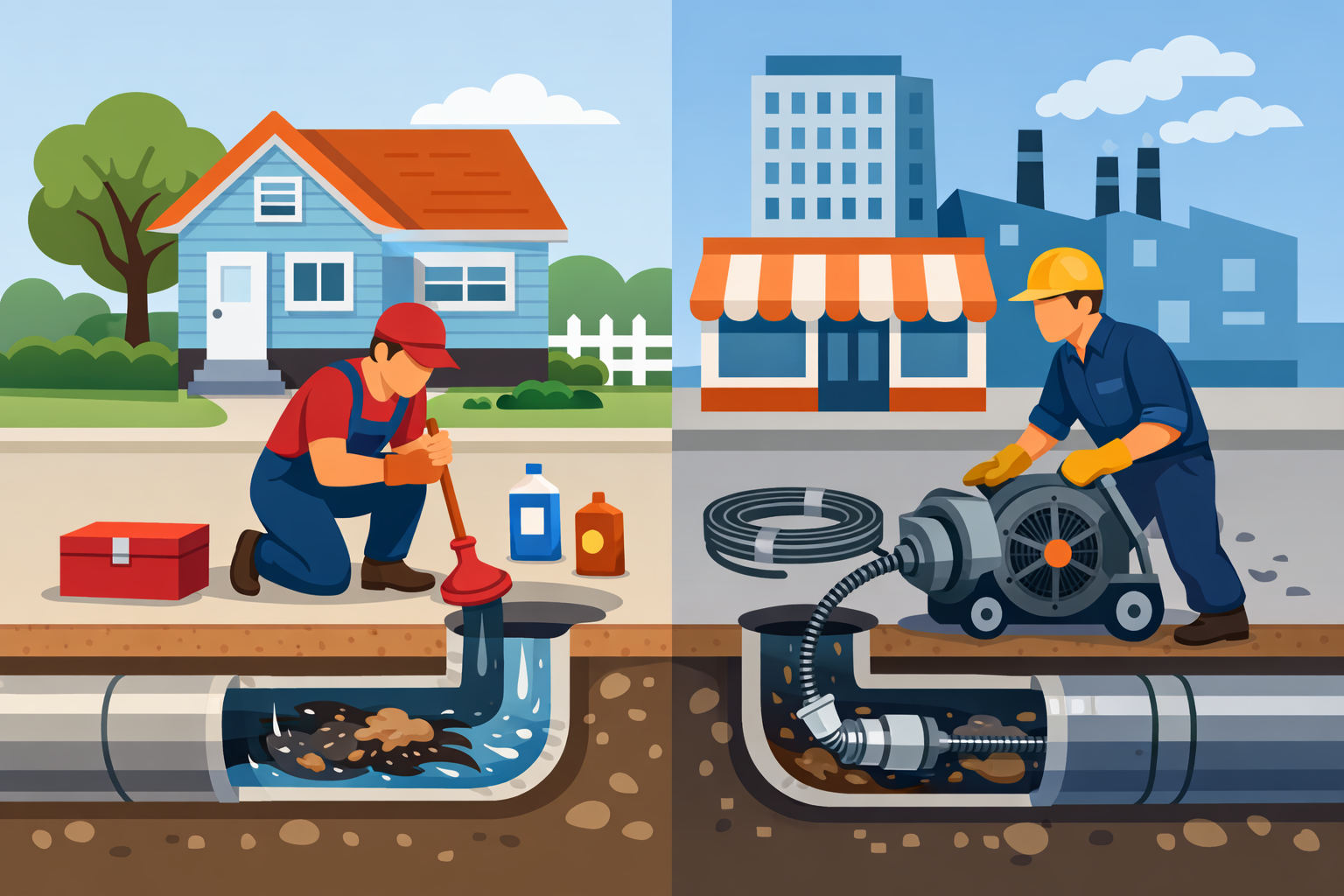
Drain issues can interrupt daily routines fast, whether it’s a slow bathroom sink at home or a blocked floor drain inside a busy restaurant. Understanding residential vs commercial drain cleaning helps property owners make better decisions about maintenance, repair timing, and long-term plumbing protection.
Both service types aim to restore proper water flow, but the scale, equipment, cleaning frequency, and complexity are very different. Knowing how these services compare helps homeowners and business owners prevent emergencies, reduce repair costs, and keep plumbing systems working efficiently.
What Drain Cleaning Actually Does
Drain cleaning removes buildup, debris, grease, and foreign materials that block pipes. Over time, drains naturally collect waste that slows water flow and eventually causes full blockages.
Common Causes of Drain Blockages
Across residential and commercial systems, clogs often develop from:
- Grease and cooking residue
- Hair and soap buildup
- Mineral deposits from hard water
- Food waste accumulation
- Flushed non-flushable materials
- Tree root intrusion into underground pipes
While these causes overlap, the volume and frequency are typically much higher in commercial settings.
What Is Residential Drain Cleaning?
Residential drain cleaning focuses on plumbing systems inside homes, townhouses, apartments, and small residential buildings. These systems usually handle moderate daily water usage.
Common Residential Drain Issues
Most homeowners deal with:
- Slow draining kitchen sinks
- Shower or bathtub backups
- Toilet clogs
- Laundry drain blockages
- Minor main line obstructions
Because residential plumbing systems are smaller and simpler, most blockages are localized and easier to diagnose.
Residential Cleaning Methods
Professional plumbers often use:
- Drain snakes and augers
- Safe drain treatments
- Hydro jetting for heavy buildup
- Camera inspections to locate hidden problems
When home clogs keep returning, professional clog repairs help resolve deeper pipe issues instead of just treating symptoms.
What Is Commercial Drain Cleaning?
Commercial drain cleaning applies to businesses like restaurants, hotels, office buildings, medical facilities, and multi-unit properties. These systems handle significantly higher usage volumes.
Typical Commercial Drain Problems
Commercial properties often face:
- Grease trap overflow
- Food waste pipe buildup
- High-traffic restroom drain wear
- Floor drain clogs
- Large main sewer line blockages
Since plumbing directly affects operations, commercial drain failures can quickly impact business revenue.
Major Differences Between Residential and Commercial Drain Cleaning
Understanding these differences helps property owners choose proper maintenance schedules and service strategies.
H3: Water Usage Volume
Residential plumbing experiences predictable usage patterns, usually peaking in the morning and evening.
Commercial plumbing runs continuously. Restaurants, for example, generate grease and food debris all day, creating constant pressure on drainage systems.
Higher usage directly increases clog risk and maintenance frequency.
H3: Plumbing System Size and Layout
Residential plumbing systems typically include:
- Smaller pipe diameters
- Shorter pipe runs
- Fewer branch connections
Commercial plumbing systems often include:
- Large-diameter main lines
- Multiple drainage zones
- Grease trap systems
- Floor drain networks
- Industrial plumbing fixtures
This complexity requires specialized diagnostic tools and cleaning equipment.
H3: Maintenance Frequency
Residential cleaning is usually reactive. Homeowners call when they notice a problem.
Commercial cleaning is typically preventive. Many businesses schedule monthly or quarterly maintenance to prevent disruptions.
Preventive cleaning is especially important for food service, healthcare, and hospitality businesses.
H3: Equipment and Technology Differences
Residential jobs often use standard drain machines and inspection cameras.
Commercial cleaning may require:
- Industrial hydro jetting systems
- High-capacity vacuum equipment
- Root cutting machinery
- Advanced pipe inspection cameras
These tools allow plumbers to clear large blockages safely and efficiently.
H3: Health Code and Compliance Requirements
Commercial properties must often follow strict sanitation and safety regulations.
Restaurants and medical facilities must maintain clean drain systems to meet local health standards. Residential properties typically face fewer regulatory requirements.
Why Commercial Drains Clog Faster
Commercial environments produce more debris in shorter time periods.
Continuous Usage
More users mean more waste entering the drainage system every hour.
Grease and Food Waste Buildup
Grease solidifies inside pipes and traps other debris, creating stubborn blockages.
Chemical Exposure
Industrial cleaners can react with buildup and contribute to pipe damage over time.
Warning Signs You Need Professional Drain Cleaning
Early detection helps avoid major plumbing failures.
Slow Drain Performance
Water draining slower than normal indicates early buildup.
Repeated Blockages
Recurring clogs often signal deeper structural pipe issues.
Drain Odors
Bad smells usually indicate trapped organic material or bacteria growth.
Standing Water Near Drains
Pooling water suggests severe blockage or pipe collapse.
Get Fast, Trusted Plumbing Help Now
Call (786) 709-0426
Cost Differences Between Residential and Commercial Cleaning
Costs vary depending on pipe size, blockage severity, and equipment needed.
Residential Cost Factors
- Drain location
- Accessibility
- Type of blockage
- Cleaning method required
Commercial Cost Factors
- System size
- Number of drain lines
- Grease trap cleaning needs
- Preventive maintenance schedules
- Emergency response requirements
Routine commercial maintenance often reduces long-term repair costs significantly.
Preventive Drain Maintenance Strategies
Preventive care reduces emergency repair risks and extends pipe lifespan.
Residential Prevention Tips
- Avoid pouring grease into drains
- Install drain strainers
- Flush drains with hot water weekly
- Schedule yearly professional inspections
Commercial Prevention Tips
- Maintain grease traps consistently
- Schedule regular hydro jet cleaning
- Train staff on proper disposal methods
- Monitor high-use drains closely
Why Professional Drain Cleaning Matters
Professional services go beyond removing clogs.
Pipe Protection
Proper cleaning methods remove buildup without damaging pipe walls.
Early Damage Detection
Camera inspections identify cracks, root intrusion, and pipe collapse early.
Better Water Flow Efficiency
Clean pipes reduce system strain and improve overall plumbing performance.
How to Choose the Right Drain Cleaning Company
Look for providers that offer:
- Licensed plumbing technicians
- Emergency service availability
- Modern cleaning technology
- Transparent pricing
- Service warranties
Reliable plumbing service helps prevent repeated problems and unexpected system failures.
When to Schedule Drain Cleaning Services
Residential Properties
Schedule service:
- Once per year for prevention
- Immediately if clogs repeat
- Before buying or selling property
Commercial Properties
Most businesses benefit from:
- Monthly or quarterly maintenance
- Scheduled grease trap cleaning
- Annual full system inspection
The Future of Drain Cleaning Technology
Modern plumbing technology continues improving efficiency and safety.
Advanced Camera Inspection
High-definition imaging allows precise blockage detection.
Eco-Friendly Cleaning Solutions
Many companies now use environmentally safe cleaning methods.
Smart Flow Monitoring
Some commercial properties use sensors to detect early flow problems.
Get Fast, Trusted Plumbing Help Now
Call (786) 709-0426
Final Thoughts
Residential and commercial drain cleaning share the same goal: keeping water flowing properly and preventing costly damage. However, system size, usage levels, and maintenance requirements create major service differences.
Homeowners usually need occasional service for isolated clogs, while businesses require structured preventive maintenance. Understanding these differences helps property owners protect plumbing systems, reduce long-term costs, and avoid emergency repairs.
Proactive drain care is one of the smartest investments you can make in your property’s plumbing health.