Heavy rain is a normal part of life in South Florida. Between tropical storms, sudden downpours, and hurricane season, homeowners are used to dealing with water. But while most people focus on roof leaks or yard flooding, there’s another system taking a serious hit every time it rains—your sewer system.
If you’ve ever noticed slow drains, strange gurgling sounds, or water backing up during a storm, those aren’t random issues. They’re often signs that your sewer lines are struggling to keep up with the increased pressure caused by heavy rainfall.
In areas like Homestead and Miami-Dade, the combination of high groundwater levels, aging infrastructure, and dense landscaping creates the perfect conditions for sewer problems. What starts as a minor inconvenience can quickly turn into a major and expensive repair if ignored.
This guide breaks down exactly how heavy rain affects your sewer system, what warning signs to watch for, and what you can do to protect your home before problems escalate.
Why Heavy Rain Puts Stress on Sewer Systems
Heavy rain doesn’t just sit on the surface—it seeps into the ground, enters underground systems, and disrupts the normal flow of wastewater. Understanding how this happens is key to preventing damage.
Groundwater Saturation and Pipe Pressure
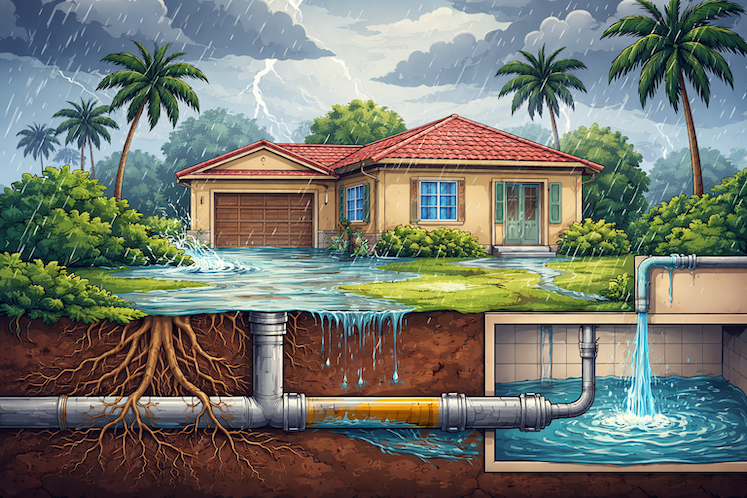
When the ground becomes saturated during heavy rain, the water table rises. This puts additional pressure on underground sewer pipes, especially older ones.
Over time, small cracks or loose joints in pipes allow groundwater to seep in. This process, known as infiltration, increases the volume of water inside your sewer system beyond what it was designed to handle.
The result is simple: your pipes become overloaded.
Sewer System Overload and Backflow
Municipal sewer systems have limits. During intense rainfall, stormwater can mix with wastewater, causing the system to reach capacity quickly.
When that happens, water has nowhere to go. Instead of flowing away from your home, it can reverse direction and push back through your plumbing system.
This is when homeowners experience:
- Water backing up into tubs or sinks
- Toilets bubbling unexpectedly
- Slow drainage throughout the house
These aren’t isolated issues—they’re signs of system-wide pressure.
Tree Root Intrusion Gets Worse
South Florida’s lush landscaping plays a role here as well. During rainy periods, tree roots grow faster and search for moisture.
Sewer pipes, especially those with small cracks, become an easy target. Roots can enter the pipe, expand, and eventually block or damage the line.
What makes this worse is that you may not notice the issue until a major clog or backup occurs.
Aging Infrastructure Adds Risk
Many homes in South Florida still rely on older piping materials like cast iron or clay. These materials degrade over time and are more vulnerable during heavy rain events.
If your system is already weakened, heavy rainfall can expose those vulnerabilities quickly. In some cases, it can even lead to pipe collapse.
If you’re unsure whether your system is still reliable, reviewing a detailed pipe repair decisions guide can help you understand when replacement might be the better option.
Common Warning Signs During Rainy Weather
Sewer problems rarely appear without warning. The key is knowing what to look for, especially during storms.
Slow Drains Throughout the House
If multiple drains start slowing down at the same time, it’s usually not a simple clog. It often points to a larger issue in the main sewer line.
Gurgling Sounds in Pipes
Hearing bubbling or gurgling noises from your toilet or sink is a sign that air is trapped in the system. This often happens when water flow is restricted or reversed.
Water Backing Up in Fixtures
One of the most obvious signs of trouble is water backing up into tubs, sinks, or floor drains. This indicates that wastewater cannot exit your home properly.
Unpleasant Sewer Odors
If you notice a strong sewer smell indoors, especially during or after rain, it could mean that wastewater is not flowing correctly through your system.
Toilets Acting Unusually
Toilets that bubble, flush slowly, or fluctuate during storms are often reacting to pressure changes in the sewer line.
What Happens If You Ignore the Problem
It’s tempting to assume everything will go back to normal once the rain stops. Unfortunately, sewer issues tend to get worse over time.
Sewage Backups Inside the Home
One of the most serious outcomes is sewage backing up into your living space. This is not only unpleasant but also poses significant health risks.
Structural Damage to Your Property
Excess moisture can weaken your home’s foundation, damage flooring, and lead to mold growth. What starts underground can quickly affect your entire home.
Escalating Repair Costs
Small issues like minor cracks or partial blockages can turn into major repairs if left untreated. A simple fix today could become a full sewer line replacement later.
Environmental Concerns
Sewer overflows can contaminate soil and groundwater, impacting the surrounding environment and potentially violating local regulations.
How to Protect Your Sewer System During Heavy Rain
The good news is that there are practical steps you can take to reduce the risk of sewer problems.
Schedule Regular Inspections
Routine inspections allow professionals to detect early signs of damage, blockages, or root intrusion before they become serious.
Camera inspections are especially effective for identifying hidden issues.
Install a Backwater Valve
A backwater valve prevents sewage from flowing back into your home during periods of high system pressure. It’s one of the most effective preventive measures for flood-prone areas.
Be Strategic with Landscaping
Avoid planting large trees near sewer lines. Roots are one of the leading causes of pipe damage in South Florida.
Keep Your Drains Maintained
Regular drain cleaning helps prevent buildup that can worsen during heavy rainfall.
Upgrade Outdated Systems
If your home still uses an older septic system or aging pipes, upgrading can significantly improve performance and reliability.
If you’re planning long-term upgrades, understanding the sewer conversion process can give you valuable insight into modern solutions.
When It’s Time to Call a Professional
Some situations require immediate attention, especially during storm season.
You should call a plumber if you notice:
- Sewage backing up into your home
- Multiple plumbing fixtures failing at once
- Persistent foul odors
- Water pooling near drains or outside your property
These are signs of a serious issue that won’t resolve on its own.
If you’re dealing with any of these problems, it’s best to schedule a professional inspection through trusted local plumbing services to prevent further damage.
If you’re facing any of these issues, scheduling a professional inspection with a trusted local plumber is the best way to prevent further damage.
Stay Ahead of Rain-Related Sewer Problems
Heavy rain is unavoidable in South Florida, but sewer damage doesn’t have to be. The key is understanding how your system responds under pressure and taking proactive steps to prevent problems.
By recognizing early warning signs, maintaining your system, and addressing issues quickly, you can avoid costly repairs and protect your home from serious damage.
Sewer problems rarely fix themselves. The sooner you act, the easier—and more affordable—it is to resolve them.