Most people do not think twice about what goes into the toilet. If it disappears with a flush, it is easy to assume there is no problem. In reality, toilets and sewer lines are designed to handle only human waste and toilet paper. Everything else increases the risk of clogs, pipe damage, sewer backups, and expensive plumbing repairs.
That is why understanding what not to flush down your toilet matters so much. A single bad habit may not seem serious at first, but repeated flushing of the wrong items can create blockages deep in your plumbing system. In some cases, the problem stays hidden until your drains slow down, your water bill rises, or sewage starts backing up into your home.
This guide explains what should never be flushed, why these items are harmful, and how homeowners can protect their plumbing system with smarter daily habits. If you want to avoid toilet clogs, reduce plumbing emergencies, and keep your home’s drains working properly, these are the toilet flushing mistakes you need to stop making.
Why Flushing the Wrong Things Causes Big Plumbing Problems
Toilets are built to move wastewater through a drain line quickly, but they are not garbage disposals. Even items labeled disposable can behave very differently once they enter your plumbing system.
Some materials do not break down at all. Others absorb water, expand, snag inside bends in the pipe, or combine with grease and debris already in the sewer line. Over time, that buildup creates stubborn blockages that can lead to overflowing toilets, damaged pipes, and expensive cleanup.
The problem becomes even worse in older homes or properties with aging sewer lines. If your plumbing already has cracks, scale buildup, or root intrusion, flushing the wrong items adds even more stress to a system that may already be vulnerable.
The Only Things You Should Flush
The safest rule is simple. Toilets are only meant to handle:
- Human waste
- Toilet paper
That is it.
Many homeowners are surprised by how short this list is, especially because so many products are marketed as flushable or convenient for bathroom disposal. But the plumbing industry sees the same result again and again: products that claim to be safe for flushing often create serious drain and sewer problems.
When in doubt, throw it in the trash instead of flushing it.
Wipes Are One of the Biggest Offenders
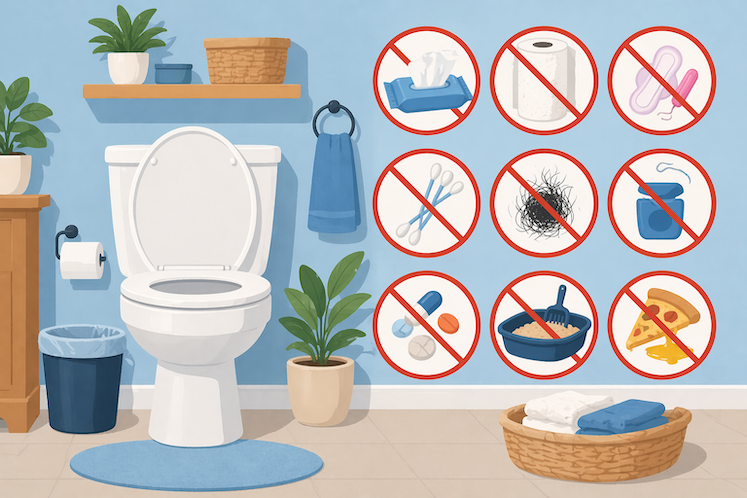
One of the most common causes of toilet and sewer clogs is the so-called flushable wipe. This includes baby wipes, cleaning wipes, makeup wipes, disinfecting wipes, and personal hygiene wipes.
Even when a package says flushable, that does not mean the product breaks down like toilet paper. Most wipes stay much stronger for much longer. Instead of dissolving, they travel through the pipes in sheets, catch on rough spots, and collect with other debris until a blockage forms.
Why wipes are so harmful
Wipes are designed to stay durable when wet. That makes them useful for cleaning, but terrible for plumbing. Once flushed, they can:
- Snag inside bends or joints
- Combine with grease and waste
- Create dense clumps in sewer lines
- Cause backups in home plumbing and municipal systems
If your household uses wipes regularly, keeping a trash bin in the bathroom is one of the easiest ways to prevent future plumbing trouble.
Paper Towels, Tissues, and Napkins Do Not Break Down Properly
A lot of people assume paper products are all the same. They are not.
Toilet paper is specifically made to break apart quickly in water. Paper towels, facial tissues, and napkins are made to stay stronger, even when wet. That means they can move through the toilet bowl initially but start causing problems once they reach the drain line.
These products may clump together, trap other debris, and create obstructions that become harder to remove over time. Repeated flushing of these materials often leads to slow drains and recurring toilet clogs.
If it is not toilet paper, it should not be flushed.
Feminine Hygiene Products Should Never Go Down the Toilet
Tampons, pads, liners, wrappers, and applicators are all major plumbing hazards. These products are designed to absorb moisture, which means they expand rather than dissolve.
Once flushed, they can swell inside pipes and block water flow. Even if they make it beyond the toilet trap, they can still get stuck deeper in the plumbing or sewer line. Over time, these products often become the core of much larger clogs.
This is one of the most important rules for protecting a toilet and drain system. Feminine hygiene products belong in the trash, never in the toilet.
Cotton Balls, Swabs, and Dental Floss Can Build Up Fast
Small bathroom items may not seem dangerous, but they can create serious issues inside plumbing lines.
Cotton balls and cotton swabs do not dissolve in water. They collect easily in pipes and can lodge in narrow sections of the drain. Dental floss is another overlooked problem because it does not break down and can wrap around other debris, helping clogs form more quickly.
These items may look minor one flush at a time, but repeated disposal through the toilet adds up. A trash can is always the safer option.
Hair Is Better in the Trash, Not the Toilet
Hair causes problems in every type of drain, including toilets. It does not dissolve, and it easily tangles with other waste moving through the plumbing system.
Once hair begins to collect, it can trap wipes, paper products, and other debris. This creates a net-like blockage that becomes difficult to clear without professional equipment.
Whether it comes from grooming, shaving, or cleaning out a hairbrush, hair should always be thrown away rather than flushed.
Medications and Chemicals Should Not Be Flushed
Flushing old medication may seem like a quick way to get rid of it, but it is not safe for plumbing or the environment.
Pills, liquids, and chemical substances can enter the wastewater system and create issues beyond your home. Some substances are not fully removed during treatment, which can affect local water quality. Certain chemicals can also damage pipes, seals, or septic systems.
The same warning applies to cleaning products, bleach tablets not designed for toilet systems, paint-related materials, and other chemical waste. These products should be disposed of according to local guidelines, not sent down the toilet.
Cat Litter Is Especially Bad for Toilets
Some cat litter brands claim to be flushable, but homeowners should be extremely cautious. Cat litter is designed to absorb liquid and form clumps. That makes it one of the worst possible materials for a plumbing line.
Even small amounts can settle in the drain, expand, and start a blockage. In homes with septic systems, the problem can be even more serious. Waste from litter boxes should always be bagged and disposed of in the trash.
Food Scraps and Grease Do Not Belong in the Toilet Either
Some homeowners use the toilet as a backup disposal option for food waste, especially when cleaning out old leftovers. That is a mistake.
Food scraps can swell, collect, and combine with other flushed items. Grease and oil can cool and stick to the inside of pipes, helping clogs form faster. Even soft food can become part of a larger blockage once it mixes with wipes, hair, or paper products.
Toilets are not built for kitchen waste. Food belongs in the trash or compost, depending on the material.
“Flushable” Labels Can Be Misleading
One of the biggest sources of confusion for homeowners is the word flushable. It sounds reassuring, but it does not guarantee that a product is safe for your plumbing system.
A product may technically pass through a toilet, but that does not mean it breaks down properly in pipes or sewer lines. Many flushable products stay intact long enough to contribute to blockages, especially in older plumbing systems.
That is why plumbers often recommend ignoring the marketing and sticking to the safest standard possible: only flush human waste and toilet paper.
Warning Signs That Something Has Already Caused a Problem
If the wrong items have been going down the toilet for a while, your plumbing system may already be showing signs of stress. Catching those signs early can help you avoid a more serious backup.
Common signs of a toilet or drain problem
Watch for these issues:
- Frequent toilet clogs
- Slow flushing
- Rising water in the bowl
- Gurgling sounds from nearby drains
- Bad odors coming from the bathroom
- Water backing up in tubs or sinks
- Repeated need for plunging
These warning signs often mean the issue is deeper than the toilet itself. A blockage could be forming in the branch line or main sewer line, especially if multiple fixtures are affected at once.
Hidden Plumbing Issues Can Raise Your Water Bill
Not every toilet-related plumbing problem shows up as an obvious clog. In some cases, flushing habits contribute to pressure on an already compromised system, making hidden leaks or drain issues harder to notice until they start costing you money.
If you have noticed a spike in water usage without a clear explanation, it may be worth learning how hidden plumbing leaks can quietly affect your monthly bill. Problems behind walls, under floors, or within damaged lines often go unnoticed longer than homeowners expect.
The longer these issues stay hidden, the more expensive they can become.
Toilet Habits Matter Even More in Older Homes
If you are living in an older property, your plumbing system may be less forgiving than you think. Aging pipes, partial blockages, corrosion, and older sewer materials can make it much easier for bad flushing habits to turn into major repairs.
That is especially important for buyers evaluating a property before moving in. A professional inspection can reveal hidden drain and sewer issues that are not obvious during a walkthrough. For anyone purchasing a home, a camera inspection can provide a clearer look at the condition of the plumbing system before problems become your responsibility.
A toilet may seem to flush normally on the surface while the main line is already developing serious trouble underneath.
Storm Season Can Make Sewer Problems Worse
Homeowners in South Florida need to be even more careful during storm season. Heavy rain can put extra pressure on drainage systems, and any weakness in your plumbing becomes more likely to show up when the weather turns severe.
If your pipes are already stressed by clogs, buildup, or improper flushing habits, storm conditions can make the risk of damage much worse. It helps to understand how storm season pipe risks can affect plumbing systems when heavy weather and existing vulnerabilities combine.
Strong plumbing habits matter year-round, but they become even more important when seasonal conditions increase the chance of backups and pipe failure.
Better Bathroom Habits That Protect Your Plumbing
Preventing toilet clogs does not require complicated maintenance. It mostly comes down to consistent habits.
Smart flushing habits for every household
Use these simple rules to protect your plumbing:
- Flush only human waste and toilet paper
- Keep a trash bin in every bathroom
- Teach children what should never be flushed
- Avoid relying on flushable labels
- Pay attention to slow flushing or repeated clogs
- Schedule plumbing inspections if problems keep returning
These small habits can make a major difference over time. They help prevent blockages, reduce emergency calls, and keep your toilet and sewer system working more reliably.
When It Is Time to Call a Professional Plumber
Some toilet issues can be handled with a plunger, but recurring problems usually point to something deeper. If your toilet clogs often, if multiple drains are acting up, or if sewage smells are coming from the bathroom, it is best to have the system inspected.
A licensed plumber can determine whether the issue is a local toilet blockage, a drain line problem, or a larger sewer issue affecting the home. Waiting too long can turn a simple repair into water damage, sanitation problems, and more expensive restoration work.
Professional help is especially important if you are dealing with older pipes, a history of backups, or unexplained drainage problems that keep returning.
Final Thoughts on What Not to Flush Down Your Toilet
Knowing what not to flush down your toilet is one of the simplest ways to protect your plumbing system. The rule is straightforward, but it matters more than many homeowners realize. Toilets are only meant for human waste and toilet paper. Everything else increases the chance of clogs, backups, and costly repairs.
Wipes, paper towels, feminine hygiene products, cotton items, floss, hair, chemicals, cat litter, and food waste all create unnecessary risk. Even products advertised as flushable can cause serious trouble once they move into your pipes.
The good news is that preventing these issues is simple. Better daily habits, a bathroom trash bin, and fast action when warning signs appear can save you from major plumbing headaches later. When in doubt, do not flush it.