A toilet that won’t stop running is more than just an annoying background noise. It can quietly waste hundreds of gallons of water a day, drive up your utility bill, and signal deeper plumbing issues inside your tank. If your toilet keeps running non-stop, it’s important to understand what’s causing it and whether it’s a quick fix or a sign you need professional help.
In this guide, we’ll break down why toilets run continuously, how to troubleshoot the problem step by step, when a DIY fix makes sense, and when it’s time to call an experienced plumber.
Why a Running Toilet Is a Bigger Problem Than You Think
At first glance, a running toilet seems minor. But even a small internal leak can waste significant water over time.
A constantly running toilet often means water is leaking from the tank into the bowl. That forces the fill valve to keep cycling, refilling the tank again and again. The result is:
- Higher water bills
- Unnecessary strain on internal components
- Potential wear on your plumbing system
- Risk of hidden leaks worsening over time
If the issue persists, it may also point to pressure imbalances, aging parts, or underlying drainage concerns that require further inspection.
How a Toilet Actually Works
Before diagnosing the issue, it helps to understand the basics.
The Tank and Bowl System
Your toilet has two main components:
- The tank (stores water for flushing)
- The bowl (receives and drains waste)
When you flush, water from the tank flows into the bowl, triggering a siphon effect that clears waste through the drain.
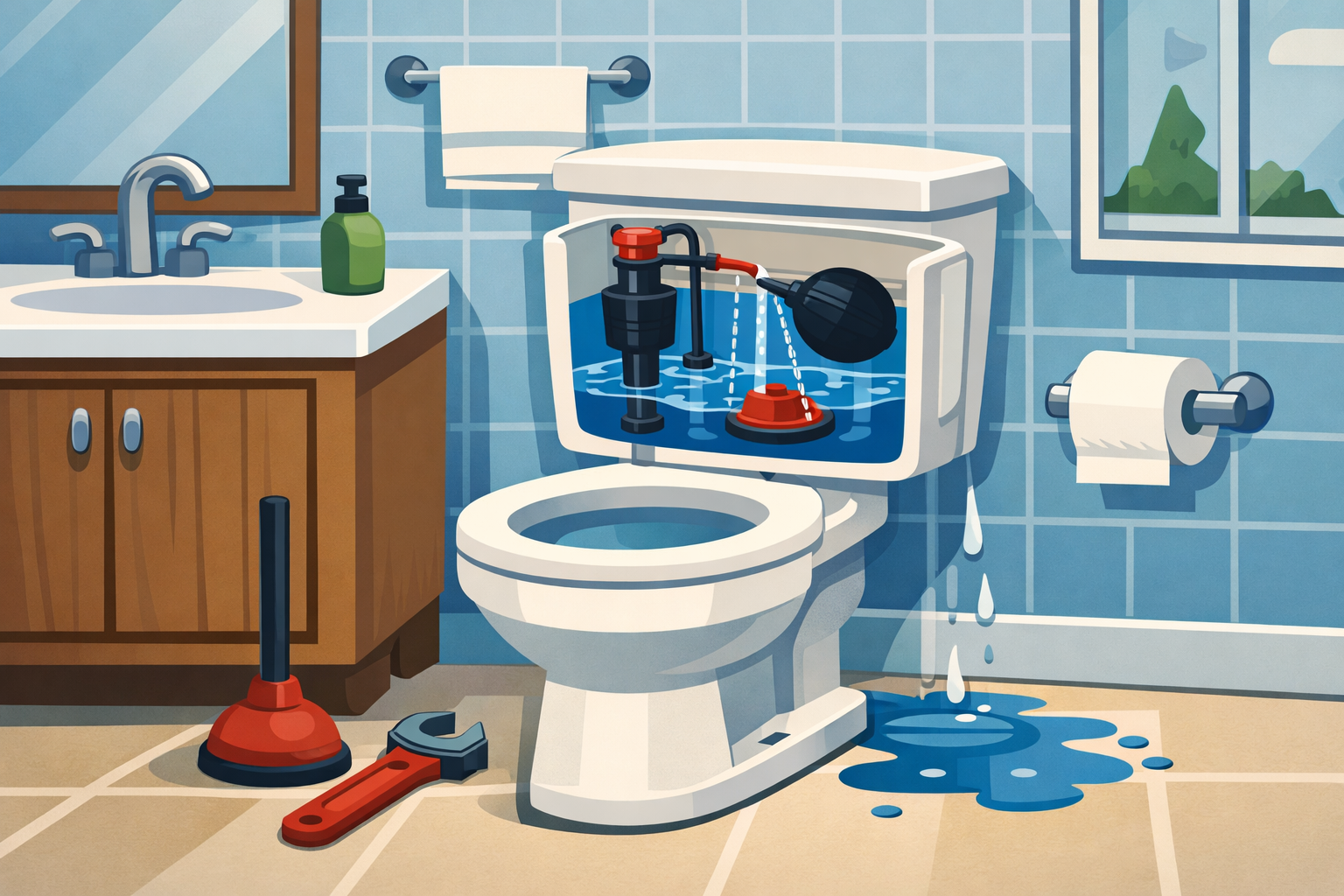
Key Internal Parts That Cause Running
Most non-stop running issues come from one of these components:
- Flapper
- Fill valve
- Float
- Overflow tube
- Flush chain
When any of these parts malfunction, water can continuously leak into the bowl.
Most Common Reasons Your Toilet Keeps Running
Let’s go through the top causes and how to identify them.
Worn or Warped Flapper
The flapper is the rubber seal at the bottom of the tank. It lifts when you flush and then seals the tank afterward.
Over time, flappers deteriorate due to:
- Mineral buildup
- Age and cracking
- Warping from constant exposure to water
If the flapper doesn’t seal tightly, water slowly leaks into the bowl, triggering constant refilling.
How to check:
Add a few drops of food coloring into the tank and wait 15–20 minutes. If the color appears in the bowl without flushing, your flapper is likely the issue.
Faulty Fill Valve
The fill valve controls how water refills the tank after a flush.
If it’s malfunctioning, you may hear:
- Hissing sounds
- Constant trickling
- Intermittent refilling
A worn fill valve can cause inconsistent water levels and continuous cycling.
In some cases, replacing the fill valve is straightforward. However, persistent refill problems may require deeper evaluation to rule out pressure or supply line concerns.
Incorrect Float Height
The float determines when the tank stops filling. If it’s set too high, water rises into the overflow tube and drains continuously.
This causes the fill valve to keep adding water, creating an endless loop.
Quick fix:
Adjust the float lower so water stops about one inch below the overflow tube.
Loose or Misaligned Chain
The chain connects the flush handle to the flapper.
If the chain is:
- Too tight, the flapper won’t fully seal
- Too loose, it may get stuck underneath
Either scenario prevents proper sealing and allows water to leak.
A simple chain adjustment can often resolve the issue in minutes.
Cracked Overflow Tube
If the overflow tube is cracked or damaged, it may allow water to escape constantly.
This is less common but can occur in older toilets or units exposed to harsh water conditions.
If you suspect internal structural damage, a professional assessment is recommended.
Step-by-Step: How to Fix a Running Toilet
If you’re comfortable with basic tools, here’s how to approach the repair safely.
Step 1: Turn Off the Water Supply
Locate the shut-off valve behind the toilet and turn it clockwise.
This prevents flooding while you inspect internal parts.
Step 2: Inspect the Flapper
Check for:
- Visible cracks
- Warping
- Mineral buildup
If worn, replace it. Flappers are inexpensive and widely available.
Step 3: Adjust the Float
Make sure water stops filling below the overflow tube.
If the tank is overfilling, adjust the float screw or clip mechanism.
Step 4: Test the Fill Valve
Turn the water back on and observe.
If refilling is erratic or constant, the fill valve may need replacement.
Step 5: Flush and Monitor
After repairs, flush several times and listen for continued running.
If the toilet still cycles intermittently, the issue may be deeper than a simple component swap.
When DIY Fixes Aren’t Enough
While many running toilet issues are minor, recurring problems may signal larger plumbing concerns.
You should call a professional if:
- The toilet continues running after replacing parts
- You hear knocking or pressure-related noises
- Multiple fixtures in your home have pressure issues
- The toilet leaks at the base
Sometimes what looks like a flapper issue may connect to supply line pressure irregularities or drainage complications.
If you suspect broader plumbing concerns, professional camera inspection tools can identify hidden pipe issues inside walls or underground.
Could a Running Toilet Be a Sign of Bigger Plumbing Issues?
In some homes, yes.
Recurring internal failures may stem from:
- Hard water mineral buildup
- Corroded supply lines
- Inconsistent water pressure
- Aging plumbing infrastructure
If your home is older or has frequent plumbing repairs, it may be worth scheduling a full system evaluation.
For example, if your running toilet is paired with inconsistent hot water performance, there could be overlapping issues within your water heater system or pressure regulation.
Addressing plumbing holistically often prevents repeat service calls.
How Much Water Does a Running Toilet Waste?
A continuously running toilet can waste between 200 and 4,000 gallons per day depending on severity.
Even a slow internal leak can add significant cost over a month.
Beyond utility bills, wasted water increases environmental impact and stresses municipal water systems.
Fixing the issue quickly saves money and prevents unnecessary wear on your plumbing components.
Preventing Future Toilet Problems
Routine maintenance helps reduce running toilet issues.
Replace Aging Internal Parts
Flappers and fill valves typically last 3–5 years depending on water quality.
Proactive replacement prevents sudden failures.
Address Hard Water Buildup
Minerals from hard water can degrade rubber seals and clog valves.
Installing a filtration or water treatment solution can extend the life of fixtures.
Schedule Periodic Plumbing Inspections
Even if everything appears functional, periodic inspections can catch slow leaks early.
An experienced plumber can identify early warning signs before they turn into larger repairs.
If you’re dealing with repeated plumbing issues, scheduling a comprehensive check ensures everything from your toilet to your supply lines is functioning correctly.
Repair or Replace the Toilet?
If your toilet is:
- Over 15–20 years old
- Frequently needing internal repairs
- Cracked or unstable
Replacement may be more cost-effective long term.
Modern toilets are more water-efficient and often solve chronic running problems caused by outdated internal designs.
Final Thoughts
A toilet that keeps running non-stop is usually caused by a worn flapper, faulty fill valve, or misadjusted float. In many cases, the fix is simple and inexpensive.
However, if the problem persists or keeps returning, it may indicate deeper plumbing issues that require professional evaluation. Ignoring it can lead to higher water bills, internal damage, and recurring frustration.
Address the issue early, monitor performance after repairs, and don’t hesitate to bring in an expert if the problem doesn’t resolve. A small fix today can prevent a larger repair tomorrow.