Running a commercial property in South Florida comes with constant pressure to keep operations smooth, tenants satisfied, and maintenance costs under control. One overlooked leak, clogged drain, or hidden pipe issue can quickly escalate into expensive downtime and property damage.
For property owners and maintenance teams, understanding the difference between proactive upkeep and reactive fixes is critical. A smart plumbing strategy not only protects your building but also helps avoid disruptions that impact employees, customers, and daily operations.
This guide breaks down the real cost differences between preventive maintenance and urgent repair situations, how South Florida’s climate affects plumbing systems, and what facility teams should prioritize to keep systems operating efficiently year-round.
Why Plumbing Maintenance Matters in South Florida
South Florida properties face unique challenges that accelerate wear on plumbing systems. High humidity, heavy rainfall, salt exposure near coastal areas, and aging infrastructure can all increase the risk of leaks, corrosion, and drainage failures.
For commercial properties, plumbing issues rarely stay isolated for long. A small problem can lead to water damage, mold growth, business interruptions, or higher utility costs if ignored.
That’s why many property owners rely on scheduled inspections instead of waiting for costly failures to occur.
Understanding Preventive Plumbing Maintenance
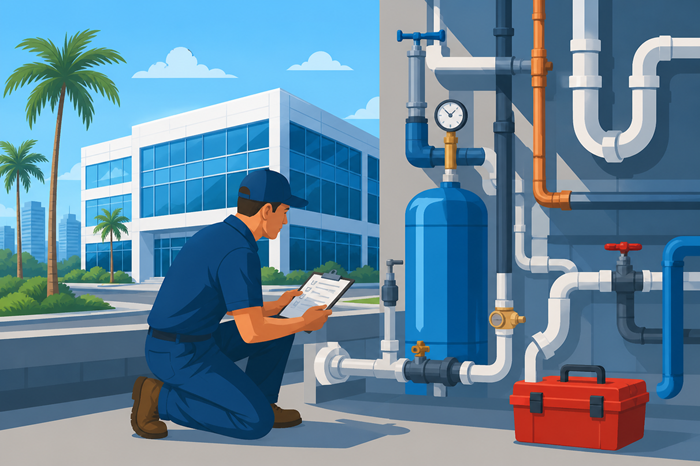
Preventive maintenance focuses on identifying small issues before they become major emergencies. Rather than reacting to damage after it happens, maintenance teams routinely inspect, clean, and test plumbing systems throughout the property.
A proactive plan typically includes:
- Pipe inspections
- Leak detection
- Drain cleaning
- Water pressure testing
- Fixture inspections
- Valve maintenance
- Sewer line evaluations
- Water heater servicing
For larger properties, consistent upkeep reduces unexpected downtime and extends the lifespan of plumbing infrastructure.
Benefits of Preventive Maintenance
Lower Long-Term Costs
Routine inspections are significantly cheaper than repairing major water damage or replacing failed systems. Catching a slow leak early can prevent thousands of dollars in structural repairs.
Reduced Operational Disruptions
Hotels, office buildings, retail spaces, and healthcare facilities depend on uninterrupted plumbing access. Scheduled maintenance minimizes unexpected shutdowns.
Better Water Efficiency
Many commercial buildings waste water through unnoticed leaks or inefficient fixtures. Property owners looking to reduce water bills often start with preventative plumbing upgrades and regular system checks.
Improved System Lifespan
Pipes, valves, and fixtures last longer when maintained properly. Preventive care reduces corrosion buildup and unnecessary strain on plumbing systems.
What Counts as an Emergency Plumbing Situation?
Emergency issues happen when plumbing failures require immediate attention to prevent safety hazards, severe damage, or business interruptions.
Examples include:
- Burst pipes
- Major leaks
- Sewer backups
- Overflowing toilets
- Water heater failures
- Flooding from broken lines
- Sudden loss of water pressure
These problems usually demand immediate service and can become expensive very quickly.
Many property owners search for an emergency plumber near me when urgent problems suddenly shut down part of a building or threaten equipment and inventory.
Preventive Maintenance vs. Reactive Repairs
Understanding the financial and operational differences between proactive care and emergency fixes helps property managers make smarter budgeting decisions.
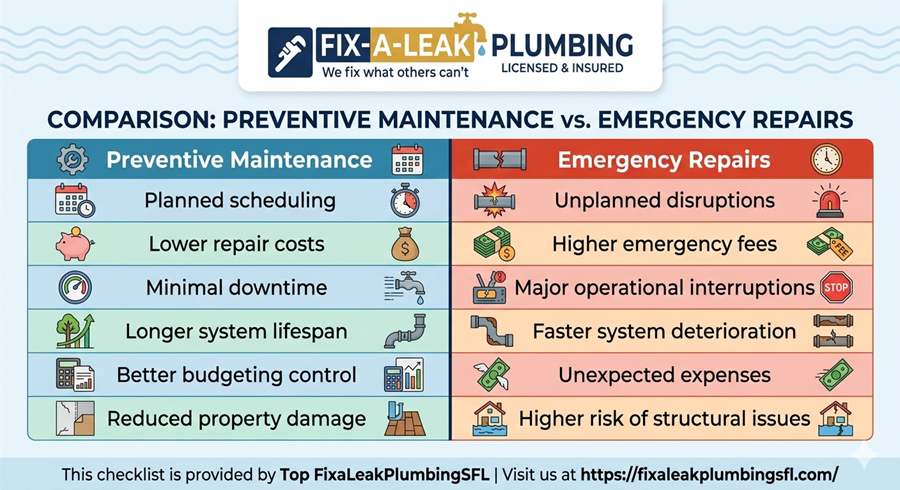
The most effective strategy is not choosing one over the other. Instead, successful facilities prioritize prevention while still having an emergency response plan in place.
South Florida’s Climate Creates Extra Plumbing Risks
Commercial properties in South Florida deal with environmental conditions that can rapidly accelerate plumbing problems.
Heavy Rain and Flooding
Frequent storms can overload drainage systems and expose weaknesses in sewer lines. Backflow prevention becomes especially important during hurricane season.
Salt Air Corrosion
Coastal buildings often experience faster pipe deterioration due to salt exposure. Metal components may corrode more quickly without routine inspections.
Hard Water Buildup
Mineral-heavy water contributes to scale buildup inside pipes and fixtures, reducing water flow and efficiency over time.
High Humidity
Excess moisture can worsen hidden leaks and increase the likelihood of mold development behind walls or beneath flooring.
Warning Signs Facility Teams Should Never Ignore
Small plumbing problems often provide warning signs before turning into emergencies. Identifying these early can prevent extensive property damage.
Watch for:
- Unexpected spikes in water bills
- Slow drains
- Water stains on ceilings or walls
- Persistent odors near drains
- Low water pressure
- Gurgling sounds in pipes
- Frequent toilet backups
- Damp flooring
Many of these issues are linked to common plumbing problems that worsen when ignored for too long.
Building a Smart Preventive Plumbing Plan
Every commercial property should have a structured plumbing maintenance schedule tailored to the building’s age, occupancy, and usage demands.
Schedule Regular Inspections
Quarterly or biannual inspections help identify hidden leaks, pipe wear, and drainage issues before they escalate.
Monitor Water Usage
Sudden increases in water consumption can indicate leaks or fixture inefficiencies.
Maintain Drainage Systems
Regular drain cleaning prevents blockages that could disrupt business operations.
Upgrade Aging Fixtures
Outdated plumbing fixtures often consume more water and become more prone to failure over time.
Keep Maintenance Records
Tracking inspections, repairs, and system performance makes it easier to identify recurring issues and plan future upgrades.
The Hidden Cost of Emergency Plumbing Failures
Emergency plumbing situations rarely involve only the immediate repair itself. The secondary damage can become even more expensive.
Additional costs may include:
- Mold remediation
- Structural repairs
- Flooring replacement
- Tenant complaints
- Lost business revenue
- Equipment damage
- Temporary closures
For commercial properties, even a short disruption can impact customer experience and operational efficiency.
That’s why preventative strategies consistently deliver stronger long-term financial value.
How Commercial Properties Benefit From Ongoing Service Plans
Large buildings typically require more advanced plumbing oversight than residential properties. Hotels, restaurants, apartment complexes, schools, and office spaces all place heavier demand on water systems daily.
Routine commercial plumbing maintenance helps reduce major system failures while improving operational consistency across the property.
Professional service plans often include:
- Priority inspections
- Leak monitoring
- Drain maintenance
- Preventive repairs
- Water efficiency recommendations
- Emergency response support
This structured approach allows building owners to stay ahead of costly plumbing disruptions.
Choosing the Right Plumbing Partner in South Florida
Not all service providers are equipped to handle the demands of large commercial properties. Choosing the right contractor can make a major difference in system reliability and long-term maintenance costs.
Look for a provider that offers:
- Commercial experience
- Preventive maintenance programs
- 24/7 emergency availability
- Licensed and insured technicians
- Transparent pricing
- Fast response times
- Experience with South Florida-specific plumbing challenges
A reliable service provider should act as a long-term partner rather than only responding during emergencies.
The Role of Technology in Modern Plumbing Maintenance
Modern plumbing systems are becoming increasingly proactive thanks to smart monitoring technology.
Many commercial properties now use:
- Leak detection sensors
- Smart water meters
- Automated shutoff valves
- Remote monitoring systems
- Water usage analytics
These tools help identify issues early and reduce the risk of catastrophic failures.
For large facilities, technology-driven monitoring can significantly lower repair costs over time.
Creating a Long-Term Maintenance Budget
Waiting for failures often leads to unpredictable expenses that strain annual budgets. Preventive maintenance creates more stable forecasting and fewer surprise costs.
A long-term maintenance budget should account for:
- Routine inspections
- Drain cleaning
- Fixture replacements
- Pipe upgrades
- Water heater servicing
- Emergency contingency planning
Planning ahead helps avoid deferred maintenance problems that become more expensive later.
Why Proactive Plumbing Protects Property Value
Commercial buildings with well-maintained plumbing systems typically experience:
- Fewer insurance claims
- Better tenant satisfaction
- Lower operational costs
- Higher property value
- Reduced liability risks
Buyers and tenants alike view maintenance history as an indicator of overall property management quality.
Neglected plumbing systems, on the other hand, can create serious long-term financial liabilities.
Final Thoughts
For South Florida property owners and maintenance teams, preventive plumbing maintenance is far more than a routine task. It’s a long-term investment in operational stability, property protection, and cost control.
While emergency repairs will always be necessary occasionally, relying solely on reactive fixes creates unnecessary financial risk. A proactive strategy helps prevent disruptions, extend system lifespan, and keep commercial properties running efficiently year-round.
The best results come from combining regular inspections, smart maintenance planning, and fast access to experienced professionals when urgent situations arise.
FAQs
How often should commercial plumbing systems be inspected?
Most commercial properties benefit from professional inspections at least twice a year.
What causes plumbing emergencies in South Florida buildings?
Heavy rain, aging pipes, corrosion, and neglected maintenance are common causes.
Can preventive maintenance lower utility costs?
Yes, routine inspections help identify leaks and inefficient fixtures that waste water.
Are emergency plumbing repairs more expensive?
Emergency services usually cost more because they require immediate response and urgent repairs.
What is the biggest benefit of preventative plumbing care?
It helps prevent major system failures and reduces long-term repair expenses.