Moving into a new home is exciting, but plumbing problems can quickly turn that excitement into frustration. Whether you purchased an older property, moved into a recently renovated house, or rented a condo that sat vacant for months, hidden plumbing issues often appear within the first few weeks after move-in.
Many homeowners focus on unpacking, furniture placement, and utility setup while overlooking the plumbing system entirely. Unfortunately, small leaks, clogged drains, water pressure problems, and aging fixtures can become expensive repairs if they go unnoticed early on.
Knowing what to inspect right after moving can help you avoid water damage, unexpected repair bills, and emergency plumbing situations. This guide covers the most important plumbing problems to check after moving into a new home so you can settle in with confidence.
Start by Checking for Visible Leaks
One of the first things you should do after moving in is inspect the home for visible plumbing leaks. Even minor drips can lead to mold growth, cabinet damage, flooring issues, and increased water bills over time.
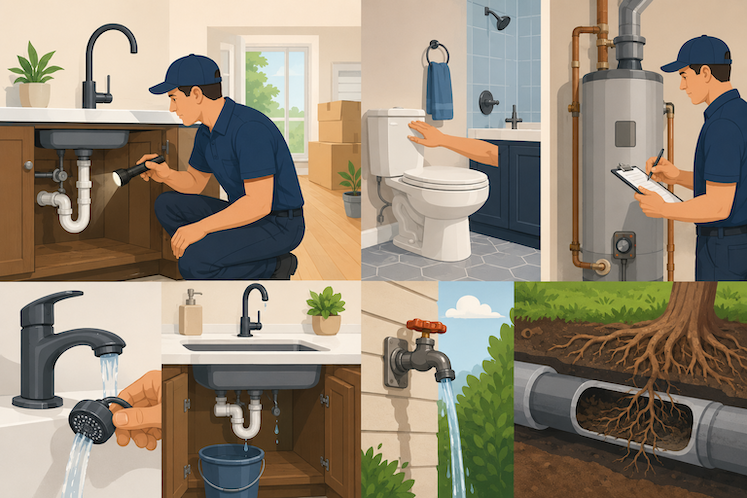
Look Under Sinks and Cabinets
Check every kitchen and bathroom sink for moisture, stains, or warped cabinetry. Sometimes previous homeowners temporarily patch leaks without fixing the actual plumbing issue.
Pay close attention to:
- P-traps
- Supply lines
- Shut-off valves
- Garbage disposal connections
- Faucet bases
Small leaks are often easier and less expensive to repair when caught early.
Inspect Around Toilets
Loose toilet seals can cause water to leak around the base of the toilet. Walk around each toilet and look for:
- Soft flooring
- Water stains
- Musty smells
- Loose movement when sitting
These signs could indicate wax ring failure or hidden subfloor damage.
Check Exterior Hose Bibs
Outdoor faucets are commonly overlooked during home inspections. Turn them on and check for dripping, weak pressure, or leaks around the wall connection.
Exterior plumbing problems can eventually affect your foundation or landscaping if ignored.
Test the Home’s Water Pressure
Water pressure issues are extremely common after moving into a home, especially in older neighborhoods.
Signs of Low Water Pressure
Weak water pressure may indicate:
- Pipe corrosion
- Hidden leaks
- Mineral buildup
- Faulty pressure regulators
- Partially closed shut-off valves
Turn on multiple fixtures throughout the house to compare water flow consistency.
Watch for Sudden Pressure Changes
If pressure drops when someone flushes a toilet or runs another faucet, the plumbing system may have outdated pipes or water supply limitations.
Homes with older galvanized plumbing are particularly prone to inconsistent water pressure problems.
Inspect Drains for Slow Flow or Backups
Drain problems are among the most common plumbing complaints after moving into a new property.
Previous homeowners may temporarily mask drainage issues before listing the home for sale. Once the house becomes occupied again, clogs often reappear quickly.
Test Every Drain Individually
Run water in:
- Bathroom sinks
- Showers
- Tubs
- Kitchen sinks
- Laundry drains
Watch how quickly the water drains away.
Slow drainage may indicate grease buildup, hair clogs, pipe damage, or deeper sewer line problems.
Many homeowners dealing with recurring drainage issues later discover the causes behind frequent drain blockage problems after moving into older properties.
Listen for Gurgling Sounds
Gurgling drains often signal venting problems or partial sewer line blockages.
If multiple drains gurgle simultaneously, the issue may involve the main sewer line rather than an isolated fixture.
Check for Sewer Line Warning Signs
Sewer line issues are among the most expensive plumbing problems homeowners face. Unfortunately, they are not always obvious during a standard walkthrough.
Warning Signs of Sewer Problems
Watch for:
- Sewage odors
- Multiple slow drains
- Bubbling toilets
- Water backups
- Wet patches in the yard
These symptoms can point to a damaged or blocked sewer line.
Tree Roots Are a Common Problem
In many older neighborhoods, invasive roots grow into underground sewer pipes through small cracks and joints.
Homeowners experiencing recurring sewer backups often learn that underground root intrusion can silently damage plumbing systems long before visible symptoms appear.
Older clay or cast-iron sewer pipes are especially vulnerable to root damage.
Evaluate the Water Heater Immediately
The water heater is one of the most important appliances in any home, yet many new homeowners forget to inspect it until problems appear.
Check the Age of the Unit
Most traditional water heaters last:
- 8–12 years for tank systems
- 15–20 years for tankless systems
Locate the manufacturer label to determine the installation date.
Look for Rust or Corrosion
Inspect around the unit for:
- Rust-colored water
- Corrosion near fittings
- Moisture around the base
- Unusual noises
Popping or rumbling sounds can indicate sediment buildup inside the tank.
Make Sure Hot Water Is Consistent
Run hot water in multiple fixtures and monitor how long it stays warm.
If hot water disappears quickly, the system may be undersized, aging, or improperly maintained.
Inspect Plumbing Fixtures for Hidden Wear
Fixtures may appear modern during a showing while still hiding internal plumbing issues.
Check Faucets and Showerheads
Turn fixtures on and off slowly to test for:
- Dripping
- Loose handles
- Poor water flow
- Sputtering water
Mineral buildup inside fixtures is common in homes with hard water exposure.
Test Shut-Off Valves
Every sink and toilet should have working shut-off valves nearby.
If valves are stuck or corroded, replacing them early can prevent emergencies later.
Examine Caulking and Seals
Inspect tubs, showers, and sinks for cracked caulking or missing seals.
Water intrusion around fixtures can lead to hidden mold and structural damage behind walls.
Watch for Signs of Hidden Pipe Damage
Not all plumbing issues are immediately visible. Some warning signs develop gradually after moving in.
Look for Water Stains
Brown ceiling spots, bubbling paint, or warped drywall can indicate slow pipe leaks hidden behind walls.
Even small leaks can cause significant structural damage over time.
Pay Attention to Musty Odors
Persistent moisture smells may point to hidden plumbing leaks beneath floors or inside walls.
If odors worsen after using plumbing fixtures, further inspection may be necessary.
Monitor Water Bills Closely
Unexpectedly high water bills during the first month could indicate hidden leaks somewhere in the system.
Compare usage carefully, especially if occupancy levels have not changed significantly.
Check the Main Water Shut-Off Valve
Every homeowner should know how to shut off the water supply during an emergency.
Locate the Shut-Off Valve Immediately
Depending on the property, the main valve may be:
- Near the water meter
- In the garage
- Outside the home
- Inside a utility room
Test it carefully to ensure it still functions properly.
Label Important Plumbing Components
After moving in, consider labeling:
- Main shut-off valve
- Water heater shut-off
- Irrigation shut-off
- Individual fixture valves
This can save valuable time during emergencies.
Don’t Ignore Seasonal Plumbing Risks
Plumbing systems are affected by seasonal weather, especially in humid climates like South Florida.
Heavy Rainfall Can Affect Plumbing
Stormwater infiltration sometimes overwhelms drainage and sewer systems.
Flood-prone areas may experience backups during severe weather conditions.
Seasonal Maintenance Helps Prevent Problems
New homeowners benefit from following a preventive plumbing maintenance routine to identify small issues before they become expensive repairs.
Routine inspections can significantly extend the lifespan of plumbing systems and appliances.
Understand the Risks in Older Homes
Older homes often have unique plumbing concerns that newer construction avoids.
Outdated Pipe Materials
Some homes still contain:
- Galvanized steel pipes
- Polybutylene piping
- Cast iron drain systems
These materials are more prone to leaks, corrosion, and reduced water flow.
Renovation Work May Hide Plumbing Problems
Cosmetic upgrades sometimes conceal plumbing shortcuts or DIY repairs.
Fresh paint and new cabinetry do not always mean the plumbing underneath was professionally updated.
Scheduling a professional inspection after moving can uncover hidden issues before they worsen.
When to Call a Professional Plumber
Some plumbing concerns require immediate professional attention.
Call a Plumber If You Notice:
- Sewage smells
- Water stains spreading quickly
- Burst pipes
- No hot water
- Multiple clogged drains
- Low water pressure throughout the home
- Visible corrosion on pipes
Addressing these issues early can help prevent more serious damage later.
Homeowners wanting peace of mind after move-in often schedule a professional plumbing inspection to identify hidden concerns before they turn into major repairs.
Professional plumbing done right, the first time.
Call (786) 709-0426
Simple Plumbing Tips for New Homeowners
Once you move in, a few proactive habits can help keep the plumbing system in good shape.
Avoid Chemical Drain Cleaners
Harsh chemicals can damage pipes over time, especially in older plumbing systems.
Know What Should Never Go Down Drains
Avoid flushing or draining:
- Grease
- Coffee grounds
- Wipes
- Paper towels
- Feminine hygiene products
These materials frequently contribute to serious drain blockages.
Schedule Preventive Maintenance
Annual plumbing inspections can help identify:
- Slow leaks
- Pipe wear
- Water heater issues
- Drain buildup
Preventive maintenance is usually far less expensive than emergency repairs.
Final Thoughts
Moving into a new home comes with plenty of responsibilities, and plumbing should never be overlooked during the transition. Small issues that seem minor at first can quickly become costly repairs if left unresolved.
Checking for leaks, testing drains, evaluating the water heater, and understanding the condition of the plumbing system can help you avoid unpleasant surprises after move-in day.
Whether you purchased an older property or moved into a recently renovated home, taking the time to inspect the plumbing system early can save money, reduce stress, and protect your investment long-term.
Frequently Asked Questions
What plumbing problems are most common after moving into a home?
The most common issues include clogged drains, low water pressure, leaking fixtures, sewer line problems, and water heater failures.
How soon should plumbing be inspected after moving in?
It is best to inspect the plumbing system within the first few days after moving into the property. Early detection can prevent larger repairs later.
Why do drains clog after a house sits vacant?
Debris buildup, dried residue, pipe corrosion, and sewer line issues can become more noticeable once water usage resumes regularly.
Should I replace the water heater after buying a house?
Not always. However, if the unit is older than 10 years or shows signs of corrosion, replacement may be worth considering.
How do I know if the sewer line has problems?
Warning signs include sewage odors, multiple slow drains, bubbling toilets, and recurring backups.
Is low water pressure always a plumbing issue?
Not necessarily. It can result from municipal supply issues, faulty regulators, clogged fixtures, or aging pipes.