South Florida homeowners face plumbing challenges that people in many other parts of the country rarely experience. Slow drains, recurring clogs, and backed-up sinks are especially common in this region. While clogged drains can occur in any home, they tend to happen more frequently in South Florida due to a combination of climate conditions, soil composition, older infrastructure, and everyday household habits.
If your kitchen sink drains slowly, your shower fills with standing water, or your bathroom sink clogs repeatedly, you’re not alone. Understanding why drains clog more often in South Florida homes can help homeowners prevent plumbing issues before they become expensive repairs.
In this guide, we’ll explore the most common causes of drain clogs in South Florida, explain how local conditions affect plumbing systems, and share practical steps homeowners can take to keep drains flowing smoothly.
South Florida’s Climate Accelerates Drain Buildup
The warm and humid climate of South Florida affects plumbing systems in ways many homeowners don’t realize.
Heat and moisture create the perfect environment for organic material, grease residue, and soap scum to accumulate inside pipes. When these substances build up along pipe walls, they reduce the space available for water to flow through the drain.
Unlike colder climates where seasonal freezing can break up debris in pipes, South Florida plumbing systems deal with constant warmth year-round. This allows buildup to form gradually over time.
Frequent rainstorms also play a role. Heavy rainfall can increase pressure on underground sewer systems and push sand, soil, and debris into aging pipes.
Routine maintenance from professionals providing reliable local plumbing repair services can help homeowners prevent these environmental factors from turning into persistent drain problems.
Older Plumbing Systems Increase the Risk of Clogs
Many homes across South Florida were built decades ago. While these homes often have charm and character, their plumbing systems may be aging.
Older pipes are more likely to develop interior corrosion or mineral buildup, which creates rough surfaces inside the pipe. These surfaces allow debris to stick more easily, gradually forming blockages.
Common issues found in older plumbing systems include:
- Corroded pipe interiors
- Reduced pipe diameter due to mineral deposits
- Slight pipe misalignments caused by shifting soil
- Weak joints where debris accumulates
Because these problems occur inside pipes where homeowners cannot see them, plumbers often rely on modern inspection technology. A professional drain camera inspection allows technicians to examine the interior of pipes and identify buildup, cracks, or hidden blockages without invasive digging.
Early inspections can prevent small problems from becoming major plumbing repairs.
Kitchen Grease Is a Major Cause of Drain Clogs
Kitchen sinks are one of the most common places for clogs to develop in South Florida homes.
Many homeowners unknowingly pour cooking grease, oils, and fats down the drain after preparing meals. Although these substances appear liquid when hot, they cool and solidify inside pipes.
As grease hardens, it coats pipe walls and creates a sticky surface that traps food debris. Over time, even small food particles can stick to the grease layer and form stubborn clogs.
Common grease sources include:
- Cooking oils
- Bacon grease
- Butter and dairy fats
- Sauces and gravies
- Food scraps rinsed from dishes
Once grease buildup begins, water has difficulty flowing through the pipe. Eventually, sinks may drain slowly or stop draining altogether.
When grease buildup becomes severe, homeowners may need professional drain cleaning. Scheduling a professional clog removal service can completely clear grease deposits and restore proper drainage.
Call us at (786) 709-0426
Hair and Soap Residue Block Bathroom Drains
Bathroom drains are another frequent source of plumbing issues in South Florida homes.
Hair, soap scum, and personal care products combine to create dense blockages inside sink and shower drains. Hair alone rarely causes a clog, but when it mixes with soap residue, it forms thick clumps that stick to pipe walls.
Many soaps contain fats and minerals that leave behind a film inside pipes. Over time, this film traps hair, shaving cream residue, and other debris.
Signs of bathroom drain buildup include:
- Water draining slowly from sinks or showers
- Standing water around the drain
- Unpleasant odors from pipes
- Gurgling sounds during drainage
These warning signs often appear long before a drain becomes completely blocked. Addressing them early can prevent more serious plumbing problems.
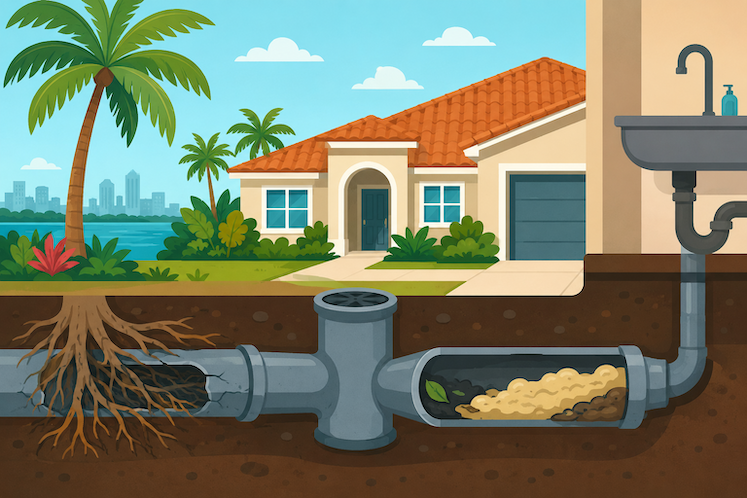
Tree Roots Can Invade Underground Pipes
South Florida’s lush landscaping adds beauty to neighborhoods, but tree roots can cause major plumbing problems.
Roots naturally grow toward moisture sources, and sewer lines are attractive targets. Even tiny cracks in underground pipes can allow roots to enter the system.
Once inside the pipe, roots expand and begin trapping debris flowing through the line. Over time, they can block water flow entirely or even break apart pipe sections.
Tree root intrusion is particularly common in neighborhoods with mature trees and older sewer systems.
Because root damage occurs underground, homeowners may not notice the problem until drains begin backing up. Camera inspections often reveal root intrusion that would otherwise remain hidden.
Sand and Sediment Can Enter Drain Lines
Another unique challenge in South Florida is sandy soil.
Ground shifting, heavy rains, and pipe deterioration can allow sand and sediment to enter plumbing lines. Once inside the pipe, this material settles and accumulates in low areas.
Sediment buildup gradually narrows the interior of pipes and restricts water flow. Unlike grease or hair clogs, sand accumulation often develops slowly and may affect multiple drains throughout the home.
Professional cleaning equipment is usually required to remove these deposits.
Hard Water Minerals Build Up Inside Pipes
Water in many parts of South Florida contains minerals that contribute to scale buildup inside plumbing systems.
As water flows through pipes, minerals like calcium and magnesium can attach to pipe walls. Over time, these mineral deposits reduce the pipe’s internal diameter.
When pipes become narrower, debris is more likely to get trapped and create clogs.
Hard water buildup also affects appliances connected to the plumbing system. For example, scale accumulation inside water heaters can reduce efficiency and increase wear on the unit.
Many homeowners schedule routine water heater maintenance services to ensure mineral deposits are not affecting overall plumbing performance.
Garbage Disposal Misuse Leads to Drain Blockages
Garbage disposals are convenient, but they are often misused.
Many foods should never go into a disposal because they can expand or stick to pipe walls. These materials may pass through the disposal blades but still accumulate inside the plumbing system.
Foods that commonly cause disposal-related clogs include:
- Coffee grounds
- Rice or pasta
- Eggshells
- Fibrous vegetables like celery
- Grease or cooking oil
Using a garbage disposal responsibly and flushing the drain with water after use can help reduce the risk of clogs.
Hidden Leaks Can Contribute to Drain Problems
Recurring drain clogs are sometimes a symptom of deeper plumbing issues.
Leaks in underground pipes can cause soil shifts that misalign pipe sections. Misaligned pipes create areas where debris can collect and block water flow.
In addition, small pipe leaks may allow dirt, roots, and sediment to enter the system.
Because these issues occur beneath floors or underground, they are difficult to detect without specialized tools. Plumbers often perform advanced leak detection services to locate hidden leaks that may be contributing to drainage problems.
Detecting leaks early can prevent major pipe damage and costly repairs.
Warning Signs Your Drain Is About to Clog
Most drain clogs do not happen suddenly. Pipes usually show warning signs before becoming completely blocked.
Common signs include:
- Slow draining sinks or showers
- Frequent need for plunging
- Gurgling noises coming from drains
- Unpleasant odors near sinks
- Water backing up into other fixtures
If you notice these symptoms, addressing them early can prevent more serious plumbing issues.
Tips for Preventing Drain Clogs
While some plumbing problems are unavoidable, many drain clogs can be prevented with simple habits.
Homeowners can protect their plumbing systems by following these steps.
Avoid pouring grease down the sink
Dispose of cooking grease in a sealed container instead of washing it down the drain.
Install drain strainers
Small strainers catch hair and food particles before they enter pipes.
Flush drains with hot water
Running hot water after washing dishes helps dissolve grease and remove residue.
Schedule regular drain maintenance
Professional cleaning prevents buildup from accumulating over time.
Routine inspections and maintenance are especially important in older homes where plumbing systems may already have wear and tear.
When to Call a Professional Plumber
Some minor clogs can be cleared with plungers or basic drain tools. However, recurring blockages often indicate deeper problems within the plumbing system.
Professional plumbers have specialized equipment designed to remove stubborn debris and diagnose hidden pipe issues. These tools include motorized drain augers, hydro-jetting equipment, and high-resolution inspection cameras.
If slow drains or repeated clogs become a regular problem in your home, it may be time to schedule professional service. Experienced plumbers can remove existing blockages and identify the underlying cause to prevent future issues.
Call us at (786) 709-0426
Keeping Drains Flowing Smoothly in South Florida Homes
Drain clogs are a common issue for homeowners throughout South Florida, but understanding the causes makes prevention much easier.
From grease buildup and hair accumulation to tree root intrusion and mineral deposits, several factors contribute to blocked drains in this region. The local climate, sandy soil, and aging plumbing infrastructure can all increase the likelihood of recurring clogs.
Recognizing early warning signs and addressing plumbing problems promptly can help homeowners avoid major repairs and costly damage.
Routine maintenance, professional inspections, and responsible drain usage go a long way toward keeping pipes clear and plumbing systems working efficiently year-round.