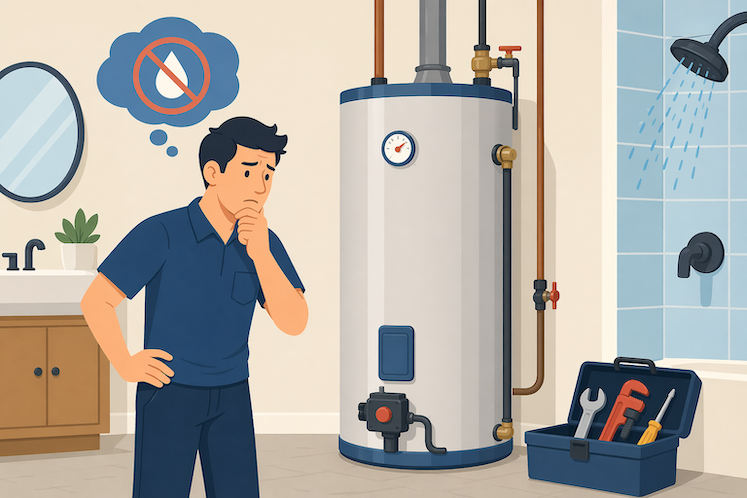
Few household problems are as frustrating as turning on the shower and getting nothing but cold water. If you have no hot water, the problem can range from a simple thermostat setting to a failing water heater that needs professional attention. The good news is that many hot water issues follow predictable patterns, which means you can usually narrow down the cause before the problem gets worse.
In this guide, we’ll walk through seven common reasons you may have no hot water, what signs to look for, and how to fix each one. Whether your hot water disappeared suddenly or has been getting weaker over time, understanding the root cause can help you decide if this is a quick fix, a maintenance issue, or a repair you should not put off.
1. The Water Heater Has No Power or Fuel
One of the most common reasons for no hot water is also one of the simplest: the unit is not getting the power or fuel it needs to heat water.
Electric water heaters rely on electricity. Gas water heaters rely on a steady gas supply and a functioning burner. If either source is interrupted, the tank cannot do its job.
What to check first
For an electric unit, check the breaker panel. A tripped breaker may shut off the heater without affecting the rest of the house in an obvious way. Resetting the breaker once may solve the issue, but if it trips again, that points to an electrical problem that needs professional repair.
For a gas unit, make sure the gas valve is open and that other gas appliances in the home are working. If your stove or furnace is also having trouble, the issue may be with the gas supply rather than the water heater itself.
How to fix it
If a breaker has tripped, reset it and monitor the heater. If the breaker trips again, stop there and call a plumber or electrician.
If the pilot light is out on a gas heater, relighting it may restore hot water. Always follow the manufacturer’s instructions and be cautious around gas equipment. If the pilot will not stay lit, there may be a bad thermocouple or another component failure.
2. The Thermostat Is Set Too Low or Failing
Sometimes the issue is not that your heater stopped working entirely. It may still be heating water, just not to a usable temperature.
Water heater thermostats control how hot the stored water gets. If the setting is too low or the thermostat is faulty, your water may feel lukewarm or go cold quickly.
Signs this may be the problem
You still get some warm water, but it does not last long. Or the water never gets fully hot, even when demand is low.
In some homes, this issue goes unnoticed for a while because it can feel like the heater is still working, just poorly.
How to fix it
Check the thermostat setting. Most homeowners set their heater around 120 degrees Fahrenheit for a balance of comfort, safety, and efficiency.
If raising the temperature does not help, the thermostat itself may be malfunctioning. On electric units, a failed upper or lower thermostat can prevent proper heating. On gas heaters, thermostat control problems can also reduce performance.
This is a repair best handled by a qualified professional, especially if electrical testing or gas controls are involved.
3. Sediment Buildup Is Blocking Efficient Heating
Over time, minerals in your water settle at the bottom of the tank. This sediment layer creates a barrier between the burner or heating element and the water you actually use.
As that buildup gets thicker, your heater has to work harder and longer to deliver the same result. Eventually, you may notice less hot water, inconsistent temperatures, or strange sounds coming from the tank.
If that sounds familiar, it may help to understand what those water heater noises often mean and why they should not be ignored.
Common warning signs
Sediment problems often show up as:
- Popping or rumbling sounds from the tank
- Hot water running out faster than usual
- Water taking too long to heat up
- Rising energy bills without another clear cause
How to fix it
Flushing the water heater can remove built-up sediment and restore efficiency. This is one of the most valuable routine maintenance tasks for tank-style units.
If the buildup has been ignored for too long, flushing may not fully solve the issue. In older units, heavy sediment can contribute to overheating, internal damage, or tank wear. A plumber can tell you whether a flush is still worthwhile or whether the damage has already gone beyond maintenance.
4. A Heating Element Has Burned Out
If you have an electric water heater, a failed heating element is a very common cause of no hot water or not enough hot water.
Most electric tank heaters have two heating elements. If one fails, you may still get some warm water, but not enough for normal household use. If both fail, the water may stay completely cold.
How this problem usually feels
The water may start warm but turn cold quickly. Or it may never get hot enough for a shower in the first place.
Because the issue is inside the tank, many homeowners assume the whole heater has failed when it is actually a replaceable part.
How to fix it
A technician can test the elements with a multimeter and replace the failed one if needed. This is often more cost-effective than replacing the entire unit, especially if the heater is not very old.
That said, if the unit is older and multiple parts are starting to fail, replacement may make more sense than continued repair.
5. The Pilot Light or Burner Assembly Is Malfunctioning
Gas water heaters use a pilot light or electronic ignition system to fire the burner. If that process fails, the tank cannot heat water.
A pilot light that repeatedly goes out or a burner that does not ignite properly can leave you with no hot water at all.
What may be happening
Several parts can cause this issue:
- A dirty or clogged burner
- A bad thermocouple
- Faulty gas control valve
- Poor ventilation or airflow problems
Sometimes the pilot goes out once and stays on after relighting. Other times, it keeps failing because an underlying part is worn out.
How to fix it
If you are comfortable following the manufacturer’s instructions, you can try relighting the pilot. If it goes out again, it is time for a service call.
Gas-related problems should be taken seriously. Improper combustion and gas control issues are not good DIY projects. A licensed plumber can diagnose the specific failed part and restore safe operation.
6. Your Water Heater Is Too Small for Household Demand
Sometimes there is nothing technically wrong with the heater. It is simply not large enough to keep up with the household’s hot water use.
This often happens after a family grows, a bathroom is added, or usage habits change. A unit that once worked fine may now struggle to meet demand, especially during busy mornings.
Signs your heater is undersized
You get hot water, but only for one short shower. Running the dishwasher and shower close together causes the water to go cold. Guests make the problem much more noticeable.
This issue can also come up when homeowners switch systems or compare tankless heater options without fully matching the unit to real household demand.
How to fix it
There are two main solutions. You can upgrade to a larger tank, or you can switch to a properly sized tankless system.
The right answer depends on how much hot water your household uses, how many fixtures run at once, and whether your home is set up for gas or electric service. A plumber can calculate demand and recommend the correct size instead of guessing.
7. The Water Heater Is Near the End of Its Life
Even well-maintained water heaters do not last forever. As they age, internal parts wear out, efficiency drops, and the risk of leaks or tank failure increases.
If your water heater is more than 8 to 12 years old, age alone may be part of the problem. Older units tend to need more frequent repairs, and they often stop delivering reliable hot water before they fail completely.
If you are noticing inconsistent performance, rust-colored water, or repeated repairs, it may be a sign of water heater failure rather than a one-time issue.
Signs replacement may be smarter than repair
Watch for these red flags:
- The unit is over a decade old
- Repairs are becoming more frequent
- Hot water recovery is slow
- Rust or corrosion is visible
- Water is leaking around the base
How to fix it
If the unit is aging out, replacement is often the most practical move. A newer system can improve efficiency, reliability, and hot water capacity while reducing the chance of a sudden breakdown.
If you are already at the point of comparing repair versus replacement, this is a good time find out what makes the most sense for your home and budget.
What You Can Safely Troubleshoot Before Calling a Plumber
When you have no hot water, it helps to separate safe homeowner checks from repairs that require experience.
Safe checks for homeowners
You can usually do the following safely:
- Check the circuit breaker for an electric heater
- Confirm the thermostat setting
- Make sure the gas valve is on
- Look for visible leaks around the tank
- Listen for unusual sounds
- Notice whether the issue affects the whole house or just one fixture
If only one faucet or shower has the problem, the issue may be with that fixture rather than the water heater.
When to stop and call a professional
Call a plumber if:
- The breaker keeps tripping
- The pilot light will not stay on
- You smell gas
- The tank is leaking
- The unit is making loud noises
- The water heater is old and performance keeps declining
- You are not comfortable working around electricity or gas
Prompt action matters. A minor repair today can prevent water damage, a total breakdown, or a much larger replacement cost later.
How to Prevent Hot Water Problems in the Future
While some failures are unavoidable, regular maintenance goes a long way toward preventing sudden hot water loss.
Annual maintenance makes a difference
A yearly inspection can catch sediment buildup, burner issues, thermostat problems, and early wear before they turn into bigger repairs.
Routine service may include:
- Flushing the tank
- Inspecting the anode rod
- Testing heating performance
- Checking for leaks or corrosion
- Evaluating burner or element condition
- Confirming safe operation
Pay attention to changes early
Many homeowners wait until the hot water is completely gone before taking action. But most heaters give warning signs first.
Strange noises, reduced hot water supply, rusty water, rising utility bills, and inconsistent temperatures are all worth checking out. The earlier you address them, the more options you usually have.
Repair or Replace: How to Decide
This is one of the biggest questions homeowners face when hot water problems start happening regularly.
If the problem is a single failed part on a newer heater, repair is often the smart choice. But if the heater is older, inefficient, or starting to show multiple issues at once, replacement may save money over the long run.
A good rule of thumb is to look at three things:
Age
An older heater is naturally closer to replacement time. Even if one repair seems manageable, other parts may not be far behind.
Frequency of repairs
If you keep spending money on service calls, the total can add up quickly. At some point, replacement becomes the more practical investment.
Performance and efficiency
A newer heater can recover faster, waste less energy, and provide more consistent hot water. That matters every day, not just when something breaks.
FAQ: No Hot Water at Home
Why do I suddenly have no hot water?
The most common causes are power loss, a tripped breaker, a failed heating element, pilot light problems, or a water heater that has reached the end of its life. Sudden loss of hot water usually means the unit stopped heating altogether.
Why is my hot water only lasting a few minutes?
This often points to sediment buildup, a failed heating element, or a water heater that is too small for your household’s demand. It can also happen when the thermostat is set too low.
Can I fix a no hot water problem myself?
You can safely check the breaker, thermostat setting, and visible signs around the tank. Beyond that, especially with gas systems, internal electrical parts, or leaks, it is better to call a professional plumber.
How long should a water heater last?
Most traditional tank water heaters last around 8 to 12 years. Some last longer with proper maintenance, but age increases the chance of breakdowns and reduced efficiency.
Is no hot water ever an emergency?
It can be. If the problem involves a leaking tank, the smell of gas, electrical issues, or signs of water damage, you should treat it as urgent. A lack of hot water by itself is inconvenient, but the cause behind it may be more serious.
Should I repair or replace my water heater?
If the heater is relatively new and the issue is limited to one part, repair may be the better choice. If the unit is older, inefficient, or needing repeated repairs, replacement is often the smarter long-term option.
Final Thoughts
No hot water is never convenient, but the cause is often easier to identify than most homeowners expect. Whether the issue is a tripped breaker, sediment buildup, a bad heating element, or an aging unit that is ready to be replaced, the key is to act before the problem gets worse.
If your hot water has become unreliable, do not ignore the early warning signs. A proper diagnosis can save you time, prevent damage, and get your home back to normal faster.