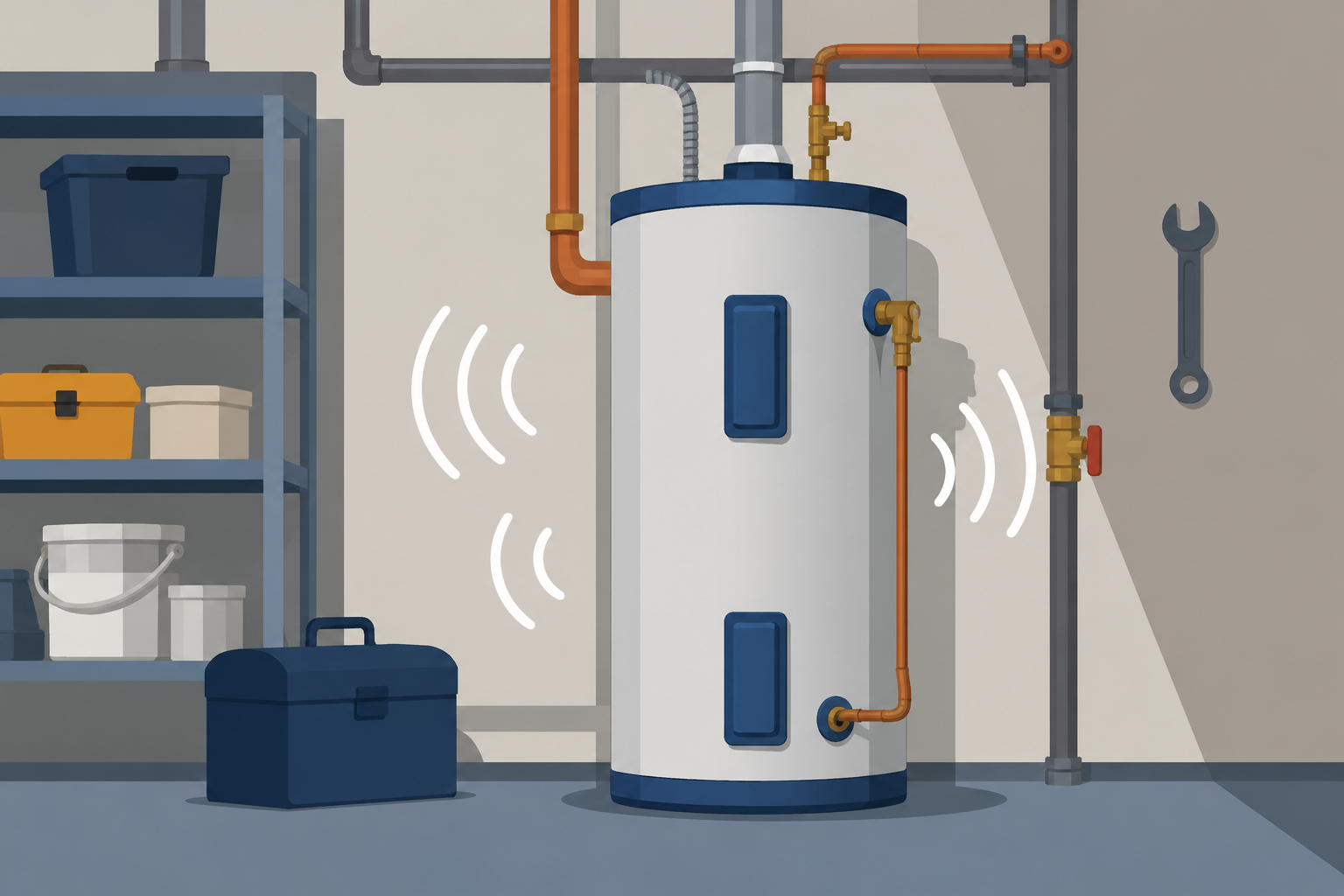
Water heaters are designed to operate quietly in the background, providing hot water for showers, dishes, and everyday household tasks. When a water heater suddenly begins making loud popping, banging, rumbling, or crackling noises, it can be both alarming and inconvenient.
While some sounds are harmless, persistent noise from a water heater often signals that something inside the tank needs attention. In many cases, the issue is caused by sediment buildup, heating element problems, or pressure fluctuations inside the tank.
Understanding why your water heater is making loud noises can help you determine whether the problem is minor maintenance or a sign that repairs are needed. In this guide, we’ll explore the most common causes of noisy water heaters, what those sounds usually mean, and when it’s time to call a professional.
What Normal Water Heater Sounds Like
Before diagnosing a problem, it helps to understand what normal operation sounds like.
A properly functioning water heater may produce subtle sounds such as:
- A gentle humming from the heating element
- Soft clicking from thermostat adjustments
- Quiet water movement inside the tank
These sounds are typically low and consistent. They should not be loud, sudden, or disruptive. When unusual noises begin to occur, the cause is often related to mechanical issues or mineral buildup inside the tank.
Common Noises a Water Heater Can Make
Different sounds can indicate different issues. Identifying the type of noise your water heater is producing can help pinpoint the problem more quickly.
Popping Sounds
Popping noises are one of the most common complaints homeowners notice. These sounds usually occur when sediment accumulates at the bottom of the tank.
When the burner or heating element heats the water, pockets of water trapped beneath sediment layers boil and create popping sounds.
Rumbling or Banging
A rumbling or banging sound often indicates heavy sediment buildup inside the tank. As water heats, the sediment hardens and traps heat, creating louder vibrations and noise.
This problem tends to worsen over time if the tank is not flushed regularly.
Crackling or Sizzling
Crackling sounds often occur when condensation drips onto a hot burner in gas water heaters. While occasional crackling can be normal, frequent sizzling may indicate internal leaks or moisture buildup.
Whistling or Screeching
Whistling sounds are usually related to pressure or water flow restrictions. A partially closed valve or pressure imbalance inside the system can produce high-pitched noises.
Sediment Buildup: The Most Common Cause
Sediment buildup is the leading cause of noisy water heaters. Minerals like calcium and magnesium naturally exist in many water supplies, particularly in areas with hard water.
Over time, these minerals settle at the bottom of the tank and form a layer of sediment.
How Sediment Causes Noise
When the heating element warms the tank, water trapped beneath sediment pockets begins to boil. As the bubbles escape, they create the popping or rumbling sounds many homeowners hear.
Problems Caused by Sediment
Sediment buildup can create several additional issues beyond noise:
- Reduced heating efficiency
- Increased energy bills
- Overheating of heating elements
- Premature tank wear
- Reduced water heater lifespan
Routine flushing can help prevent this buildup and maintain proper performance.
Heating Element Problems
Electric water heaters use heating elements to warm the water inside the tank. When these elements loosen or malfunction, they can create noticeable noise.
Loose Heating Elements
A loose heating element may vibrate during operation, producing humming or buzzing sounds. While the heater may still function, the noise indicates the element may need tightening or replacement.
Burned-Out Elements
Damaged or burned-out heating elements can cause inconsistent heating, which sometimes results in unusual sounds during operation.
If the water temperature fluctuates along with the noise, the heating element could be failing.
Pressure Changes Inside the Tank
Pressure imbalances within the water heater system can also produce unusual sounds.
Thermal Expansion
When water heats up, it expands. In closed plumbing systems, this expansion can increase pressure inside the tank.
This pressure can sometimes cause knocking or rumbling sounds in the system.
Faulty Pressure Relief Valve
The temperature and pressure relief valve (T&P valve) is designed to release excess pressure inside the tank. If the valve is malfunctioning or partially blocked, pressure may build and cause strange noises.
Ignoring pressure-related issues can lead to more serious plumbing problems.
Hard Water and Mineral Deposits
Homes with hard water experience mineral buildup much faster than those with softer water.
Hard water minerals accumulate on heating elements and tank surfaces, creating insulation that forces the heater to work harder. As the heater struggles to maintain temperature, unusual sounds often occur.
Installing a water softener or performing regular tank maintenance can help reduce mineral accumulation.
Aging Water Heater Tanks
Water heaters typically last between 8 and 12 years depending on maintenance and usage.
As the tank ages, internal components wear down, and corrosion may develop. These issues can create:
- Popping noises
- Metallic banging
- Water flow disturbances
If your water heater is approaching the end of its lifespan and frequently makes loud noises, replacement may be the most cost-effective solution.
Why Ignoring Water Heater Noise Is Risky
Many homeowners ignore unusual sounds from their water heater until a major problem occurs. However, persistent noise is often an early warning sign that something inside the system needs attention.
Ignoring the issue can lead to:
- Higher energy consumption
- Reduced hot water supply
- Tank overheating
- Potential water damage
Addressing the cause early can prevent more expensive repairs later.
If you notice ongoing problems, scheduling a professional residential plumbing services can help identify the root cause before it escalates.
Call us at (786) 709-0426
How to Prevent Water Heater Noise
Preventive maintenance is the most effective way to keep a water heater operating quietly and efficiently.
Flush the Tank Annually
Flushing the tank removes sediment buildup that causes most noise issues. This process helps maintain efficiency and prolong the lifespan of the heater.
Inspect the Heating Elements
Checking heating elements periodically ensures they remain secure and functional.
Loose or failing elements can often be replaced before they cause significant problems.
Monitor Water Pressure
Maintaining proper water pressure protects both the water heater and the plumbing system. Excessive pressure can strain components and cause noise.
Install a Water Softener
If your home has hard water, installing a water softener can significantly reduce mineral buildup inside the tank.
When You Should Call a Professional
Some water heater noises can be resolved with basic maintenance, but others require professional diagnosis.
You should contact a plumber if:
- The noise becomes louder over time
- The water heater produces rumbling or banging constantly
- Hot water supply decreases
- Water temperature fluctuates
- The tank is more than 10 years old
Professional inspection ensures that small problems do not turn into costly failures.
If your water heater continues to make loud noises or struggles to provide consistent hot water, scheduling a professional water heater repair can help restore proper function and extend the life of your system.
Call us at (786) 709-0426
Signs Your Water Heater May Need Replacement
Sometimes noise is a symptom of a water heater nearing the end of its lifespan.
Common replacement indicators include:
- Frequent repairs
- Rust-colored hot water
- Water leaks around the tank
- Rising energy costs
- Inconsistent water temperature
Modern water heaters are significantly more energy-efficient than older models, making replacement a worthwhile investment when the unit begins to fail.
Final Thoughts
A water heater that suddenly starts making loud noises should never be ignored. While some sounds may be harmless, persistent popping, rumbling, or banging often indicates sediment buildup, heating element issues, or pressure imbalances inside the tank.
Regular maintenance, including annual flushing and routine inspections, can prevent many of these problems before they become serious.
If your water heater continues to produce unusual noises, a professional inspection can identify the underlying issue and ensure your system continues to operate safely and efficiently.
Keeping your water heater in good condition not only reduces noise but also improves energy efficiency, extends equipment lifespan, and ensures a reliable hot water supply for your home.