Commercial properties in Miami face unique plumbing challenges. Between aging infrastructure, year-round humidity, storm season, and heavy building usage, even a small plumbing issue can turn into a costly insurance claim fast. That’s why more property owners are investing in regular inspections to reduce risk, prevent damage, and potentially lower their insurance premiums.
Insurance companies pay close attention to water-related claims because they’re among the most expensive property losses. Routine plumbing evaluations help identify hidden leaks, deteriorating pipes, drainage concerns, and pressure issues before they become major liabilities. For building owners, that means fewer emergencies, less downtime, and stronger protection for both the property and the bottom line.
Whether you manage office buildings, restaurants, retail spaces, or apartment complexes, scheduled plumbing assessments can play a major role in protecting your investment in Miami’s demanding environment.
Why Insurance Companies Care About Plumbing Risks
Insurance providers calculate premiums based on risk exposure. Commercial properties with a history of leaks, water damage, sewer backups, or pipe failures are often viewed as higher-risk investments.
Water damage claims can involve:
- Structural repairs
- Mold remediation
- Business interruption
- Equipment replacement
- Tenant displacement
- Electrical damage
A neglected plumbing system increases the chances of these costly events happening. On the other hand, buildings with documented inspection records and preventative maintenance plans often appear far less risky to insurers.
That’s one reason many property owners search for commercial plumbing near me when preparing for policy renewals or trying to improve building safety standards.
The Connection Between Plumbing Inspections and Lower Premiums
Regular inspections help reduce insurance costs because they demonstrate proactive risk management. Insurance carriers appreciate property owners who actively prevent damage rather than reacting after a disaster occurs.
Here’s how inspections can positively impact your insurance profile.
Early Leak Detection Prevents Major Claims
Small leaks inside walls, ceilings, or underground lines often go unnoticed for months. Over time, these leaks can weaken structures and create severe mold issues.
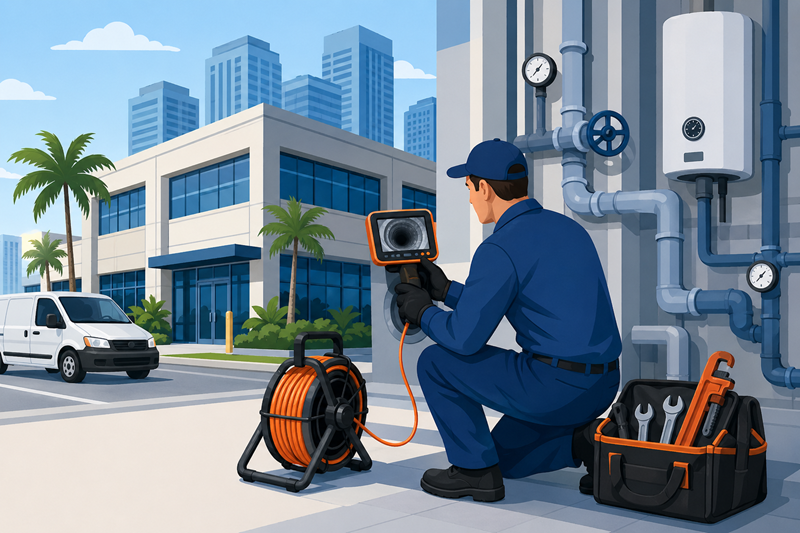
Professional plumbers use advanced diagnostic methods, including camera inspections, to locate hidden plumbing concerns before they escalate into major repairs.
When insurers see that your building undergoes routine evaluations, it signals lower risk exposure and better property management practices.
Preventative Maintenance Reduces Emergency Repairs
Emergency plumbing failures are expensive. Burst pipes, overflowing drains, and sewer backups can shut down operations instantly.
Consistent inspections allow plumbers to identify:
- Corroded piping
- Drain blockages
- Faulty shut-off valves
- Pressure irregularities
- Aging fixtures
- Hidden moisture problems
By fixing these issues early, property owners avoid large-scale emergencies that often trigger insurance claims.
This preventative approach also reduces the need for sudden commercial plumbing repair services that disrupt tenants and daily operations.
Miami’s Climate Makes Inspections Even More Important
South Florida’s environment places additional stress on commercial plumbing systems.
Humidity and Corrosion
High humidity levels accelerate pipe corrosion and fixture deterioration, especially in older buildings. Corroded pipes can weaken internally long before visible leaks appear.
Routine inspections help identify vulnerable components before failure occurs.
Heavy Rain and Flooding Risks
Miami’s storm season increases the risk of drainage overload and sewer backups. Commercial properties with poor drainage systems are more likely to suffer water intrusion during severe weather events.
Plumbing professionals can inspect sump systems, drainage flow, and sewer lines to reduce flood-related vulnerabilities.
Salt Air Exposure
Properties near the coast often experience accelerated wear from salt air exposure. Metal plumbing components can degrade much faster than expected without proper maintenance.
This is especially important for hotels, restaurants, and waterfront commercial buildings.
What Happens During a Commercial Plumbing Inspection?
A comprehensive inspection goes far beyond checking for visible leaks.
Professional commercial plumbers typically evaluate:
Water Supply Systems
Plumbers inspect water pressure, pipe conditions, shut-off valves, and fixture functionality to ensure reliable operation.
Drain and Sewer Lines
Blocked or damaged drains are one of the most common causes of commercial water damage claims.
Many property owners compare home vs business drain cleaning approaches and quickly realize commercial systems require more frequent monitoring due to higher usage demands.
Water Heaters and Boilers
Commercial water heating systems operate under heavy workloads. Inspections help identify efficiency issues, leaks, and aging components before breakdowns occur.
Backflow Prevention Devices
Backflow systems protect potable water supplies from contamination. In many commercial buildings, routine testing is required for compliance and insurance purposes.
Restrooms and Fixtures
Leaking toilets, faucets, and commercial fixtures can waste thousands of gallons of water annually while increasing utility costs.
Documentation Matters for Insurance Providers
One overlooked benefit of routine inspections is documentation.
Detailed service records help demonstrate that:
- The property is professionally maintained
- Plumbing systems are routinely evaluated
- Repairs are addressed promptly
- Preventative measures are in place
If an insurance issue ever arises, maintenance documentation can support claims and sometimes help avoid disputes regarding negligence.
Insurance carriers often reward properties that show consistent upkeep because it lowers the likelihood of catastrophic damage.
Preventative Maintenance Saves More Than Insurance Costs
Insurance savings are important, but the financial benefits go far beyond premiums.
Routine inspections can help lower:
- Water bills
- Emergency repair costs
- Tenant complaints
- Operational downtime
- Mold remediation expenses
- Long-term infrastructure replacement costs
For many commercial property owners, preventative maintenance becomes a major long-term cost-saving strategy.
Businesses already investing in commercial plumbing maintenance often experience fewer disruptions and more predictable repair expenses throughout the year.
Older Commercial Buildings Need Extra Attention
Miami has many older commercial properties with aging plumbing infrastructure. Pipes installed decades ago may already be nearing the end of their lifespan.
Common problems in older buildings include:
- Galvanized pipe corrosion
- Slab leaks
- Drain deterioration
- Tree root intrusion
- Outdated plumbing materials
Without regular inspections, these hidden problems can worsen silently until a major failure occurs.
This is why many property owners searching for plumbing inspections near me prioritize routine evaluations before purchasing or refinancing commercial buildings.
How Often Should Commercial Plumbing Inspections Be Scheduled?
Inspection frequency depends on:
- Building age
- Property size
- Occupancy levels
- Industry type
- Plumbing system complexity
In general:
- Restaurants may require inspections every few months
- Office buildings often benefit from annual evaluations
- Multi-tenant properties may need semi-annual checks
- Older buildings should be monitored more frequently
A licensed commercial plumber can recommend an inspection schedule based on your property’s specific risks and operational demands.
Schedule Now: (786) 709-0426
Signs Your Commercial Property Needs an Inspection
Even if there’s no visible emergency, certain warning signs should never be ignored.
Unexpected Water Bill Increases
Sudden spikes in water usage may indicate hidden leaks or inefficient fixtures.
Slow Drains
Recurring drainage problems often point to developing blockages inside sewer lines.
Water Stains or Mold Odors
Discoloration, moisture spots, or musty smells may indicate concealed plumbing leaks.
Low Water Pressure
Pressure drops can signal pipe damage, leaks, or buildup inside the system.
Frequent Plumbing Repairs
If small plumbing problems keep returning, a full inspection may uncover larger underlying issues.
Choosing the Right Commercial Plumbing Professionals
Not all plumbers specialize in commercial systems. Large properties require experienced technicians familiar with high-capacity plumbing infrastructure and local code requirements.
Reliable commercial plumbing contractors should offer:
- Preventative maintenance programs
- Advanced diagnostic equipment
- Sewer camera technology
- Emergency response services
- Commercial compliance expertise
- Detailed inspection reporting
Working with experienced professionals helps ensure your building remains safe, efficient, and insurance-friendly year-round.
When Emergency Plumbing Situations Happen
Even well-maintained systems can experience unexpected failures. Fast response times are critical when water damage threatens commercial operations.
Having access to trusted emergency plumbing services can help minimize property damage, protect tenants, and reduce business interruption costs during urgent situations.
Need Help Protecting Your Commercial Property?
Regular inspections are one of the smartest ways to reduce long-term plumbing expenses, improve building safety, and potentially lower insurance premiums in Miami.
Call now for commercial plumbing support
📞 (786) 709-0426
FAQs
Can plumbing inspections really lower insurance premiums?
Yes. Preventative inspections reduce risk exposure, which may help insurers offer better rates.
How often should commercial plumbing systems be inspected?
Most commercial properties benefit from annual or semi-annual inspections.
What’s included in a commercial plumbing inspection?
Inspections typically cover pipes, drains, fixtures, water heaters, sewer lines, and leak detection.
Are plumbing inspections important for older buildings?
Absolutely. Older plumbing systems are more vulnerable to leaks, corrosion, and pipe failure.
Do inspections help prevent emergency repairs?
Yes. Early problem detection helps avoid major plumbing emergencies and costly downtime.