Commercial plumbing systems work harder than most people realize. Restaurants, office buildings, retail stores, medical facilities, warehouses, and apartment complexes all rely on plumbing systems every day to keep operations running smoothly. When something goes wrong, the disruption can quickly become expensive.
A clogged drain, leaking pipe, sewer backup, or main line failure can interrupt business operations, damage property, create safety concerns, and even impact customer experience. That is why preventive commercial plumbing maintenance matters so much for businesses in South Florida and other high-demand environments.
Unlike residential systems, commercial plumbing handles heavier daily usage, larger water volumes, and more complex infrastructure. Without regular maintenance, small plumbing issues can quietly grow into costly emergencies that affect productivity and long-term operational costs.
This guide covers practical commercial plumbing maintenance tips that help businesses reduce downtime, extend system lifespan, and avoid expensive repairs.
Why Commercial Plumbing Maintenance Matters
Commercial plumbing systems experience constant wear throughout the day.
Restaurants use kitchen drains continuously. Office buildings rely on multiple restrooms. Retail centers handle heavy foot traffic. Hotels, healthcare facilities, and industrial buildings place even greater demand on water and sewer systems.
Over time, this daily usage creates strain on:
- Pipes
- Sewer lines
- Water heaters
- Fixtures
- Drain systems
- Valves
- Backflow devices
Preventive maintenance helps identify problems before they interrupt business operations.
Businesses that invest in regular plumbing inspections and maintenance often spend far less on emergency repairs over time.
Routine Inspections Help Prevent Major Problems
One of the most important commercial plumbing maintenance strategies is scheduling regular inspections.
Many plumbing issues develop gradually behind walls, underground, or inside ceilings where they are difficult to notice immediately.
Routine inspections help detect:
- Small leaks
- Pipe corrosion
- Drain buildup
- Pressure issues
- Water heater wear
- Sewer line damage
Identifying these issues early allows businesses to address repairs before systems fail unexpectedly.
Plumbing Emergencies Disrupt Operations Quickly
Commercial plumbing failures can force temporary closures, damage inventory, or create unsafe conditions for employees and customers.
A sewer backup inside a restaurant or retail store can immediately affect daily operations and reputation.
Preventive maintenance significantly lowers the risk of unexpected interruptions.
Monitor Water Pressure Regularly
High water pressure may seem harmless at first, but excessive pressure places constant stress on commercial plumbing systems.
Over time, high pressure can:
- Damage fixtures
- Weaken pipe joints
- Increase leak risks
- Shorten equipment lifespan
- Raise water costs
Commercial properties should periodically test water pressure levels to ensure systems remain within safe operating ranges.
Pressure regulators may need adjustment if readings remain consistently high.
Keep Commercial Drains Clean
Drain maintenance is one of the most overlooked areas of commercial plumbing care.
Slow drains usually indicate buildup forming inside pipes long before complete blockages occur.
Commercial drain systems often collect:
- Grease
- Soap residue
- Hair
- Food debris
- Mineral buildup
- Paper products
Routine drain cleaning helps maintain proper flow and prevents larger sewer problems later.
Restaurants Need More Frequent Drain Maintenance
Food service businesses place extreme strain on drainage systems.
Grease buildup inside pipes can gradually restrict water flow and increase the risk of severe blockages.
Regular cleaning helps restaurants avoid emergency backups that may interrupt operations during peak business hours.
Watch for Main Line Warning Signs
Commercial main sewer lines handle large volumes of wastewater daily.
When problems develop underground, businesses often experience subtle warning signs before major failures occur.
Common signs include:
- Multiple slow drains
- Gurgling sounds
- Sewer odors
- Frequent backups
- Water pooling near drains
Ignoring these symptoms can eventually lead to major excavation and repair costs.
Many commercial properties only uncover hidden sewer line problems after repeated drainage issues begin affecting daily operations, often showing the same early symptoms associated with commercial main line failure warning signs.
Prevent Pipe Condensation Problems
Florida’s humidity creates unique plumbing challenges for commercial buildings.
Cold water pipes exposed to warm humid air often develop condensation, which can lead to:
- Water stains
- Mold growth
- Ceiling damage
- Corrosion
- Structural moisture problems
Pipe condensation is especially common in:
- Office buildings
- Retail centers
- Medical facilities
- Apartment complexes
Preventive insulation and moisture management help reduce long-term damage risks.
Commercial property owners across South Florida frequently deal with humidity-related plumbing issues, particularly in older buildings where moisture control is limited and pipe condensation becomes a recurring concern tied to Florida’s climate conditions and indoor humidity levels affecting commercial plumbing systems.
Schedule Annual Sewer Camera Inspections
Sewer line problems often remain hidden until severe backups occur.
Camera inspections allow plumbers to inspect underground lines without excavation.
These inspections help identify:
- Tree root intrusion
- Pipe corrosion
- Cracks
- Blockages
- Misaligned connections
For older commercial buildings, periodic sewer inspections can prevent extremely expensive underground repairs.
Older Commercial Buildings Need Closer Monitoring
Aging infrastructure naturally becomes more vulnerable over time.
Older commercial properties may contain outdated piping materials that deteriorate faster under heavy daily usage.
Routine inspections help businesses plan gradual upgrades instead of reacting to sudden failures.
Maintain Commercial Water Heaters
Commercial water heaters work continuously throughout the day.
Without regular maintenance, sediment buildup and wear can reduce efficiency and increase operating costs.
Water heater maintenance should include:
- Tank flushing
- Temperature checks
- Valve inspections
- Leak monitoring
- Sediment removal
Poorly maintained systems often fail earlier and consume more energy.
Replacing commercial water heaters unexpectedly can create significant operational disruption for businesses that rely heavily on hot water.
Prevent Leaks Before They Spread
Small commercial leaks often remain unnoticed for long periods.
Unfortunately, even slow leaks can cause:
- Mold growth
- Structural damage
- Ceiling stains
- Flooring issues
- Electrical hazards
Routine inspections help detect hidden moisture before repairs become extensive.
Water Damage Can Affect Business Reputation
Water damage inside customer-facing spaces can negatively impact public perception.
Businesses that appear poorly maintained may lose customer trust quickly.
Preventive plumbing maintenance helps protect both physical property and professional reputation.
Protect Plumbing Fixtures From Overuse
Commercial fixtures experience significantly heavier usage than residential systems.
Toilets, sinks, faucets, and flush valves gradually wear down from constant daily operation.
Businesses should monitor:
- Leaking faucets
- Running toilets
- Weak flushing
- Loose fixtures
- Corroded connections
Replacing worn components early helps prevent larger plumbing failures later.
Backflow Prevention Is Essential
Commercial properties often require backflow prevention devices to protect water quality.
These devices prevent contaminated water from flowing backward into clean water supplies.
Routine testing and maintenance help ensure systems remain compliant with local plumbing regulations.
Backflow failures can create serious health and liability concerns for businesses.
Plumbing Inspections Can Reduce Insurance Risks
Insurance providers increasingly evaluate building maintenance history when assessing commercial property risk.
Regular plumbing inspections help document system condition and demonstrate proactive property management.
This may help businesses:
- Reduce insurance claims
- Minimize water damage risk
- Support policy compliance
- Improve long-term building value
Many commercial property owners now recognize that preventive plumbing inspections help reduce long-term operational costs, minimize water damage risks, and support insurance protection efforts for buildings exposed to ongoing plumbing wear and moisture-related issues.
Many commercial property owners are now recognizing how preventive inspections
Train Staff to Spot Early Plumbing Issues
Employees often notice plumbing problems before management does.
Businesses should encourage staff to report:
- Slow drains
- Leaks
- Unusual odors
- Water stains
- Running toilets
- Low water pressure
Early reporting helps prevent minor issues from escalating into expensive emergencies.
Quick Response Saves Money
Addressing plumbing concerns immediately usually costs far less than delaying repairs.
Even a small leak left unresolved for weeks can create extensive structural damage.
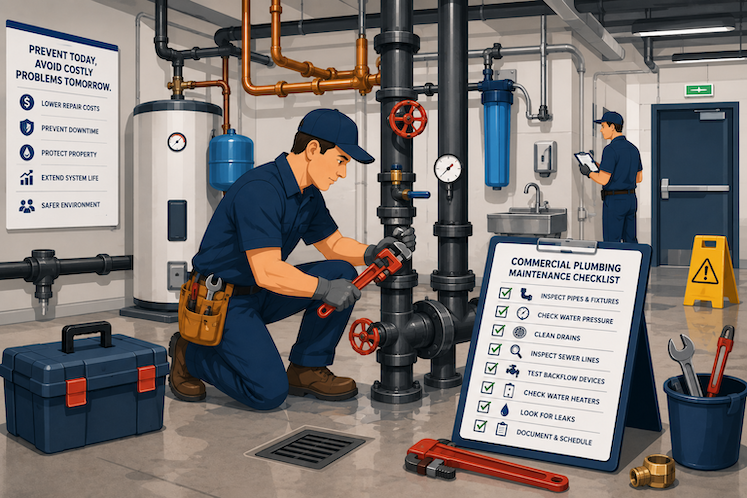
Create a Preventive Maintenance Schedule
Commercial plumbing maintenance works best when businesses follow a consistent schedule.
Maintenance plans may include:
- Monthly inspections
- Quarterly drain cleaning
- Annual sewer inspections
- Water heater servicing
- Leak detection checks
Regular scheduling helps businesses stay ahead of system wear.
Maintenance Costs Are More Predictable
Emergency repairs often happen unexpectedly and require immediate spending.
Preventive maintenance creates more stable, manageable operational costs over time.
Businesses can budget for maintenance more effectively than large emergency repairs.
South Florida Businesses Face Unique Plumbing Conditions
Commercial plumbing systems in South Florida deal with:
- Heavy rainfall
- High humidity
- Corrosion risks
- Hard water
- Aging infrastructure
- Coastal environmental exposure
These conditions increase the importance of preventive maintenance programs.
Businesses operating in humid coastal environments typically experience faster plumbing wear than properties located in drier regions.
Preventive Plumbing Supports Long-Term Business Stability
Commercial plumbing systems affect daily operations more than many businesses realize.
Reliable plumbing supports:
- Employee comfort
- Customer experience
- Health standards
- Building safety
- Operational continuity
Waiting for visible plumbing failures often leads to more expensive repairs, greater downtime, and higher long-term costs.
Businesses that invest in preventive maintenance usually experience fewer emergencies, lower repair costs, and more predictable facility management over time.
Protect Your Commercial Plumbing System
Preventive maintenance helps businesses avoid costly plumbing emergencies before they disrupt operations.
Get A Free Quote
Frequently Asked Questions
Why is commercial plumbing maintenance important?
Commercial plumbing maintenance helps prevent expensive repairs, reduce downtime, extend system lifespan, and improve overall operational reliability.
How often should commercial plumbing systems be inspected?
Most commercial properties should schedule plumbing inspections at least annually, while high-usage facilities may require more frequent evaluations.
What are common signs of commercial plumbing problems?
Slow drains, sewer odors, water stains, leaks, low pressure, and recurring backups often indicate developing plumbing issues.
Can preventive plumbing reduce business costs?
Yes. Preventive maintenance helps businesses avoid emergency repairs, water damage, operational interruptions, and premature equipment replacement.
Why are sewer inspections important for commercial properties?
Sewer camera inspections help identify underground issues like blockages, cracks, corrosion, and root intrusion before severe failures occur.
Does Florida’s climate affect commercial plumbing systems?
Yes. South Florida’s humidity, rainfall, and coastal conditions can increase corrosion, condensation, and plumbing system wear over time.