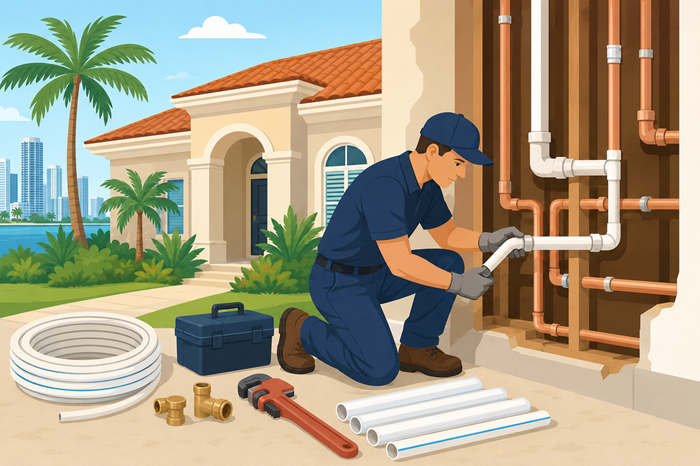
Older homes across South Florida have charm, character, and solid construction — but aging plumbing systems can quietly become a major issue behind the walls. Leaks, low water pressure, rusty water, and recurring pipe repairs often point to something bigger than a quick fix. In many cases, homeowners are dealing with outdated piping that is nearing the end of its lifespan.
Knowing when it’s time to replace your plumbing system can save you from expensive water damage, mold growth, and emergency repairs. Whether you live in Miami, Fort Lauderdale, or another coastal community, the region’s humidity, salt air, and storm exposure can accelerate pipe deterioration faster than many homeowners realize.
If your property has recurring plumbing issues, this guide will help you recognize the warning signs, understand your options, and decide when a full plumbing upgrade makes more financial sense than repeated repairs.
Why Older South Florida Homes Face Plumbing Problems
Many homes built before the 1990s still contain galvanized steel, polybutylene, or aging copper pipes. Over time, these materials corrode, weaken, or crack under pressure.
South Florida’s climate adds another layer of stress to plumbing systems. Heat, humidity, shifting soil, and seasonal storms can gradually damage underground and interior pipes. Homes near the coast may also experience faster corrosion because of salty air exposure.
Even if your plumbing still appears functional, hidden wear inside the pipes could already be reducing water flow and causing internal leaks.
The Most Common Signs You May Need New Pipes
Constant Pipe Leaks
A small leak every few months may not seem alarming at first. But when plumbing repairs become a regular expense, the problem is often systemic rather than isolated.
One leaking pipe can usually be repaired easily. Multiple leaks throughout the home typically indicate widespread corrosion or pipe failure.
If you find yourself repeatedly calling for emergency plumbing services, it may be more cost-effective to replace the aging system entirely.
Discolored Water
Brown, yellow, or reddish water coming from faucets is often caused by rust inside deteriorating pipes. This issue is especially common in older galvanized steel plumbing systems.
Rusty water is not only unpleasant but can also stain sinks, tubs, clothing, and appliances. If discoloration appears regularly, it may signal internal corrosion throughout your piping network.
Low Water Pressure Throughout the House
Low water pressure can happen for several reasons, but older pipes are a major cause. Mineral buildup, corrosion, and narrowing pipe interiors reduce water flow over time.
If showers, faucets, and appliances all struggle with pressure, your plumbing system may no longer be functioning efficiently.
Strange Noises in the Pipes
Banging, rattling, or vibrating sounds behind walls are often signs of loose or deteriorating plumbing lines. Aging pipes can shift, weaken, or develop pressure inconsistencies that create unusual noises.
These sounds should never be ignored, especially in older homes where hidden leaks can develop quickly.
Water Stains or Mold Growth
Unexplained stains on ceilings or walls often point to hidden plumbing leaks. Moisture trapped inside walls can also create mold problems, which become a serious health concern in humid South Florida environments.
Aging pipes frequently leak slowly before major failures occur, making early detection extremely important.
Call Now: (786) 709-0426
How Old Is Too Old for a Plumbing System?
Different pipe materials have different lifespans.
Galvanized Steel Pipes
Typically last 40–50 years before corrosion becomes severe.
Copper Pipes
Can last 50+ years but may weaken faster in coastal areas due to water chemistry and environmental conditions.
Polybutylene Pipes
These pipes were commonly installed between the 1970s and 1990s and are now considered unreliable because they become brittle and crack over time.
Cast Iron Drain Pipes
Often found in older homes, cast iron sewer lines can corrode internally and eventually collapse.
If your home is more than 30–40 years old and still has original plumbing, a professional evaluation is highly recommended.
Why Small Repairs Can Become More Expensive
Many homeowners continue patching isolated issues for years because replacing pipes feels like a large investment. Unfortunately, recurring repairs often add up faster than expected.
Temporary fixes may solve immediate leaks but do not address the underlying deterioration throughout the system. As pipes continue aging, the likelihood of water damage increases significantly.
A major leak hidden behind walls or beneath floors can lead to expensive structural repairs, flooring replacement, and mold remediation.
Scheduling an annual plumbing inspection can help homeowners catch warning signs before severe damage develops.
What Happens During a Whole-Home Pipe Replacement?
A full pipe replacement involves removing old supply lines and installing modern plumbing materials designed for long-term durability and efficiency.
Depending on the home, contractors may use:
- PEX piping
- Copper piping
- CPVC systems
Modern materials resist corrosion better and improve water flow throughout the property.
The process usually includes:
- Inspecting the existing plumbing system
- Identifying damaged or outdated sections
- Installing new water supply lines
- Testing pressure and leak prevention
- Repairing affected wall areas
While some wall access is necessary, experienced plumbers minimize disruption as much as possible.
Signs Your Repairs Are Becoming a Financial Drain
There comes a point where repairing old pipes repeatedly no longer makes financial sense.
Here are a few indicators:
- Water bills continue rising unexpectedly
- Plumbing problems return shortly after repairs
- Multiple areas of the home experience leaks
- Water pressure steadily worsens
- Insurance companies raise concerns about old pipes
If these issues sound familiar, investing in long-term plumbing improvements may actually save money over time.
Many homeowners also discover that updated plumbing systems can help boost your home’s value before selling.
Why South Florida Homes Need Special Attention
Plumbing systems in South Florida face unique environmental challenges.
Hurricane and Storm Exposure
Heavy rain and flooding can stress underground plumbing and sewer systems. Storm preparation is essential for protecting older homes from sudden failures.
Homeowners planning seasonal maintenance should also prioritize proper hurricane season prep, especially if aging pipes are already vulnerable.
Hard Water and Mineral Buildup
Some areas experience mineral-rich water that gradually narrows pipe interiors and reduces flow efficiency.
High Humidity
Persistent humidity can worsen hidden leaks and accelerate mold growth behind walls.
Because of these conditions, plumbing systems in older South Florida homes often age faster than homeowners expect.
How Modern Plumbing Improves Efficiency
New plumbing systems do more than prevent leaks. They can also improve your home’s overall performance and efficiency.
Benefits often include:
- Better water pressure
- Cleaner water quality
- Reduced leak risks
- Improved appliance performance
- Lower maintenance costs
- Increased property value
Modern fixtures and piping can also help homeowners reduce water bills through better efficiency and reduced water waste.
Should You Replace Pipes Before Problems Start?
Preventative replacement may seem unnecessary when pipes are still functioning, but proactive upgrades often prevent much larger expenses later.
This is especially important if:
- Your home has original plumbing
- You plan to renovate
- You recently purchased an older property
- You have recurring leak history
- Insurance providers recommend updates
Waiting until a major pipe burst occurs can lead to emergency restoration costs that far exceed planned replacement expenses.
Understanding the Warning Signs Hidden Behind Walls
Some plumbing issues stay hidden for years before obvious damage appears.
Pay close attention to:
- Damp drywall
- Musty smells
- Bubbling paint
- Warped flooring
- Reduced hot water performance
- Unexplained spikes in utility bills
These symptoms often indicate leaks occurring inside walls or beneath floors.
Call Now: (786) 709-0426
Many homeowners researching a repipe only realize how extensive the damage is after opening the walls during inspections.
Choosing the Right Plumbing Professionals
Replacing an aging plumbing system is a major project that requires experienced professionals familiar with South Florida homes and building codes.
When evaluating contractors, look for:
- Licensed and insured technicians
- Experience with older homes
- Clear project timelines
- Detailed inspections
- Transparent pricing
- Strong local reviews
Searching for repipe specialists near me may produce dozens of results, but choosing experienced local professionals matters far more than selecting the cheapest option.
An experienced plumbing company near me can evaluate your system thoroughly and explain whether repairs or replacement make the most sense.
How Much Does Pipe Replacement Cost?
The total repipe cost depends on several factors:
- Home size
- Pipe material
- Accessibility
- Number of bathrooms
- Existing damage
- Permit requirements
Smaller homes may require less extensive work, while large multi-story properties often involve more labor and wall access.
Although the upfront investment can feel significant, replacing aging pipes often prevents much larger repair expenses in the future.
Repair vs. Replacement: How to Decide
Minor isolated issues usually justify targeted repairs. However, widespread problems often indicate deeper system deterioration.
You may want to consider a full plumbing overhaul if:
- Repairs happen multiple times yearly
- Pipes are decades old
- Water quality keeps worsening
- Leaks appear in several locations
- Insurance providers recommend upgrades
A professional inspection can determine whether a localized repair or full repipe service is the smarter long-term investment.
Don’t Ignore Early Plumbing Warning Signs
Many major plumbing emergencies begin with small symptoms homeowners dismiss for months or years.
Ignoring warning signs can lead to:
- Water damage
- Mold growth
- Structural repairs
- Higher utility bills
- Reduced home value
- Emergency restoration expenses
Older South Florida homes deserve proactive plumbing care, especially in coastal climates where aging pipes deteriorate faster.
If your plumbing system is showing multiple signs of wear, addressing the issue early can help protect your property, improve efficiency, and avoid costly surprises later.
FAQs
How do I know if my house needs new pipes?
Frequent leaks, rusty water, low pressure, and aging plumbing materials are common warning signs.
How long does a whole-home pipe replacement take?
Most residential projects take several days depending on home size and accessibility.
Are older pipes dangerous?
Aging pipes can leak, corrode, and cause water contamination or structural damage over time.
Does replacing pipes increase home value?
Updated plumbing systems can improve buyer confidence and reduce future repair concerns.
What type of piping is best for South Florida homes?
PEX and copper are commonly recommended for durability and long-term performance.