Buying or building a new home in West Palm Beach is exciting, but plumbing deserves attention before small issues become expensive repairs. Between Florida humidity, heavy rain, mineral-rich water, and rapid home development, your plumbing system works harder than many homeowners realize.
Whether your home is brand new, recently remodeled, or new to you, understanding the basics can help you prevent leaks, protect water quality, and avoid emergency plumbing calls. These new home plumbing tips will help West Palm Beach residents feel more confident from day one.
Start With a Full Plumbing Inspection
Even if the home passed a general inspection, it is smart to have the plumbing checked separately. A general home inspector may notice obvious leaks, but a licensed plumber can evaluate water pressure, pipe materials, shut-off valves, drains, water heater performance, and signs of hidden damage.
This is especially important in West Palm Beach, where homes can range from new construction to older properties with aging pipe systems. A plumbing inspection can uncover problems behind walls, under sinks, or below the slab before they turn into larger repair bills.
If you are unsure where to begin, scheduling a free plumbing estimate can give you a clear starting point for your home’s plumbing needs.
Know Where Your Main Shut-Off Valve Is
One of the first things every new homeowner should locate is the main water shut-off valve. If a pipe bursts, a toilet overflows, or a supply line fails, turning off the water quickly can prevent major damage.
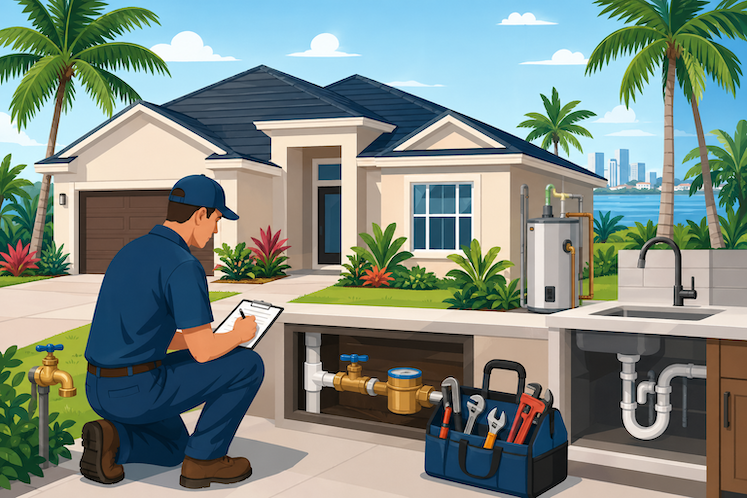
In many South Florida homes, the main shut-off valve may be near the water meter, outside along an exterior wall, in the garage, or close to the front of the property. Make sure every adult in the home knows where it is and how to use it.
It is also smart to test the valve occasionally. If it is stuck, corroded, or difficult to turn, have it replaced before an emergency happens.
Check the Age and Material of Your Pipes
Pipe material matters more than many homeowners think. Copper, PEX, PVC, CPVC, cast iron, and galvanized steel all age differently, and each has its own strengths and weaknesses.
In West Palm Beach, older homes may still have plumbing materials that are closer to the end of their useful life. Newer homes may use modern materials, but installation quality still matters. Poor connections, weak fittings, or rushed construction can lead to problems even in newer properties.
If you are not sure what type of pipes your home has, learning about the lifespan of pipes can help you understand whether your system may need closer attention.
Understand PEX vs. Copper Pipes
Many new homeowners hear about PEX and copper but do not know which one is better. The truth is that both can work well when installed correctly, but they perform differently.
Copper is durable and long-lasting, but it can be more expensive and may be affected by certain water conditions over time. PEX is flexible, easier to install, and often more resistant to freezing and corrosion, though it must be protected from UV exposure and installed properly.
If your new home has been repiped or recently built, it helps to compare PEX vs. copper pipes so you know what to expect from your system.
Test Water Pressure Early
High water pressure may feel nice in the shower, but it can strain pipes, fixtures, valves, and appliances. Low water pressure can also signal clogged lines, leaks, mineral buildup, or issues with the municipal supply.
For most homes, water pressure should stay within a safe range. If the pressure is too high, a pressure-reducing valve may be needed. If it is too low, a plumber can help identify whether the cause is inside your home or connected to the outside supply.
Testing pressure early gives you a baseline, which makes future issues easier to diagnose.
Inspect Every Fixture and Drain
Walk through your home and test every faucet, shower, toilet, tub, garbage disposal, and outdoor spigot. Look for slow drains, dripping faucets, weak flushing, loose handles, water stains, or unusual sounds.
Small problems can reveal bigger issues. A slow bathroom sink may point to a simple clog, but repeated backups could suggest venting or drain line concerns. A toilet that runs after flushing may waste hundreds of gallons of water over time.
Do this inspection before moving in fully, if possible. It is easier to repair plumbing issues before furniture, boxes, and daily routines get in the way.
Pay Attention to Your Water Heater
Your water heater is one of the most important plumbing appliances in your home. It affects showers, laundry, dishwashing, and everyday comfort.
New homeowners should check the water heater’s age, size, energy source, location, visible condition, and warranty status. Look for rust, leaks, strange noises, inconsistent temperature, or water that takes too long to heat.
If your home suddenly has no hot water, there may be several possible causes. Reviewing the common no hot water issues can help you understand when it is time to call a plumber.
Do Not Ignore Small Leaks
A small drip under the sink may not seem urgent, but in Florida’s humid climate, moisture can quickly lead to mold, cabinet damage, flooring problems, and pest issues.
Check under sinks, around toilets, behind appliances, near the water heater, and around outdoor hose bibs. Look for damp spots, musty smells, soft drywall, bubbling paint, or unexplained increases in your water bill.
Small leaks are usually easier and cheaper to fix when caught early. Waiting can turn a simple repair into water damage restoration.
Protect Your Home From Backflow Issues
Backflow happens when contaminated water flows backward into your clean water supply. This can happen because of pressure changes in the plumbing system, and it is a serious concern for water safety.
In some homes and businesses, backflow prevention devices are required. Even when they are not required, they can be a smart layer of protection, especially for irrigation systems, pools, or properties with certain plumbing setups.
Understanding backflow prevention basics can help you protect your household water from contamination risks.
Watch for Signs of Sewer Line Trouble
Sewer line issues can be stressful and expensive, so early warning signs matter. Slow drains throughout the home, gurgling toilets, sewage odors, wet patches in the yard, or frequent backups should not be ignored.
West Palm Beach properties with mature landscaping may also face root intrusion. Tree roots naturally seek moisture and can enter small cracks in older sewer lines.
If multiple drains are acting up at the same time, avoid using chemical drain cleaners as a first response. A professional inspection can identify the real problem without damaging your pipes.
Be Careful With What Goes Down the Drain
New homeowners often inherit plumbing habits from previous homes, but every system is different. To keep drains clear, avoid putting grease, coffee grounds, wipes, paper towels, cotton swabs, hair, and food scraps down sinks or toilets.
Even products labeled “flushable” can cause clogs. Toilets are designed for toilet paper and human waste only.
In the kitchen, wipe grease from pans before washing them. Use sink strainers to catch food particles. In bathrooms, clean hair from drains regularly before it builds up.
Maintain Outdoor Plumbing
Outdoor plumbing is easy to overlook, but it matters in West Palm Beach. Sprinkler systems, hose bibs, pool lines, outdoor kitchens, and exterior drains all need attention.
Check outdoor faucets for leaks, rust, and poor water flow. Make sure irrigation systems are not spraying directly against the house, which can create moisture problems near the foundation.
Before hurricane season, inspect exterior drainage areas and make sure water can move away from your home. Standing water around the property can create pressure on underground plumbing and increase the risk of hidden problems.
Prepare for Heavy Rain and Hurricane Season
South Florida weather can put real stress on plumbing systems. Heavy rain may overwhelm drainage, expose sewer issues, or create water intrusion around low-lying areas.
Before hurricane season, make sure sump pumps, drains, gutters, and exterior plumbing components are working properly. If your property has a history of flooding, ask a plumber whether additional protection is needed.
A little preparation can make a major difference when storms arrive.
Keep Plumbing Records Organized
As a new homeowner, start a simple plumbing folder. Include inspection reports, repair invoices, appliance manuals, water heater information, warranty documents, and photos of plumbing upgrades.
These records help you track maintenance and make better decisions later. They can also be useful if you sell the home in the future.
You do not need anything complicated. A digital folder with dates, receipts, and notes is enough to stay organized.
Know When to Call a Professional Plumber
Some tasks are safe for homeowners, such as cleaning faucet aerators, plunging a toilet, or checking for visible leaks. But larger issues should be handled by a licensed plumber.
Call a professional if you notice recurring clogs, sewer odors, low water pressure, pipe leaks, no hot water, water heater problems, slab leak signs, or unexplained water bills.
Plumbing repairs affect your home’s safety, water quality, and long-term value. When in doubt, it is better to get a proper diagnosis than guess.
FAQ
What should I check first in a new home’s plumbing system?
Start with the main shut-off valve, water heater, visible pipes, drains, toilets, faucets, and water pressure. A professional plumbing inspection is also helpful because it can reveal issues that are not easy to spot.
Is West Palm Beach hard on plumbing systems?
Yes, it can be. Humidity, heavy rainfall, mineral content in water, salt air near coastal areas, and older infrastructure can all affect plumbing performance over time.
How often should I have my plumbing inspected?
For most homes, a plumbing inspection once a year is a good idea. Older homes, homes with mature trees, or properties with past plumbing issues may need more frequent checks.
What are signs of a hidden leak?
Common signs include higher water bills, musty odors, damp flooring, bubbling paint, soft drywall, mold growth, or the sound of running water when fixtures are off.
Should I replace old pipes before they leak?
If the pipes are near the end of their lifespan, replacement may be smarter than waiting for failure. A plumber can inspect the system and recommend whether repair or repiping makes more sense.
Final Thoughts
A new home in West Palm Beach should feel comfortable, safe, and ready for everyday life. Plumbing plays a big role in that. By learning your system, checking key fixtures, watching for warning signs, and scheduling professional help when needed, you can avoid many common plumbing headaches.
The best time to understand your plumbing is before there is an emergency. A little attention now can protect your home, your budget, and your peace of mind later.