
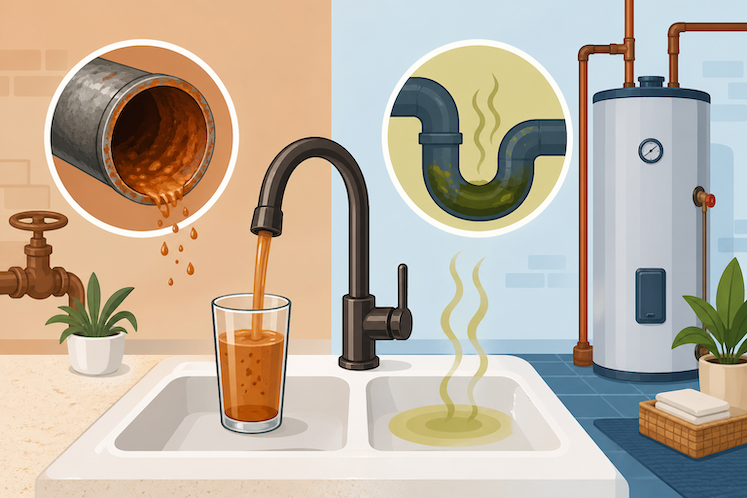
When your water smells like rust or sulfur, it is hard to ignore. A metallic, rusty odor can make tap water seem dirty, while a rotten egg smell can make showers, laundry, and cooking feel unpleasant.
The good news is that smelly water does not always mean your entire plumbing system is failing. Sometimes the cause is simple, like mineral buildup, an aging water heater, or bacteria inside one fixture. Other times, it can point to pipe corrosion, sewer gas issues, or contamination that needs fast attention.
Understanding the difference helps you protect your home, your plumbing, and your family’s comfort.
What Rust-Smelling Water Usually Means
Rusty-smelling water often has a metallic odor or taste. It may also look yellow, orange, red, or brown, especially when you first turn on the faucet.
This usually happens when iron, sediment, or corrosion enters your water supply.
In older homes, the issue may come from aging galvanized pipes. As these pipes corrode, rust particles can break loose and travel through your fixtures. If your home has older plumbing materials, learning how different pipe types age can help you compare and decide whether repiping may be worth considering.
Why Your Water Smells Like Sulfur
A sulfur smell is often described as rotten eggs. This odor is commonly caused by hydrogen sulfide gas or bacteria reacting inside your plumbing system.
The smell may come from:
- The water heater
- A specific drain
- Well water
- Bacteria in pipes
- Sewer gas entering the home
If the smell only happens with hot water, your water heater is usually the first place to check. If it comes from both hot and cold water, the issue may be deeper in the water supply or plumbing system.
Rust Smell vs. Sulfur Smell: Why the Difference Matters
Rust and sulfur odors point to different plumbing problems.
Rusty water often suggests corrosion, iron, or sediment. Sulfur smells usually involve bacteria, gas, or drain-related issues.
This matters because the fix is not the same. A rusty odor may require pipe inspection, flushing, filtration, or water heater service. A sulfur odor may require water heater treatment, drain cleaning, or sewer gas investigation.
Guessing can waste money. A proper inspection helps identify the source before the issue gets worse.
Common Causes of Rusty Water
Corroded Pipes
Corroded pipes are one of the most common reasons water smells or tastes metallic.
As pipes age, rust can form inside the line. When water flows through, it carries small rust particles to your faucet. This can discolor water and create a strong metallic smell.
If corrosion is advanced, it can also weaken pipes and increase the risk of leaks.
Sediment in the Water Heater
Water heaters collect sediment over time. Minerals settle at the bottom of the tank, especially in areas with hard water.
When sediment builds up, your hot water may smell metallic, look cloudy, or have small particles in it. The heater may also become less efficient, which can raise energy costs.
Flushing the water heater may help, but older or heavily corroded units may need professional service.
Municipal Water Line Work
Sometimes rusty water has nothing to do with your home’s plumbing.
If your city recently repaired water mains, flushed hydrants, or performed utility work nearby, sediment can get stirred up in the public line. This can temporarily discolor water in your home.
If the smell clears after running cold water for several minutes, it may have been a short-term issue. If it continues, the problem may be inside your plumbing.
Old Fixtures
Rust can also come from old faucets, valves, or supply lines.
If only one sink has rusty-smelling water, the fixture itself may be the source. Replacing the faucet or supply line may solve the problem without major plumbing work.
Common Causes of Sulfur-Smelling Water
Water Heater Bacteria
If only your hot water smells like rotten eggs, your water heater is likely involved.
Certain bacteria can react with the anode rod inside the tank. This reaction can create hydrogen sulfide gas, which causes the sulfur smell.
A plumber may recommend flushing the tank, replacing the anode rod, disinfecting the system, or checking whether the heater is near the end of its lifespan.
Drain Odors
Sometimes the water itself is not the problem.
A dirty drain can produce odors that seem like they are coming from the faucet. Food particles, soap scum, grease, and bacteria can collect inside the drain and release a sulfur-like smell.
A simple test is to fill a clean glass with water and smell it away from the sink. If the water smells fine away from the drain, the odor is likely coming from the drain, not the water.
Sewer Gas Problems
A sulfur smell can also come from sewer gas.
This may happen if a drain trap dries out, a vent pipe is blocked, or there is a problem with the sewer line. Sewer gas issues should not be ignored because they can affect indoor air quality and may point to a larger plumbing concern.
In South Florida, sewer line problems may also be affected by landscaping and underground root growth. If drains are slow along with the odor, tree root intrusion could be part of the problem.
Well Water Issues
Homes with well water are more likely to experience sulfur odors.
Hydrogen sulfide can occur naturally in groundwater. It may also come from bacteria in the well system, pressure tank, or plumbing lines.
Well water should be tested before choosing a treatment system. Filters, aeration systems, and chlorination can help, but the right solution depends on the test results.
Is Smelly Water Dangerous?
Smelly water is not always dangerous, but it should be taken seriously.
Rusty water may stain sinks, tubs, laundry, and appliances. It can also signal pipe corrosion, which may lead to leaks or reduced water flow.
Sulfur-smelling water may be harmless in some cases, but it can also point to bacteria, sewer gas, or water heater problems. If the smell is strong, sudden, or spreading to multiple fixtures, it is best to schedule an inspection.
Do not ignore water that smells bad and also looks dirty, tastes strange, or causes skin irritation.
What You Can Check Before Calling a Plumber
You can do a few simple checks to narrow down the source.
First, check whether the smell comes from hot water, cold water, or both. If it only happens with hot water, the water heater may be the cause.
Next, test multiple fixtures. If only one sink smells, the problem may be local to that drain or faucet. If every fixture smells, the issue may involve the main water supply or larger plumbing system.
You should also note whether the water is discolored. Rusty color usually points to sediment or corrosion, while clear water with a rotten egg smell often points to sulfur gas or bacteria.
When Smelly Water Needs Professional Attention
Some plumbing issues are easy to clean or flush. Others need a licensed plumber.
Call a professional if:
- The smell lasts more than a day
- Water is brown, orange, or cloudy
- The odor comes from several fixtures
- You notice low water pressure
- Drains are slow or gurgling
- The smell is strongest near drains
- Your water heater is making noise
- You see stains around fixtures
Odor combined with pressure problems may point to buildup, corrosion, or a deeper supply issue. If your fixtures are not flowing properly, low water pressure can be another sign your plumbing needs attention.
How Plumbers Diagnose Rust or Sulfur Smells
A plumber will usually start by identifying where the smell begins.
They may inspect fixtures, test hot and cold water, check the water heater, look at visible piping, and inspect drains or sewer lines. In some cases, water testing may be recommended.
For sewer-related odors, camera inspections can help find blockages, cracks, or root intrusion. For water heater odors, flushing and anode rod inspection may reveal the cause.
The goal is to fix the source instead of masking the smell.
How to Prevent Rusty or Sulfur-Smelling Water
Prevention depends on the cause, but regular plumbing care makes a big difference.
Flush your water heater as recommended. Keep drains clean and avoid pouring grease, oil, and food waste into sinks. Watch for early signs of corrosion, leaks, or pressure changes.
Routine maintenance can also prevent small issues from turning into costly repairs. Many homeowners avoid major damage by learning how to spot early warning signs and expensive plumbing repairs before they become emergencies.
Why You Should Not Ignore Plumbing Odors
Bad smells are often early warning signs.
A rusty smell can mean your pipes are wearing down from the inside. A sulfur smell can mean bacteria, sewer gas, or water heater trouble. Both can lead to bigger problems when left alone.
Even if the water is still usable, odor problems can affect your daily comfort and confidence in your home’s plumbing.
If the smell keeps coming back, it is better to investigate now than wait for leaks, stains, backups, or water heater failure.
Getting the Right Fix for Smelly Water
The right solution depends on the source.
A rusty odor may require pipe repair, fixture replacement, filtration, or water heater service. A sulfur odor may require drain cleaning, sewer inspection, water treatment, or water heater maintenance.
If you are dealing with persistent odors, discoloration, or plumbing concerns, you can get plumbing estimate from a local professional who can inspect the issue and recommend the right next step.
FAQ
Why does my water smell like rotten eggs?
A rotten egg smell is usually caused by hydrogen sulfide gas or bacteria in your plumbing system. It may come from the water heater, drains, well water, or sewer gas.
Why does my water smell metallic?
Metallic-smelling water is often caused by rust, iron, sediment, or pipe corrosion. It can also come from an old fixture or water heater buildup.
Is rusty water safe to use?
Rusty water is not always harmful, but it is not something to ignore. It can stain fixtures, damage appliances, and point to pipe corrosion.
Why does only my hot water smell bad?
If only hot water smells, the issue is often inside the water heater. Sediment, bacteria, or the anode rod may be causing the odor.
Can a drain make water smell like sulfur?
Yes. Sometimes the water is fine, but bacteria and buildup inside the drain create the smell. Testing water in a clean glass away from the sink can help you tell the difference.
Should I call a plumber for smelly water?
Yes, especially if the smell lasts, affects multiple fixtures, comes with discoloration, or appears with slow drains or low water pressure.
Conclusion
Water that smells like rust or sulfur is more than a minor annoyance. It can point to corrosion, sediment, bacteria, sewer gas, or water heater problems.
The key is finding where the smell starts. Once you know whether it comes from hot water, cold water, one fixture, multiple fixtures, or the drain itself, it becomes much easier to choose the right fix.
A small odor problem can often be corrected early. Waiting too long can lead to stains, leaks, backups, or expensive repairs.