Water backing up in your sink or tub is one of those plumbing problems that immediately gets your attention. It’s messy, inconvenient, and often a sign that something deeper is going wrong in your pipes.
If you’ve ever turned on your faucet or shower only to see water rising instead of draining, you’re not alone. This issue is common in many homes and can range from a simple clog to a more serious plumbing problem that needs professional attention.
In this guide, we’ll break down the real causes behind water backup, how to identify what’s happening in your home, and the most effective ways to fix and prevent it.
What Does It Mean When Water Backs Up?
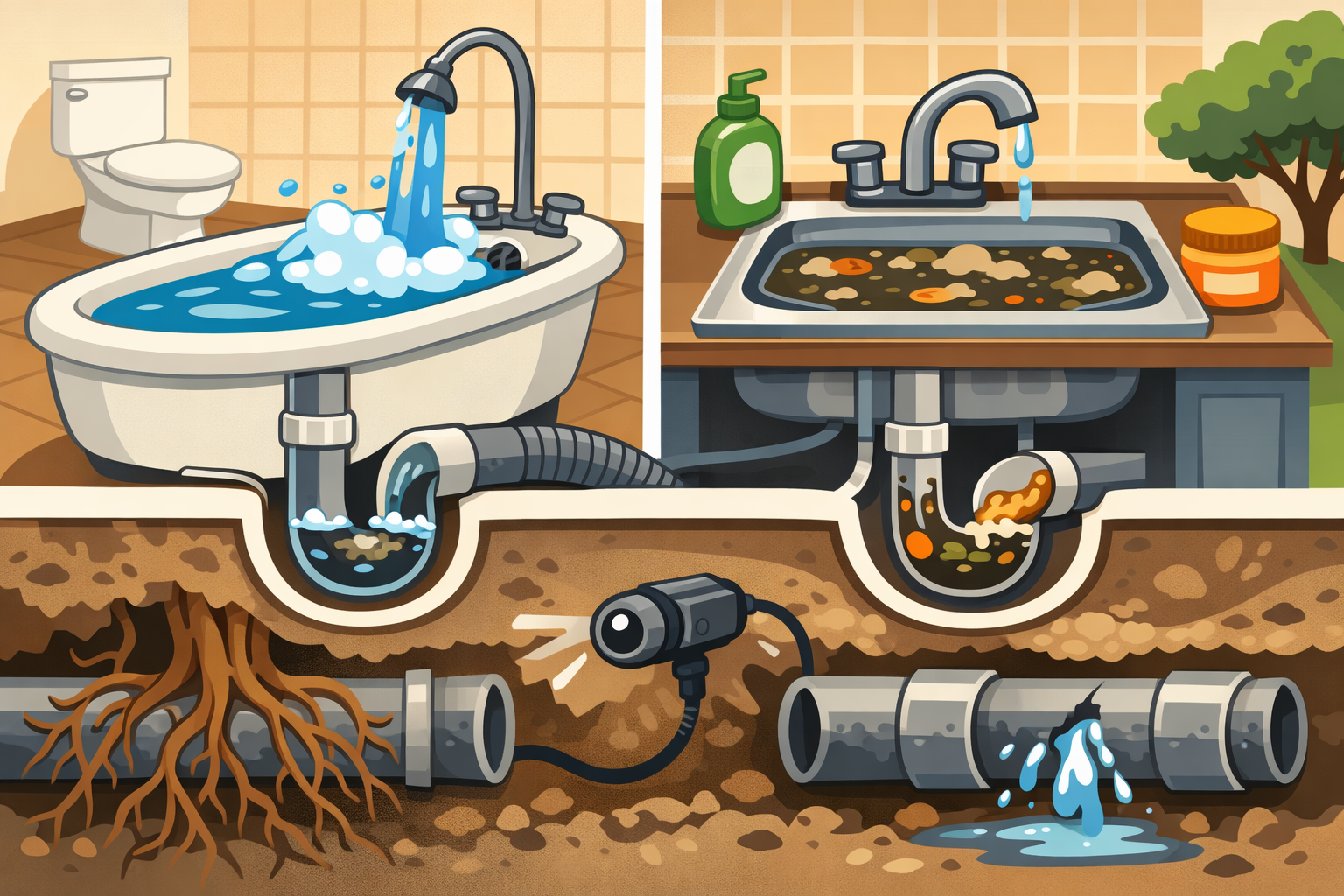
Water backing up means wastewater isn’t flowing out of your plumbing system properly. Instead of moving through your pipes and into the sewer line, it reverses direction or gets stuck.
This usually happens when something blocks or restricts the flow of water.
Common Signs to Watch For
- Water rising in the sink or tub when draining
- Bubbling or gurgling sounds from drains
- Slow drainage followed by sudden backup
- Water appearing in other fixtures (like a tub filling when you flush the toilet)
- Foul odors coming from drains
These symptoms often point to a clog or blockage somewhere in your plumbing system, but the exact cause can vary.
Main Causes of Water Backing Up
Understanding the root cause is key to solving the problem properly. Here are the most common reasons homeowners deal with water backup.
Hair and Soap Buildup
Hair is one of the biggest culprits, especially in bathroom drains. Over time, it binds with soap residue and creates stubborn clogs.
Why It Gets Worse Over Time
- Soap scum hardens inside pipes
- Hair collects and traps debris
- Water flow gradually slows until it stops
This type of clog usually starts small but becomes a complete blockage if left untreated.
Grease and Food Waste in Kitchen Drains
In kitchen sinks, grease is the number one cause of backups.
Even if you rinse it with hot water, grease cools and solidifies inside your pipes.
What Happens Inside the Pipe
- Grease sticks to pipe walls
- Food particles cling to grease
- Layers build up until water can’t pass through
This often leads to sudden backups, especially after heavy use.
Foreign Objects Stuck in the Drain
Sometimes the issue is as simple as something that shouldn’t be there.
Common items include:
- Paper towels
- Hygiene products
- Small objects accidentally dropped
Unlike organic buildup, these blockages can completely stop water flow instantly.
Tree Roots in Sewer Lines
If the backup affects multiple fixtures, the issue may be deeper in your main sewer line.
Tree roots naturally seek moisture and can grow into small cracks in underground pipes.
Signs of Root Intrusion
- Multiple drains backing up at once
- Slow drainage throughout the house
- Recurring clogs despite cleaning
This is a more serious issue that typically requires professional equipment.
Pipe Damage or Misalignment
Older or damaged pipes can collapse, crack, or shift out of place.
When this happens, water flow becomes restricted or completely blocked.
Common Causes of Pipe Issues
- Aging plumbing systems
- Ground movement
- Poor installation
These problems often go unnoticed until backups become frequent.
Vent Pipe Blockages
Your plumbing system relies on vent pipes to regulate air pressure.
If these vents become blocked (by debris, nests, or dirt), it can disrupt drainage and cause water to back up.
Symptoms of Vent Issues
- Gurgling sounds
- Slow draining across fixtures
- Intermittent backups
This is less obvious but still an important factor.
How to Identify the Severity of the Problem
Not all backups are the same. Knowing how serious the issue is helps you decide what to do next.
Minor Clog (Localized Issue)
- Only one drain is affected
- Water drains slowly but eventually clears
- No unusual smells or sounds
This is usually caused by surface-level buildup and may be resolved with basic cleaning.
Moderate Blockage
- Multiple slow drains
- Occasional backups
- Gurgling noises
At this stage, the blockage is likely deeper in the system and may require professional tools.
Major Plumbing Issue
- Water backing up in multiple fixtures
- Sewage smells
- Frequent or sudden overflows
This typically points to a main sewer line issue and should be handled immediately.
Effective Solutions for Water Backup
Once you understand the cause, the next step is choosing the right solution.
DIY Methods That Can Help
For minor clogs, you can try:
Hot Water Flush
Works best for grease buildup.
- Boil water
- Pour slowly down the drain
- Repeat if necessary
Baking Soda and Vinegar
A natural way to break down light buildup.
- Pour baking soda into the drain
- Add vinegar
- Let it sit before flushing with hot water
Plunger
Creates pressure to loosen clogs near the surface.
These methods are useful for early-stage problems but won’t fix deeper issues.
When to Call a Professional Plumber
If the problem keeps coming back or gets worse, it’s time to bring in experts.
Professional plumbers have tools that go beyond basic fixes, including drain snakes and hydro jetting systems.
If you’re dealing with recurring or severe blockages, it’s best to schedule a proper clog removal and repair service to fully clear the issue and prevent further damage.
Advanced Solutions Used by Professionals
Professional services don’t just remove clogs—they diagnose the root cause.
Camera Inspection for Accurate Diagnosis
A plumbing camera allows technicians to see inside your pipes.
This helps identify:
- Exact clog location
- Pipe damage
- Tree root intrusion
If you want a precise diagnosis before repairs, a drain camera inspection can eliminate guesswork.
Hydro Jetting for Deep Cleaning
Hydro jetting uses high-pressure water to clean the inside of pipes.
It removes:
- Grease buildup
- Mineral deposits
- Stubborn debris
This method is especially effective for recurring clogs.
Leak Detection and Pipe Repair
Sometimes backups are caused by hidden leaks or structural damage.
In these cases, an advanced leak detection can locate the issue without unnecessary digging.
How Water Backup Affects Your Home
Ignoring the problem can lead to more than just inconvenience.
Water Damage
Standing water can damage cabinets, flooring, and walls.
Even small leaks can lead to costly repairs over time.
Health Risks
Backed-up water often contains bacteria and contaminants.
This can create an unhealthy environment, especially in kitchens and bathrooms.
Increased Plumbing Costs
The longer you wait, the worse the problem gets.
What starts as a simple clog can turn into a major repair involving your main sewer line.
Preventing Future Drain Backups
Prevention is always easier and more affordable than repairs.
Watch What Goes Down the Drain
Avoid putting these into your plumbing system:
- Grease and oils
- Coffee grounds
- Hair buildup
- Hygiene products
Small habits make a big difference over time.
Use Drain Screens
Simple screens can catch debris before it enters your pipes.
They’re inexpensive and highly effective.
Schedule Routine Maintenance
Regular inspections and cleaning keep your system running smoothly.
Working with a trusted provider for ongoing plumbing services helps catch problems early.
Don’t Ignore Early Warning Signs
Slow drains, odors, and unusual sounds are early indicators.
Addressing them quickly can prevent major issues later.
Maintain Connected Systems
Your drains are connected to other plumbing components, including water heaters and supply lines.
Final Thoughts
Water backing up in your sink or tub is more than just a nuisance—it’s a clear signal that something isn’t working properly in your plumbing system.
While some minor clogs can be handled with simple solutions, recurring or severe backups often require professional attention. Identifying the root cause early can save you from costly repairs, property damage, and unnecessary stress.
If you notice persistent issues, unusual smells, or multiple drains acting up, it’s best to act quickly and get a proper diagnosis. A proactive approach ensures your plumbing system stays reliable and your home remains safe and comfortable.