
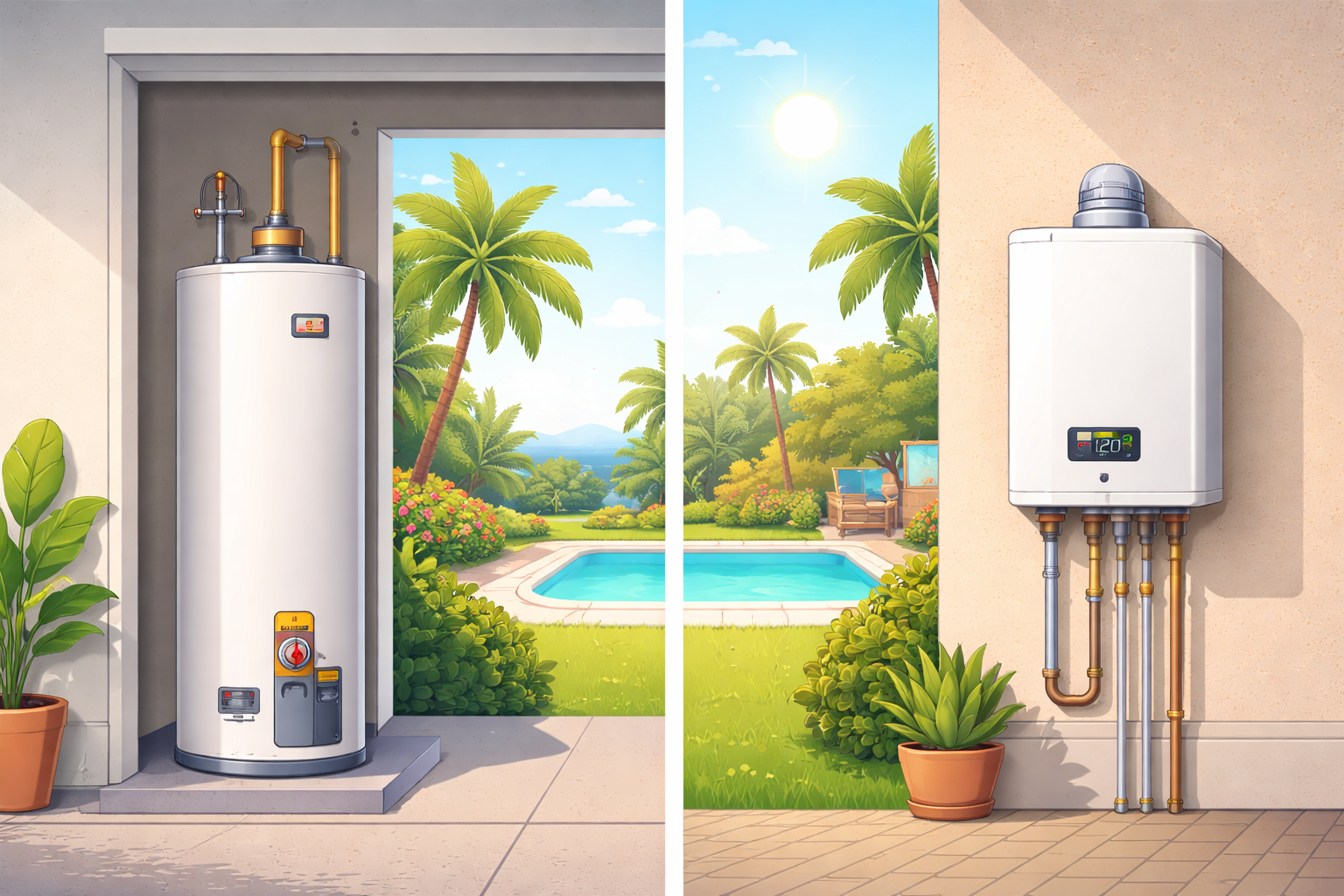
Hot water is something most homeowners rarely think about—until it suddenly stops working. In South Florida, where warm temperatures and high humidity influence how plumbing systems perform, choosing the right water heater can make a noticeable difference in comfort, efficiency, and long-term costs.
If you’re considering replacing your existing system or installing one in a new home, you’ve likely come across the debate between traditional tank water heaters and modern tankless systems. Both options have advantages, and the best choice depends on your household’s needs, water usage habits, and long-term goals.
This guide explains the key differences between tank and tankless water heaters, how they perform in South Florida homes, and what to consider before making a decision.
Understanding How Tank Water Heaters Work
Traditional tank water heaters have been the standard for decades. They store and heat a large amount of water in an insulated tank so it’s ready whenever you turn on the tap.
Most residential units hold between 30 and 80 gallons of hot water. The system continuously heats and maintains the water temperature so it’s available for showers, laundry, dishwashing, and other daily needs.
Key Components of Tank Systems
A typical tank water heater includes:
- A large insulated storage tank
- Heating elements (gas burner or electric element)
- A thermostat to regulate temperature
- An inlet pipe for cold water
- An outlet pipe for hot water
Once hot water is used, the tank automatically refills with cold water and reheats it.
Advantages of Tank Water Heaters
Tank systems remain popular because they are:
Affordable to install
Upfront costs are usually lower than tankless systems.
Reliable and simple
The design is straightforward and well understood by most plumbers.
Consistent for moderate usage
Households with predictable water usage typically have no issues.
For many homeowners, especially those replacing an existing system, traditional water heater installation services may still be the most practical option.
How Tankless Water Heaters Work
Tankless water heaters operate very differently. Instead of storing hot water, these systems heat water instantly as it flows through the unit.
When you turn on a faucet or shower, cold water passes through powerful heating elements or gas burners that raise the temperature within seconds.
Because there is no storage tank, the system can provide hot water continuously.
Key Components of Tankless Systems
Tankless heaters typically include:
- A compact heating unit mounted on a wall
- High-powered heating elements or gas burners
- Flow sensors that activate heating when water runs
- Digital temperature controls
These systems are significantly smaller than traditional tanks and are often installed in utility closets, garages, or outside walls.
Benefits of Tankless Water Heaters
Tankless systems offer several advantages:
Unlimited hot water
Because water is heated on demand, you never run out during long showers or multiple uses.
Energy efficiency
Tankless units avoid the “standby heat loss” that happens when stored water cools down.
Space-saving design
Their compact size frees up valuable space in smaller homes.
Longer lifespan
Tankless systems often last 20 years or more with proper maintenance.
These benefits have made tankless heaters increasingly popular among South Florida homeowners.
Why Water Heater Choice Matters in South Florida
The South Florida climate presents unique conditions that can affect plumbing systems.
High humidity, mineral-rich water, and year-round water usage all play a role in how efficiently water heaters operate.
Warmer Groundwater Temperatures
One advantage for South Florida homeowners is that groundwater temperatures are warmer compared to northern states.
This means water heaters require less energy to reach the desired temperature, making both tank and tankless systems more efficient.
High Water Usage
Many homes in Miami, Fort Lauderdale, and surrounding areas have larger households or frequent guests. This can lead to multiple showers running at the same time.
Tankless systems can be beneficial here, especially when properly sized for the household’s needs.
Hard Water and Mineral Buildup
South Florida water often contains minerals that can accumulate inside plumbing fixtures and appliances.
Over time, this buildup may reduce efficiency or cause damage. Regular inspections and maintenance help prevent long-term problems, and in some cases a professional plumbing camera inspection can identify hidden pipe issues before they affect your system.
Comparing Tank vs Tankless Water Heaters
Choosing between these systems often comes down to several practical considerations.
Upfront Cost
Tank water heaters are typically cheaper to install. They require fewer upgrades to plumbing or electrical systems.
Tankless units have a higher initial investment because they may require:
- Gas line upgrades
- Electrical panel adjustments
- Specialized installation
However, long-term efficiency can offset those costs.
Energy Efficiency
Tankless water heaters are generally more energy efficient because they heat water only when needed.
Traditional tanks constantly maintain hot water, which results in energy loss over time.
Over several years, homeowners may notice lower utility bills with a tankless system.
Lifespan
The expected lifespan varies significantly.
Tank water heaters typically last:
- 8 to 12 years
Tankless systems often last:
- 20 years or longer
This longer lifespan can make tankless systems more appealing for homeowners planning to stay in their property long term.
Space Requirements
Traditional tanks take up significant space in garages or utility areas.
Tankless units are wall-mounted and compact, making them ideal for smaller homes or modern renovations.
Hot Water Capacity
Tank heaters provide a limited supply of hot water at a time. Once the tank empties, you must wait for it to refill and reheat.
Tankless systems produce hot water continuously, but they do have flow limits. If multiple fixtures run simultaneously, the system must be properly sized to handle the demand.
When a Tank Water Heater Makes More Sense
Despite the popularity of tankless systems, traditional tanks remain the best option in certain situations.
Budget-Conscious Installations
If upfront cost is the primary concern, tank heaters are typically more affordable.
Homeowners replacing an old system with minimal changes to plumbing often choose tank systems.
Smaller Households
For homes with predictable water usage—such as couples or smaller families—a properly sized tank heater can provide plenty of hot water without the need for a more complex system.
Existing Infrastructure
Older homes sometimes lack the gas supply or electrical capacity needed for tankless units.
Upgrading these systems may increase installation costs significantly.
When Tankless Water Heaters Are the Better Choice
Tankless systems are often ideal for households that prioritize efficiency and long-term performance.
Large Families
Homes with multiple bathrooms or several people using hot water at once can benefit from continuous hot water.
Energy Efficiency Goals
Homeowners looking to reduce energy consumption often choose tankless systems because they eliminate standby heat loss.
Modern Home Upgrades
If you’re remodeling or upgrading plumbing systems, installing a tankless unit can be a forward-looking improvement that increases property value.
Common Water Heater Problems in South Florida
Regardless of which system you choose, water heaters can experience problems over time.
Some common issues include:
- Sediment buildup inside tanks
- Heating element failure
- Temperature fluctuations
- Corrosion and leaks
Sometimes the first sign of a problem appears as unexplained moisture or rising water bills. In these cases, professional home leak detection services can help identify hidden plumbing issues before they lead to major repairs.
Signs It’s Time to Replace Your Water Heater
Even well-maintained systems eventually need replacement.
Watch for these warning signs:
Inconsistent Water Temperature
If water frequently switches between hot and cold, the heating elements or thermostat may be failing.
Rusty Water
Rust-colored water can indicate corrosion inside the tank.
Strange Noises
Popping or rumbling sounds often mean sediment has accumulated inside the tank.
Frequent Repairs
If your water heater requires constant repairs, replacing it may be more cost-effective.
Professional Installation Matters
Whether you choose a tank or tankless system, professional installation is essential for safety and efficiency.
Improper installation can cause:
- Reduced system lifespan
- Higher energy costs
- Water damage
- Safety hazards
A licensed plumber ensures that the unit is properly sized, connected, and calibrated for your home’s needs.
If you’re considering replacing your system or upgrading to a more efficient option, you can schedule a quick plumbing appointment by calling 786-709-0426.
Making the Right Choice for Your Home
The decision between tank and tankless water heaters ultimately depends on your priorities.
Tank systems remain a reliable and budget-friendly option for many households.
Tankless systems, on the other hand, offer higher efficiency, longer lifespans, and unlimited hot water—making them an excellent investment for modern South Florida homes.
The best way to determine which option is right for you is to evaluate your household size, water usage habits, and long-term goals.
Consulting with a professional plumber can help ensure you choose a system that delivers comfort, efficiency, and reliability for years to come.