Condo plumbing can feel confusing because one problem may involve your unit, your neighbor’s unit, the building’s shared plumbing lines, or the condo association. For South Florida condo owners, this matters even more because high humidity, heavy rain, storm season, aging buildings, and high-rise drainage systems can all put extra pressure on plumbing infrastructure.
Understanding how shared plumbing systems work can help you spot problems earlier, avoid costly mistakes, and know when to call your association or a licensed plumber. Whether you own a condo in Miami, Hollywood, Fort Lauderdale, Boca Raton, or West Palm Beach, the basics are the same: your plumbing does not exist in isolation.
What Are Shared Plumbing Systems in Condos?
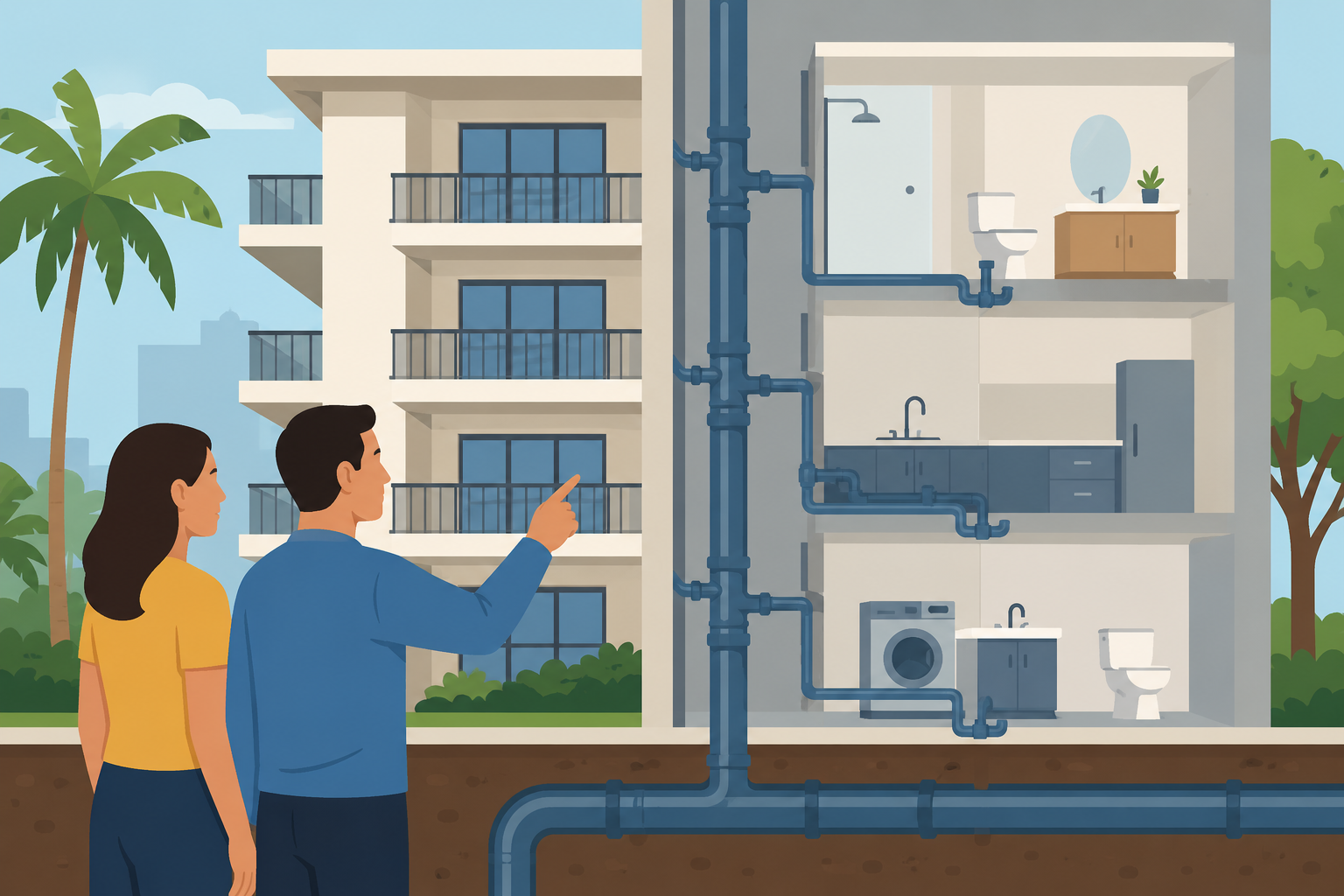
Shared plumbing systems are the parts of a condo building’s plumbing network that serve more than one unit. These systems usually include main water supply lines, vertical drain stacks, sewer lines, vent pipes, shutoff valves, and sometimes water heaters or pump systems depending on the building design.
In a single-family home, most plumbing lines serve only one household. In a condo, multiple units may depend on the same pipes. That means a clog, leak, or backup may not start inside your unit, even if your bathroom or kitchen is where the problem appears.
This is why condo plumbing problems often require a different approach than standard residential plumbing. A plumber may need to determine whether the issue is limited to your fixtures or connected to a larger building-wide system.
Why Condo Plumbing Is More Complicated Than Home Plumbing
Condo buildings are built with layered plumbing systems. Water supply lines bring clean water into individual units, while drain lines remove wastewater from sinks, showers, tubs, toilets, washing machines, and dishwashers.
In multi-story buildings, vertical drain stacks run through several floors. These stacks collect wastewater from multiple units before carrying it into the main sewer line. If there is a blockage in one of these shared stacks, several units may be affected at once.
That is where confusion often starts. A backup in your bathtub may look like your personal plumbing issue, but it could be caused by a blockage below your floor or in a shared line. In South Florida condos, where older buildings and heavy usage are common, shared drainage issues can become especially frustrating.
Common Shared Plumbing Components Condo Owners Should Know
Main Water Supply Lines
The main water supply line brings fresh water into the building. From there, branch lines distribute water to individual units. If there is a break or pressure issue in the main line, several residents may notice low water pressure, discolored water, or no water at all.
Problems with main supply lines are usually handled by the condo association, but that depends on the building’s governing documents.
Drain Stacks
Drain stacks are vertical pipes that carry wastewater from multiple units. These are common in high-rise and mid-rise condo buildings. If a drain stack becomes clogged, wastewater may back up into lower units first.
This can be especially stressful because the affected owner may not have caused the clog. Grease, wipes, hair, food scraps, and buildup from several units can collect in the same line over time.
Sewer Lines
The sewer line carries wastewater from the building to the municipal sewer system or another approved waste system. A sewer line issue can cause foul odors, slow drains, gurgling toilets, and wastewater backups.
If you are dealing with recurring backups or researching factors that may influence repair pricing, sewer backup costs can vary depending on the extent of the issue, property conditions, and the specific repair work needed in Hollywood and nearby South Florida areas.
Vent Pipes
Plumbing vent pipes help regulate air pressure in the drain system. Without proper venting, drains may gurgle, empty slowly, or release sewer odors. Venting issues can be hard to diagnose because they may not involve a visible leak.
Shutoff Valves
Shutoff valves control water flow to certain parts of the plumbing system. Your unit may have individual shutoff valves under sinks, behind toilets, or near appliances. The building may also have larger shutoff valves for shared lines.
Knowing where your unit’s shutoff valves are located can prevent major damage during a leak.
Who Is Responsible for Condo Plumbing Repairs?
Responsibility depends on your condo documents, state laws, and the exact location of the plumbing problem. In general, individual owners are often responsible for plumbing fixtures and lines that serve only their unit. Condo associations are often responsible for shared systems that serve multiple units.
However, this is not always simple. A pipe inside your wall may serve your unit only, or it may be part of a shared system. A leak may begin in one unit and damage another. A clog may appear in your sink but originate in a shared drain line.
This is why documentation matters. Your condo declaration, bylaws, and maintenance rules should explain who handles what. If the language is unclear, the association, property manager, insurance company, or plumber may need to help determine responsibility.
Signs a Plumbing Problem May Be Shared
Some plumbing issues clearly belong to one unit. A dripping faucet, running toilet, or leaking supply hose under a sink is usually local. Other symptoms may point to a shared plumbing issue.
Watch for these warning signs:
Slow drains in multiple fixtures at once may suggest a deeper blockage. If your shower, toilet, and sink all drain poorly, the problem may be beyond one fixture.
Water backing up into a tub or shower when another fixture is used may point to a shared drain line issue.
Gurgling sounds from toilets or drains may indicate blocked vents or drainage pressure problems.
Sewer odors in more than one room or unit can suggest a shared vent or drain issue.
Water stains on ceilings or walls may come from pipes above or behind your unit.
If neighbors are experiencing similar issues, the problem is more likely connected to shared plumbing infrastructure.
Why South Florida Condo Owners Need to Pay Extra Attention
South Florida creates unique plumbing challenges. Many condo buildings are located near the coast, where salt air, humidity, and storm activity can speed up wear on building systems. Older buildings may also have aging cast iron pipes, galvanized lines, or drainage systems that were not designed for today’s water usage.
Heavy rain can also stress sewer and stormwater systems. During hurricane season, plumbing problems may become more noticeable because groundwater rises, municipal systems become overloaded, and drainage slows down.
Even routine seasonal changes can affect plumbing performance. South Florida homeowners and condo owners often deal with extra demand during hot months, which makes summer plumbing problems worth understanding before small issues turn into emergencies.
Common Plumbing Problems in Condo Buildings
Recurring Drain Clogs
Recurring clogs are one of the most common condo plumbing complaints. In a shared system, one resident’s habits can affect others. Grease, coffee grounds, wipes, paper towels, hair, and soap scum can build up inside shared lines.
If your drain keeps clogging even after basic cleaning, the issue may be deeper in the building’s plumbing system.
Water Leaks Behind Walls
Leaks behind walls are especially concerning in condos because water can travel between floors and units. A small leak may damage drywall, flooring, cabinets, ceilings, and electrical systems.
Because shared pipes often run through walls and ceilings, it may not be obvious where the water started. A professional inspection can help identify the source before repairs begin.
Low Water Pressure
Low water pressure can come from clogged aerators, failing valves, pipe corrosion, or building-wide supply problems. If only one faucet has low pressure, it may be a local issue. If the entire unit or several units are affected, the problem may involve shared plumbing.
Sewer Backups
Sewer backups are serious and should be addressed quickly. They can expose residents to contaminated water and cause expensive property damage. In condos, backups may affect lower-floor units first because wastewater follows gravity.
A sewer backup may be caused by a shared blockage, damaged main line, root intrusion, or municipal sewer problem.
Noisy Pipes
Banging, rattling, or knocking pipes may be caused by pressure changes, loose pipe supports, water hammer, or shared system issues. In multi-unit buildings, pressure fluctuations can happen when several residents use water at the same time.
What to Do When You Notice a Plumbing Problem
The first step is to stay calm and gather information. Check whether the issue is limited to one fixture or happening throughout your unit. Ask nearby neighbors if they are experiencing the same problem. This can help determine whether the issue may be shared.
Next, report the issue to your property manager or condo association, especially if you suspect a shared line, wall leak, ceiling leak, sewer odor, or backup. Put the report in writing so there is a record.
If water is actively leaking, shut off the nearest valve if you can do so safely. Move valuables away from the area and document damage with photos or videos.
Then contact a licensed plumber. Even if the association may be responsible, a professional diagnosis can help clarify the source of the problem. When you need local help, you can schedule plumbing service with a South Florida plumbing team that understands condo systems and shared plumbing concerns.
How Condo Owners Can Prevent Plumbing Problems
Preventing condo plumbing issues starts with good habits inside your own unit. Avoid pouring grease, oil, or food scraps down the kitchen sink. Even if your drain seems fine, that material can harden farther down the shared line.
Use drain strainers in showers and tubs to catch hair. Do not flush wipes, paper towels, feminine hygiene products, cotton pads, or dental floss. Many products labeled “flushable” can still cause problems in shared plumbing systems.
Check under sinks regularly for moisture, corrosion, or soft cabinet flooring. Look around toilets, washing machines, dishwashers, and water heaters for signs of leaks.
It also helps to know the age of your building’s plumbing system. If your condo has older pipes, regular inspections may be especially valuable.
Questions to Ask Your Condo Association
Every condo owner should understand how plumbing responsibility works in their building. Ask your association or property manager:
Who is responsible for pipes inside walls?
Who handles drain stack repairs?
What should owners do during an active leak?
Are there preferred plumbers for building-related issues?
Does the building have a plumbing maintenance schedule?
Has the building had recent sewer, drain, or pipe inspections?
Are owners required to carry specific insurance coverage for water damage?
Clear answers can save time during an emergency. They can also help prevent disputes after damage occurs.
Insurance and Documentation Matter
Water damage is one of the most common and expensive condo insurance issues. Because shared plumbing can involve multiple parties, documentation is important.
Keep copies of repair invoices, plumber reports, association emails, photos, videos, and insurance communication. If a leak affects another unit or comes from another unit, this documentation can help establish the timeline and source.
It is also smart to review your condo insurance policy before a problem happens. Make sure you understand what is covered, what is excluded, and whether you have enough coverage for water damage, mold remediation, temporary housing, and personal property.
When to Call a Plumber Immediately
Some issues should not wait. Call a plumber right away if you notice wastewater backing up into your tub, shower, or toilet. You should also get help quickly for active leaks, water stains that are spreading, sewer odors, sudden low water pressure, or repeated clogs.
Delaying service can make damage worse. In a condo, plumbing problems can spread beyond your unit, which may increase repair costs and create disputes with neighbors or the association.
A licensed plumber can inspect the issue, determine whether it is local or shared, and recommend the right next step.
Final Thoughts
Shared plumbing systems are part of condo living, but they do not have to be a mystery. When you understand how your building’s plumbing works, you can respond faster, ask better questions, and protect your property from unnecessary damage.
For South Florida condo owners, prevention is especially important. Humidity, storms, older buildings, high-rise drainage systems, and heavy water use can all increase plumbing risk. A small warning sign today can become a major repair if it is ignored.
The best approach is simple: know your responsibilities, communicate with your association, watch for early signs of trouble, and bring in a qualified plumber when something does not seem right.
FAQ
What is a shared plumbing system in a condo?
A shared plumbing system is any part of the plumbing network that serves more than one unit. This can include drain stacks, main water lines, sewer lines, vent pipes, and building shutoff valves.
Who pays for shared plumbing repairs in a condo?
It depends on your condo documents and where the problem is located. Owners usually handle plumbing that serves only their unit, while associations often handle shared systems. Always check your governing documents.
Can a clog in another condo affect my unit?
Yes. If multiple units connect to the same drain stack or sewer line, a clog caused by another unit can affect your plumbing. Lower-floor units are often more likely to experience backups.
What should I do if water is leaking from the ceiling?
Document the leak, move valuables, notify your property manager or condo association, and call a plumber. If possible, ask the unit above whether they have an active leak.
Are sewer backups common in condo buildings?
They can happen, especially in older buildings or shared drain systems with heavy use. Grease, wipes, debris, pipe damage, and main line blockages can all contribute to sewer backups.
How can I tell if a plumbing issue is mine or the building’s?
If the issue affects one fixture, it may be limited to your unit. If multiple fixtures, multiple units, or shared walls are involved, it may be a building issue. A plumber can help identify the source.
Should condo owners schedule plumbing inspections?
Yes, especially in older South Florida buildings. Regular inspections can catch hidden leaks, corrosion, drain buildup, and pressure problems before they become expensive emergencies.