Water damage can escalate quickly. A small leak or burst pipe can soak floors, ruin drywall, and damage furniture within minutes. Acting fast before professional help arrives can significantly reduce repair costs and protect your home from long-term issues like mold and structural damage.
The good news is that homeowners can take several immediate steps to control the situation. Knowing what to do in the first few minutes after discovering a leak can make a major difference.
This guide explains practical actions you can take to minimize water damage while waiting for professional plumbing help.
Why Acting Quickly Matters During a Plumbing Emergency
Water spreads rapidly. Even a minor leak can cause extensive damage if it goes unchecked for long.
When water seeps into flooring, drywall, and insulation, it can weaken structural materials and create ideal conditions for mold growth. The longer moisture sits, the more complicated and expensive the repair process becomes.
Quick action helps prevent:
- Structural damage to walls and floors
- Electrical hazards from water exposure
- Mold and mildew growth
- Expensive home restoration work
While professional plumbers have the tools to solve the root problem, homeowners can reduce the impact by controlling the water source and limiting its spread.
Identify the Source of the Water
Before taking any other step, try to determine where the water is coming from.
Not all leaks are immediately obvious. Water might travel along pipes or behind walls before becoming visible in another area.
Common plumbing leak sources include:
- Burst pipes
- Leaking water heaters
- Overflowing toilets
- Damaged supply lines
- Cracked pipe fittings
- Broken appliance connections
If the source is not visible, it may require professional diagnostics such as advanced camera inspection to identify hidden pipe problems within walls or underground lines.
Identifying the source helps determine the fastest way to stop the water flow.
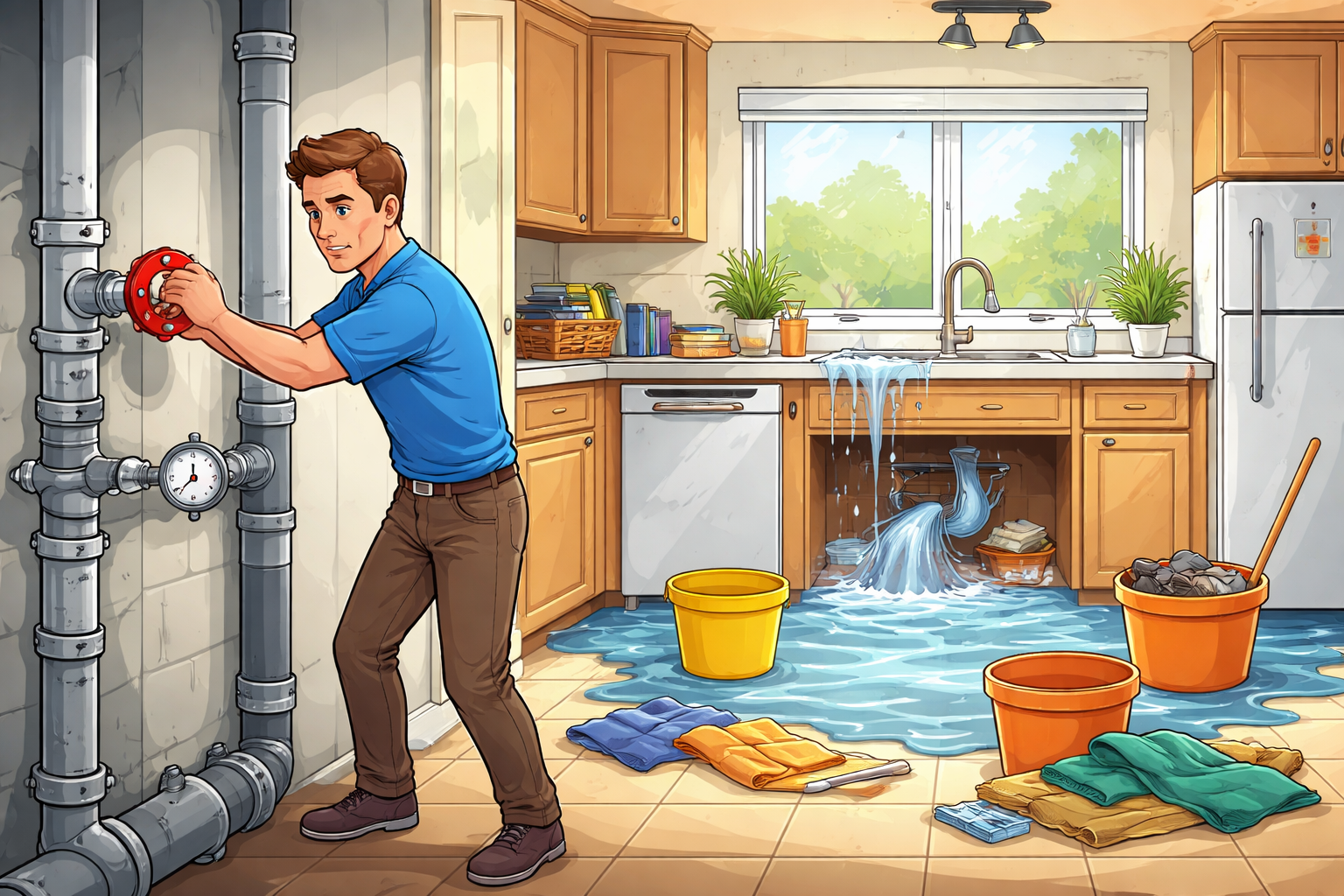
Shut Off the Main Water Supply Immediately
Turning off the main water supply is the single most effective way to stop further damage.
Every homeowner should know where the main shutoff valve is located. It is usually found in areas such as:
- Near the water meter
- Inside the basement
- Outside along an exterior wall
- In a garage utility area
Turning the valve clockwise typically shuts off the water supply.
If the leak is coming from a specific fixture like a toilet or sink, you may only need to shut off the local valve under the fixture.
Stopping the water flow quickly prevents additional flooding while you arrange for a reliable plumbing services to resolve the issue.
Turn Off Electricity if Water Is Near Electrical Areas
Water and electricity create a dangerous combination.
If water is spreading near outlets, electrical panels, appliances, or power cords, it is safest to turn off the electricity to that area of the home.
This precaution helps prevent:
- Electrical shocks
- Short circuits
- Fire hazards
Never step into standing water if electrical components may be involved. If you are unsure, it is best to leave the area and contact professionals.
Safety should always come first during plumbing emergencies.
Drain Remaining Water From Pipes
Once the main water supply is shut off, there may still be water trapped inside your plumbing system.
Opening faucets helps drain remaining water and reduce pressure in the pipes.
Follow these steps:
- Turn on all cold-water faucets in the house.
- Flush toilets once to empty their tanks.
- Turn on outdoor hose faucets if available.
This process helps remove water from the system and prevents additional leaks from pressure buildup.
Contain the Water to Limit Spread
Stopping the water source is only part of the solution. Containing the water helps reduce the damage it can cause.
Use simple household items to control the spread:
- Towels and rags
- Buckets or containers
- Mops
- Absorbent cloths
Place buckets under active drips and use towels to block water from spreading to other rooms.
If water is pooling on the floor, begin removing it immediately.
Quick containment prevents water from soaking deeper into flooring materials.
Move Furniture and Valuables Away From Water
Water damage often extends beyond plumbing systems. Furniture, electronics, rugs, and personal belongings are especially vulnerable.
Move items away from the affected area as soon as possible.
Focus on protecting:
- Electronics and appliances
- Furniture legs touching water
- Rugs and carpets
- Important documents
- Wooden cabinets and shelving
Even lifting items slightly off the floor can prevent significant damage.
If carpets become soaked, removing them temporarily may help prevent mold growth.
Start Drying the Area
Drying the affected space as soon as possible helps minimize long-term damage.
Air circulation and ventilation are extremely important during this stage.
You can accelerate drying by:
- Opening windows
- Using household fans
- Running dehumidifiers
- Increasing air circulation
Removing moisture quickly helps prevent mold and mildew from forming within 24 to 48 hours.
If the leak was caused by a hidden pipe problem, professional accurate leak detection services may be necessary to locate the exact source and prevent future damage.
Address Water Heater Leaks Quickly
Water heaters are one of the most common sources of major indoor leaks.
A leaking tank can release dozens of gallons of water rapidly if the issue worsens.
Signs of water heater problems include:
- Water pooling around the base of the unit
- Rust or corrosion on the tank
- Reduced hot water supply
- Strange noises from the heater
If you suspect the water heater is leaking, turn off both the water supply and the power source to the unit.
Professional water heater repair experts can determine whether the system requires repair or replacement.
Handling water heater issues quickly helps avoid sudden flooding.
Protect Floors and Walls From Additional Damage
Water can quickly seep into porous materials like drywall, laminate flooring, and wooden surfaces.
Protect vulnerable surfaces using temporary solutions.
For example:
- Place plastic sheets over damp flooring
- Use towels along baseboards
- Elevate furniture legs with blocks
These small steps help slow down water absorption until repairs can begin.
The goal is to prevent the water from spreading deeper into the home’s structure.
Document the Damage for Insurance
If the water damage is severe, documenting the situation may be helpful for insurance claims.
Take photos or videos of:
- Water accumulation
- Damaged walls and flooring
- Leaking fixtures or appliances
- Affected furniture and belongings
Accurate documentation can help support claims and simplify the recovery process.
Be sure to keep records before cleanup begins.
Avoid Common Mistakes During Water Leaks
During a stressful plumbing emergency, homeowners sometimes make decisions that worsen the situation.
Avoid these common mistakes:
Ignoring Small Leaks
Even minor leaks can lead to hidden structural damage over time.
Using Temporary DIY Fixes
Tape or sealants may stop leaks briefly but often fail quickly under water pressure.
Waiting Too Long to Call a Plumber
Delaying professional repair allows damage to spread further into walls and floors.
Using Electrical Appliances Near Water
Running vacuums or appliances near standing water can create serious safety hazards.
Knowing what not to do is just as important as knowing the correct steps to take.
When to Call a Professional Plumber
While homeowners can limit damage in the early stages, permanent repairs require professional expertise.
You should call a plumber immediately if you notice:
- Continuous leaking pipes
- Sudden drops in water pressure
- Water stains on ceilings or walls
- Persistent drain backups
- Flooding from appliances
Experienced plumbers can quickly diagnose the issue, repair damaged pipes, and restore your plumbing system.
Professional service also helps prevent recurring leaks that could cause additional water damage in the future.
Preventing Future Plumbing Emergencies
The best way to minimize water damage is to prevent leaks before they happen.
Routine plumbing maintenance can identify early warning signs of pipe failure.
Preventive steps include:
- Scheduling regular plumbing inspections
- Monitoring water pressure levels
- Replacing aging pipes
- Maintaining water heaters
- Inspecting appliance connections
Proactive maintenance helps homeowners avoid sudden plumbing emergencies and expensive repairs.
A reliable plumber can assess your system and recommend improvements that keep your home protected.
Final Thoughts
Water damage from plumbing problems can escalate rapidly, but quick action makes a significant difference.
By shutting off the water supply, containing leaks, removing standing water, and protecting valuables, homeowners can reduce the extent of damage while waiting for professional help.
Knowing these emergency steps allows you to stay calm and take control of the situation.
Most importantly, addressing plumbing issues quickly ensures that small leaks do not turn into costly disasters.
When plumbing emergencies occur, experienced professionals can restore your system safely and efficiently.