
A reliable supply of hot water is something most homeowners take for granted—until the water suddenly turns cold or the heater begins making strange noises. One of the most important maintenance steps for keeping a water heater working efficiently is flushing it regularly.
Over time, minerals and sediment from your water supply settle inside the tank. If left alone, this buildup can reduce efficiency, increase energy costs, and shorten the lifespan of your system. Fortunately, flushing your water heater on a routine schedule helps prevent these issues and keeps your plumbing system running smoothly.
In this guide, we’ll explain how often you should flush your water heater, why it matters, and the warning signs that your tank may already need attention.
Why Flushing Your Water Heater Is Important
Water heaters constantly heat and store water, which naturally leads to mineral deposits settling at the bottom of the tank. This is especially common in areas with hard water.
Sediment buildup acts like an insulating barrier between the burner or heating element and the water. As a result, the heater must work harder to warm the water inside the tank.
What Happens When Sediment Builds Up?
Sediment accumulation can cause several problems, including:
- Reduced heating efficiency
- Higher utility bills
- Longer heating times
- Strange rumbling or popping sounds
- Increased wear on the tank
If ignored for too long, sediment can eventually cause internal corrosion or permanent damage to the tank.
Routine maintenance, including scheduling professional routine plumbing maintenance when needed, can help prevent these problems before they become costly repairs.
How Often Should You Flush Your Water Heater?
Most plumbing professionals recommend flushing your water heater at least once per year.
However, the ideal frequency depends on several factors, including water hardness, household water usage, and the type of heater installed.
Annual Flushing (Standard Recommendation)
For most homes, flushing the tank once a year is enough to remove sediment before it becomes a problem.
This maintenance step keeps the system efficient and extends the life of the heater.
Every 6 Months (Hard Water Areas)
Homes with hard water should flush the heater every six months. Hard water contains higher levels of minerals like calcium and magnesium, which settle in the tank more quickly.
If your home experiences frequent mineral buildup, installing filtration or scheduling periodic professional leak detection inspections can also help identify hidden issues affecting your plumbing system.
Every 2–3 Years (Low Usage Homes)
Homes with lower water usage may be able to extend flushing intervals slightly. Even then, the tank should still be flushed at least every two years to prevent long-term sediment accumulation.
Skipping maintenance entirely often leads to efficiency loss and premature system failure.
Signs Your Water Heater Needs Flushing
Sometimes your water heater will show clear signs that sediment has already started building up.
Recognizing these symptoms early can help you address the issue before the tank becomes damaged.
Rumbling or Popping Sounds
Sediment trapped at the bottom of the tank causes water to boil underneath it. This creates rumbling or popping noises as steam bubbles escape through the buildup.
These sounds are often the first warning sign that flushing is overdue.
Reduced Hot Water Supply
If your hot water runs out faster than usual, sediment may be taking up space inside the tank.
Less available space means less heated water for your household.
Cloudy or Rust-Colored Water
Sediment and corrosion inside the tank can cause discolored water. If hot water appears cloudy or rusty, the heater may need maintenance or inspection.
Slow Heating Times
When sediment builds up, the heater takes longer to warm water. If showers suddenly require more time for the water to heat up, the tank may be struggling due to buildup.
In some cases, advanced inspection tools like drain camera inspection technology can help plumbers diagnose deeper plumbing system issues contributing to water heater performance problems.
How Sediment Affects Water Heater Efficiency
Sediment buildup forces the heater to work harder to heat water, which increases energy consumption.
Higher Energy Bills
As efficiency decreases, the system burns more gas or uses more electricity to maintain water temperature. Over time, this leads to noticeable increases in utility bills.
Increased Wear on Heating Elements
For electric water heaters, sediment can cover heating elements, causing them to overheat and fail sooner than expected.
Tank Overheating
Gas heaters may experience overheating at the base of the tank because sediment traps heat near the burner.
This extra heat accelerates corrosion and weakens the metal lining of the tank.
If your system has already experienced heavy sediment buildup, consulting a technician specializing in professional water heater service can help determine whether flushing is enough or if replacement is needed.
How to Flush a Water Heater
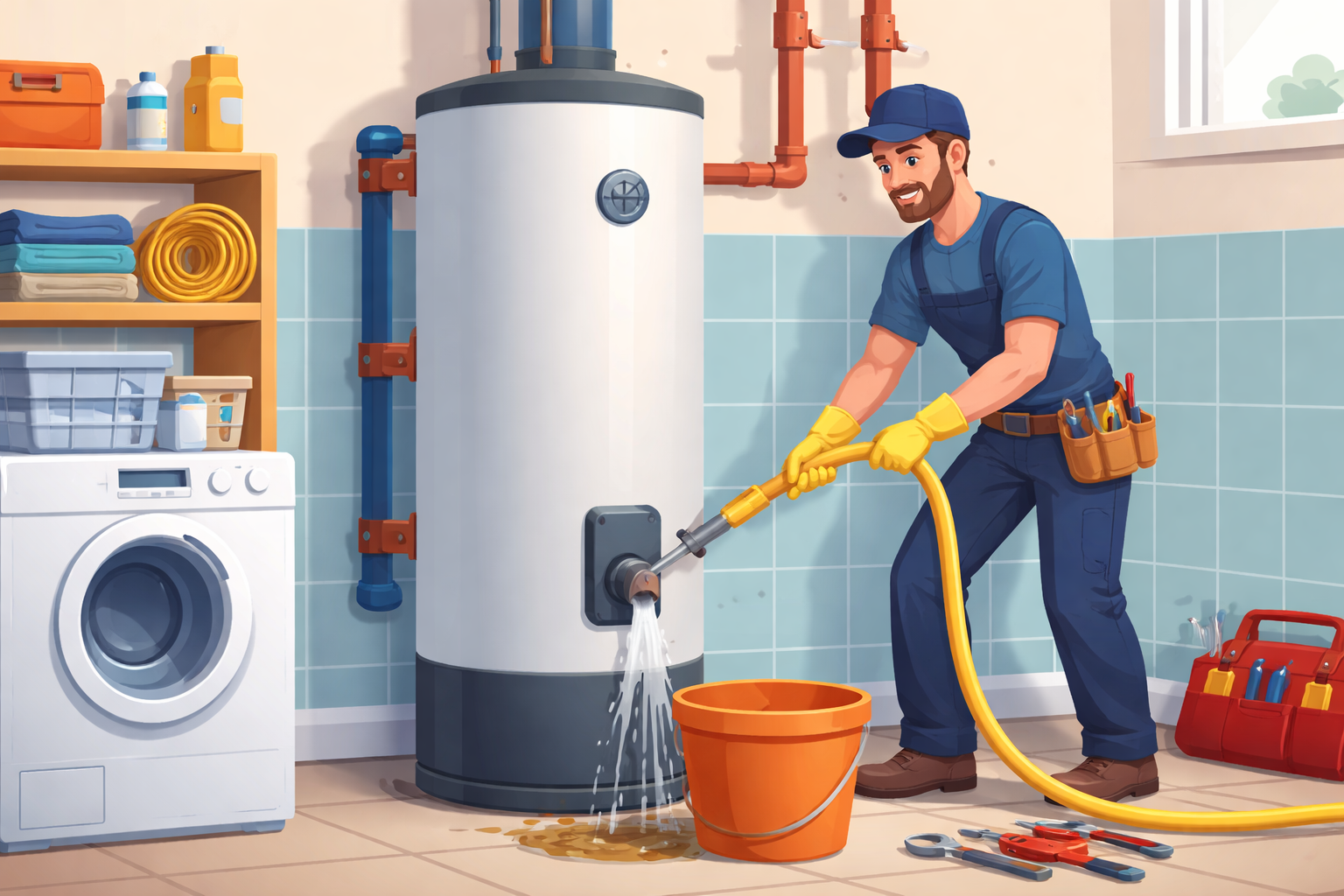
Flushing a water heater involves draining water from the tank to remove sediment buildup.
While some homeowners attempt this task themselves, many prefer to have a licensed plumber handle it to avoid mistakes or damage.
Basic Water Heater Flushing Process
The process usually includes:
- Turning off the heater and allowing water to cool
- Shutting off the water supply valve
- Connecting a hose to the tank’s drain valve
- Draining the tank completely
- Refilling the tank and restoring power
During flushing, sediment flows out through the hose along with the drained water.
A professional plumber will also inspect valves, heating elements, and pressure components during the process.
When Flushing Isn’t Enough
If a water heater hasn’t been flushed for several years, sediment buildup may become hardened at the bottom of the tank.
In these cases, flushing alone may not completely remove the deposits.
Severe Sediment Accumulation
Heavy buildup can cause:
- Permanent tank damage
- Heating element failure
- Blocked drain valves
When this happens, the heater may require repairs or replacement.
Clogged plumbing lines can also contribute to poor water heater performance. In those situations, services like emergency drain clog removal may be needed to restore proper water flow.
Tank vs Tankless Water Heater Maintenance
Both tank and tankless systems require maintenance, but the flushing process differs.
Tank Water Heaters
Traditional tank heaters require regular sediment flushing to keep the tank clean.
Since these systems store water constantly, mineral buildup happens more quickly.
Tankless Water Heaters
Tankless systems do not store water, but mineral scaling can still occur inside the heat exchanger.
Instead of flushing sediment, tankless heaters are typically descaled annually using a cleaning solution.
This maintenance keeps the system operating efficiently and prevents internal damage.
Benefits of Regular Water Heater Maintenance
Routine flushing offers several long-term advantages for homeowners.
Longer Equipment Lifespan
Sediment buildup is one of the leading causes of water heater failure. Regular flushing reduces wear on internal components and helps the tank last longer.
Lower Utility Bills
Clean tanks heat water more efficiently, which reduces energy usage and saves money on monthly bills.
Consistent Hot Water
Maintenance helps maintain steady water temperature and prevents sudden cold water surprises during showers.
Fewer Plumbing Emergencies
Preventive maintenance reduces the risk of leaks, overheating, and tank failure.
A proactive approach keeps your entire plumbing system functioning properly.
When to Call a Professional Plumber
Although flushing can sometimes be done by homeowners, professional service ensures the job is completed safely and thoroughly.
You should consider calling a plumber if:
- Your water heater hasn’t been flushed in several years
- The drain valve is clogged or stuck
- The tank is making loud rumbling sounds
- Rusty water is coming from hot water taps
- Hot water supply has decreased significantly
Scheduling professional maintenance can also uncover hidden plumbing issues before they lead to expensive repairs.
Homeowners looking to maintain their entire plumbing system can start by arranging trusted plumbing repair services with experienced professionals.
Final Thoughts
Flushing your water heater may not be the most exciting home maintenance task, but it plays a major role in keeping your plumbing system efficient and reliable.
Most homes benefit from flushing the tank once a year, while properties with hard water may require more frequent maintenance. Ignoring this simple task can lead to sediment buildup, higher energy bills, and a shorter lifespan for the heater.
By staying proactive with maintenance, you can protect your water heater, extend its service life, and ensure your household always has access to reliable hot water.