Hard water is a common issue in many parts of South Florida, and for homeowners in Miami, it can quietly cause serious plumbing problems over time. While it may seem harmless at first, the mineral content in hard water can damage pipes, reduce efficiency, and lead to costly repairs if left untreated.
Understanding how hard water affects your plumbing system is essential if you want to protect your home, maintain water quality, and avoid unnecessary expenses. In this guide, we’ll break down exactly what hard water does to your pipes, how to identify the warning signs, and what you can do to prevent long-term damage.
What Is Hard Water?
Hard water contains high levels of dissolved minerals, primarily calcium and magnesium. These minerals are naturally picked up as water passes through limestone and other deposits underground.
Why Hard Water Is Common in Miami
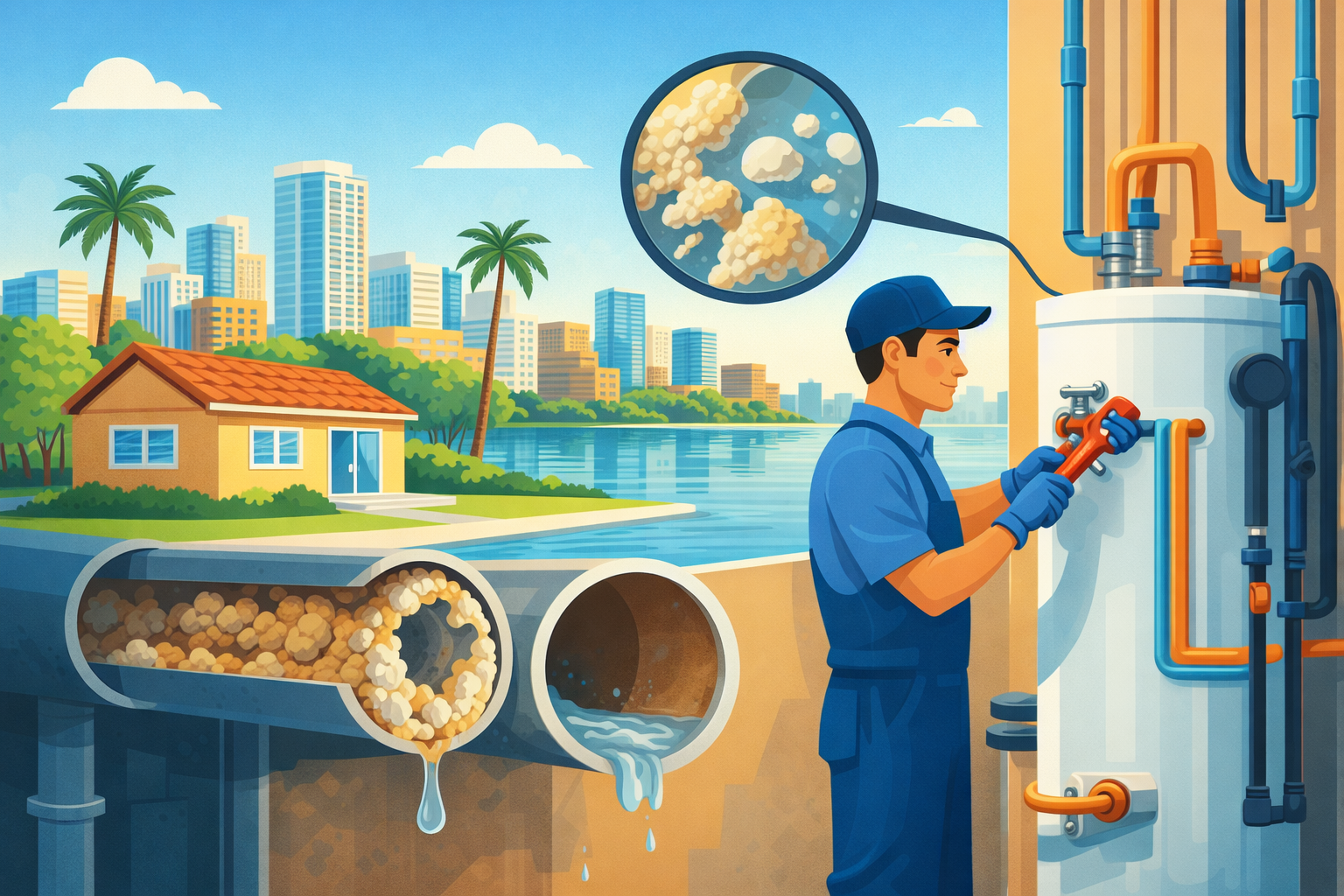
Homes in Miami are especially prone to hard water due to the region’s geology. South Florida’s aquifers are rich in limestone, which increases mineral concentration in the water supply.
This means most households in Miami deal with some level of water hardness, whether they realize it or not.
How Hard Water Impacts Your Plumbing System
Hard water doesn’t just affect how your water feels—it directly impacts the performance and lifespan of your plumbing system.
Mineral Buildup Inside Pipes
Over time, calcium and magnesium deposits accumulate along the inner walls of your pipes. This buildup, often referred to as “scale,” gradually restricts water flow.
As scale thickens:
- Pipe diameter decreases
- Water pressure drops
- Flow becomes inconsistent
This can lead to noticeable issues like slow faucets and weak showers.
Increased Risk of Pipe Damage
The buildup caused by hard water doesn’t just restrict flow—it also puts stress on your plumbing system.
As pressure increases due to narrowing pipes:
- Joints become more vulnerable
- Older pipes may crack or corrode
- Leaks are more likely to develop
If left untreated, this can escalate into major repairs requiring professional plumbing services.
Reduced Efficiency of Water Heaters
Water heaters are especially sensitive to hard water. Minerals settle at the bottom of the tank, forming a layer of sediment that interferes with heating.
This leads to:
- Higher energy consumption
- Slower heating times
- Increased wear and tear
If your system is struggling, it may be time to evaluate your setup or explore professional water heater solutions.
Signs Your Pipes Are Affected by Hard Water
Many homeowners don’t realize they have a hard water problem until the symptoms become obvious.
Low Water Pressure
If your water pressure has gradually decreased, mineral buildup inside your pipes may be the cause.
Frequent Clogs
Scale buildup narrows pipes, making it easier for debris to get stuck. This often results in recurring blockages that require professional clog removal.
Visible Residue
White, chalky residue around faucets and showerheads is a clear indicator of hard water. This same buildup is happening inside your pipes.
Unexplained Leaks
As mineral deposits stress your plumbing system, small leaks can begin to form. Early detection through professional leak detection can prevent major damage.
Long-Term Effects of Hard Water on Pipes
Ignoring hard water issues can lead to serious long-term consequences.
Pipe Replacement Costs
Severe scaling can make pipes unusable, requiring full replacement. This is one of the most expensive plumbing issues homeowners face.
Reduced Appliance Lifespan
Appliances that rely on water—such as dishwashers and washing machines—are also affected by mineral buildup, leading to premature failure.
Hidden Plumbing Damage
Not all damage is visible. Internal pipe buildup can go unnoticed for years, which is why periodic inspections using advanced tools like camera inspection are essential.
How Miami’s Climate Makes It Worse
Miami’s warm climate can accelerate the effects of hard water.
Higher temperatures:
- Increase mineral precipitation
- Speed up scale formation
- Put additional strain on plumbing systems
Combined with constant water usage, this creates the perfect conditions for rapid buildup and deterioration.
Preventing Hard Water Damage
The good news is that hard water damage is preventable with the right approach.
Install a Water Softener
Water softeners remove calcium and magnesium from your water, preventing scale buildup before it starts.
Regular Plumbing Maintenance
Routine inspections can catch early signs of buildup and prevent major issues. Professional maintenance ensures your system remains efficient and damage-free.
Flush Your Water Heater
Regular flushing removes sediment buildup, improving efficiency and extending the lifespan of your system.
Schedule Professional Inspections
Working with a trusted local expert ensures your plumbing system is properly evaluated and maintained.
Why Professional Help Matters
Hard water issues require more than quick DIY fixes. Without proper diagnosis and treatment, the problem will continue to worsen.
A professional plumbing team can:
- Identify hidden buildup
- Use advanced tools for accurate diagnosis
- Recommend long-term solutions
- Prevent recurring issues
Fix A Leak Plumbing is a trusted provider in Miami, known for delivering reliable solutions tailored to local water conditions.
When to Call a Plumber
You should consider contacting a professional if you notice:
- Sudden drops in water pressure
- Repeated clogs
- Rising energy bills
- Signs of leaks or water damage
Taking action early can save you thousands in repair costs.
If you’re experiencing any of these issues, you can easily schedule service and get expert assistance right away.
Call us at (786) 709-0426
Final Thoughts
Hard water is more than just a minor inconvenience—it’s a long-term threat to your plumbing system. From mineral buildup and reduced efficiency to leaks and costly repairs, the impact can be significant if left untreated.
For homeowners in Miami, understanding these risks is the first step toward protecting your property. With the right preventative measures and professional support, you can maintain a reliable, efficient plumbing system for years to come.