Hard water is a common issue in many households, yet most homeowners don’t realize the long-term effects it can have on their plumbing. While the water may look clean and safe to drink, it often contains high levels of minerals like calcium and magnesium that gradually impact pipes, appliances, and fixtures throughout the home.
Over time, these minerals accumulate inside plumbing systems, leading to reduced efficiency, higher maintenance costs, and even premature equipment failure. Understanding how hard water affects plumbing can help homeowners identify early warning signs and prevent costly repairs down the line.
This guide explores how hard water impacts your plumbing system, the signs to watch for, and practical steps you can take to protect your home’s pipes and appliances.
What Is Hard Water?
Hard water refers to water that contains elevated levels of dissolved minerals, primarily calcium and magnesium. These minerals enter the water supply as groundwater passes through limestone and chalk deposits.
While hard water is not harmful to human health, it can cause several problems for plumbing systems and household appliances.
Common Minerals Found in Hard Water
- Calcium
- Magnesium
- Iron (in some areas)
- Manganese
When water containing these minerals flows through pipes and fixtures, mineral deposits gradually accumulate. These deposits, often referred to as limescale, are the primary reason hard water causes plumbing issues.
Signs Your Home Has Hard Water
Many homeowners live with hard water without realizing it. However, several noticeable signs can indicate a high mineral content in your water supply.
White Residue on Fixtures
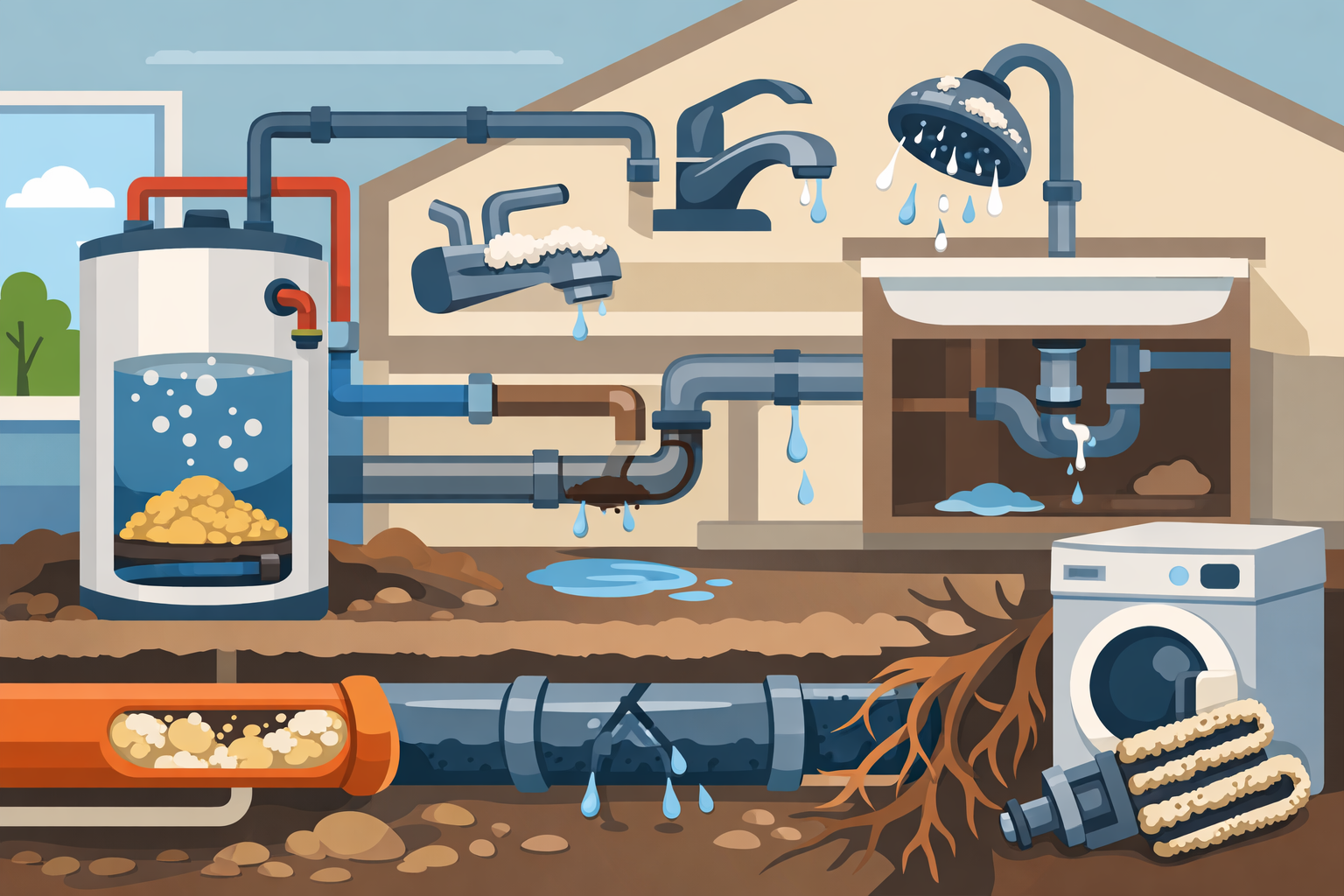
One of the most recognizable signs of hard water is a white, chalky residue on faucets, showerheads, and sinks. These deposits are dried mineral remnants left behind when water evaporates.
Reduced Water Pressure
Mineral buildup inside pipes gradually narrows the flow path of water. As the buildup increases, water pressure throughout the home may begin to drop.
Soap That Doesn’t Lather Well
Hard water makes it difficult for soap to dissolve and produce lather. This can leave a sticky residue on skin, dishes, and bathroom surfaces.
Spotty Glassware and Dishes
If you frequently notice cloudy spots on glasses and plates after washing, mineral deposits from hard water are likely the cause.
Frequent Appliance Repairs
Appliances that rely on water—such as dishwashers and washing machines—may require repairs more often due to mineral buildup affecting internal components.
How Hard Water Affects Plumbing Pipes
One of the most significant impacts of hard water occurs inside the plumbing pipes themselves.
Mineral Buildup Inside Pipes
When hard water flows through pipes, minerals slowly attach to the inner pipe walls. Over time, this buildup thickens and reduces the internal diameter of the pipes.
This process restricts water flow and forces plumbing systems to work harder to maintain pressure.
Increased Risk of Pipe Blockages
In severe cases, limescale accumulation can partially block pipes, leading to slow water flow or complete clogs. These blockages often develop gradually, making them difficult to detect until noticeable plumbing issues occur.
Professional plumbers use advanced tools such as drain camera inspections to view the interior of pipes and identify mineral buildup or hidden obstructions.
Higher Pressure on Plumbing Systems
As pipes narrow due to mineral deposits, water pressure within the system may fluctuate. This increased strain can contribute to leaks, joint failures, or pipe damage over time.
Hard Water Damage to Plumbing Fixtures
Plumbing fixtures are constantly exposed to water flow, making them particularly vulnerable to mineral deposits.
Faucet and Showerhead Clogging
Small openings in faucet aerators and showerheads can easily become blocked by mineral deposits. When this happens, water flow becomes uneven or restricted.
You may notice:
- Spray patterns becoming irregular
- Reduced water pressure
- Visible scale buildup on fixtures
Cleaning the fixtures can provide temporary relief, but recurring buildup often signals an ongoing hard water problem.
Shortened Fixture Lifespan
Continuous exposure to mineral buildup can damage internal components inside faucets and valves. Over time, this wear may cause dripping, leaks, or malfunctioning handles.
Addressing water quality issues early can help extend the lifespan of plumbing fixtures throughout the home.
Impact on Water Heaters
Water heaters are among the most affected appliances when hard water is present.
Sediment Accumulation in the Tank
When hard water is heated, minerals separate from the water and settle at the bottom of the tank. This sediment layer gradually thickens and interferes with heat transfer.
As a result:
- The heater takes longer to warm water
- Energy usage increases
- Heating elements wear out faster
Homes experiencing persistent water heating issues may require maintenance or replacement. Professional services can help diagnose sediment buildup and restore system efficiency.
Increased Energy Costs
A water heater coated with mineral deposits must work harder to heat water. This extra effort translates directly into higher energy bills.
Regular maintenance and flushing of the tank can help minimize sediment accumulation.
Reduced Water Heater Lifespan
Hard water significantly shortens the lifespan of water heaters. Systems that might normally last 10–15 years may fail much earlier when exposed to excessive mineral buildup.
Hard Water and Hidden Plumbing Leaks
Mineral buildup does more than just restrict water flow. Over time, it can contribute to small cracks, corrosion, and pressure imbalances within plumbing systems.
These issues sometimes result in hidden leaks behind walls or beneath flooring.
Why Hard Water Can Cause Leaks
When pipes narrow due to scale buildup, water pressure inside the system can increase. This added pressure places stress on pipe joints and weak points in the plumbing system.
Eventually, these vulnerable areas may develop leaks that are difficult to detect.
Advanced tools such as non-invasive leak detection allow plumbers to locate hidden leaks without tearing into walls or floors.
Effects on Household Appliances
Hard water does not only impact pipes and fixtures—it can also shorten the lifespan of household appliances.
Washing Machines
Mineral deposits can accumulate on internal components of washing machines, affecting efficiency and reducing cleaning performance.
Dishwashers
Hard water leaves spots and residue on dishes while also damaging heating elements and internal plumbing lines.
Coffee Makers and Ice Machines
Small appliances that heat water are especially vulnerable to limescale buildup, which can reduce performance and cause equipment failure.
Regular cleaning and descaling can help mitigate these effects.
Long-Term Financial Costs of Hard Water
Many homeowners underestimate the financial impact of hard water. While the issues may appear minor at first, the cumulative effects can lead to significant repair and replacement costs.
Common Hard Water Expenses
- Increased plumbing repairs
- Premature water heater replacement
- Appliance breakdowns
- Higher energy bills
- Fixture replacements
Addressing water quality issues early often costs far less than repairing extensive plumbing damage later.
How to Protect Your Plumbing From Hard Water
Fortunately, several steps can help minimize the effects of hard water on your plumbing system.
Install a Water Softener
Water softeners remove calcium and magnesium from the water supply before it enters your plumbing system.
These systems use ion exchange technology to replace hard minerals with sodium or potassium, reducing scale buildup.
Flush Your Water Heater Regularly
Flushing the water heater once or twice per year removes sediment buildup from the tank and helps maintain efficiency.
Clean Fixtures and Showerheads
Regular cleaning can prevent mineral deposits from blocking small openings in fixtures.
Soaking showerheads in vinegar is a simple way to dissolve scale buildup.
Schedule Professional Plumbing Inspections
Routine plumbing inspections can detect early signs of hard water damage before they become major problems.
Homeowners who notice declining water pressure, recurring leaks, or frequent appliance issues may benefit from professional plumbing assistance. Scheduling a trusted plumbing service appointments can help identify the root cause of these problems and prevent further damage.
Call us at (786) 709-0426
When to Call a Professional Plumber
Some hard water problems can be managed with regular maintenance, but others require professional attention.
You should consider contacting a plumber if you experience:
- Persistent low water pressure
- Recurring pipe clogs
- Water heater inefficiency
- Hidden leaks
- Frequent plumbing repairs
A professional evaluation can determine whether mineral buildup is affecting your plumbing system and recommend appropriate solutions.
Final Thoughts
Hard water may seem like a minor inconvenience, but its long-term impact on plumbing systems can be significant. Mineral deposits gradually accumulate inside pipes, fixtures, and appliances, leading to reduced efficiency, higher energy costs, and costly repairs.
Recognizing the early signs of hard water and taking preventive action can protect your plumbing system and extend the lifespan of household appliances.
Regular maintenance, professional inspections, and proper water treatment solutions can help ensure that your plumbing system continues to operate efficiently for years to come.