Florida homeowners deal with a plumbing challenge that often builds slowly and quietly: hard water. You may not notice it right away, but over time mineral-heavy water can affect faucets, water heaters, showerheads, appliances, and even your monthly utility efficiency.
The good news is that hard water problems are manageable when you understand the signs early. With the right maintenance habits and equipment choices, homeowners can protect their plumbing system and reduce the wear that mineral buildup causes.
What hard water means
Hard water contains elevated levels of dissolved minerals, commonly calcium and magnesium. These minerals are not usually harmful for drinking in the way homeowners often fear, but they can be rough on plumbing infrastructure.
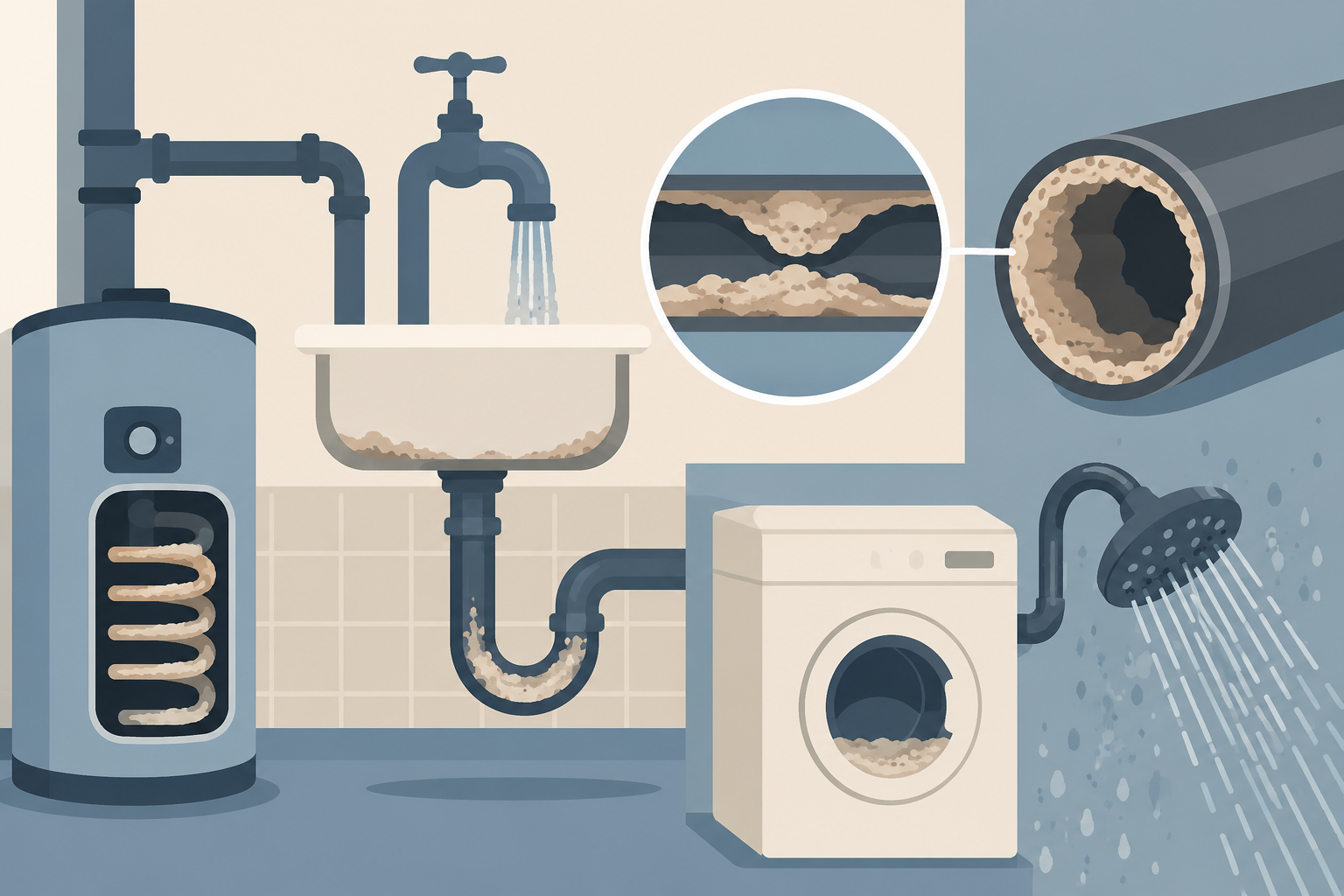
When hard water moves through pipes and fixtures, it can leave behind scale. That residue builds over time, especially where water is heated or where flow narrows at small openings.
In Florida, water quality can vary by city, neighborhood, and whether a home uses municipal service or a private well. Even so, mineral buildup is a common enough issue that homeowners should know how to recognize it.
Why hard water is a bigger plumbing issue than people think
Hard water rarely creates a dramatic emergency overnight. Instead, it creates small inefficiencies and gradual damage. That slow pace is exactly why it gets overlooked.
A showerhead that sprays unevenly, a water heater that loses efficiency, or faucets that develop crusty deposits may all seem minor. But collectively, these issues can shorten the life of plumbing components and increase repair frequency.
Common signs of hard water in Florida homes
Homeowners often notice the cosmetic symptoms first, but the plumbing symptoms matter even more.
White, chalky residue on fixtures
If you see a white film or crust around faucets, showerheads, or sink drains, mineral deposits are a likely cause. These buildup patterns are among the most common signs of hard water.
Reduced water flow
Scale can narrow openings in aerators, showerheads, and supply lines. Over time, water pressure may feel weaker at individual fixtures, even if the larger plumbing system is still functioning.
Water heater inefficiency
Water heaters are especially vulnerable because heat encourages mineral precipitation. Sediment and scale buildup can make the unit work harder, reduce heating efficiency, and increase wear.
Spotty dishes and glassware
If dishes come out of the dishwasher with cloudy spots or residue, hard water may be part of the problem.
Soap that does not rinse or lather well
Hard water can make soap perform poorly, which often leaves people using more product than necessary in showers, sinks, and laundry.
How hard water affects different plumbing components
Hard water is not just a fixture issue. It can affect the broader plumbing ecosystem of the house.
Faucets and showerheads
Mineral accumulation can clog small openings and reduce performance. Homeowners may replace showerheads repeatedly without realizing the root problem is water hardness.
Water heaters
Scale inside a water heater can reduce efficiency and force the unit to work longer to deliver hot water. In tank systems, sediment may settle at the bottom. In tankless units, scale can affect heat exchange performance if flushing is neglected.
Appliances
Dishwashers, washing machines, and ice makers may all experience reduced efficiency or shortened service life when mineral deposits accumulate.
Pipes and valves
In severe cases, scale can contribute to restricted flow in plumbing lines and affect the operation of valves or fixture cartridges.
Hard water and Florida water heaters
If there is one place homeowners should pay attention, it is the water heater. Water heating equipment already works hard in a humid climate where year-round use is normal. Add hard water, and efficiency losses can show up faster.
Why maintenance matters
Routine flushing helps remove sediment in many tank-style water heaters. Tankless systems often need periodic descaling according to manufacturer guidance. Skipping this kind of maintenance can lead to poor performance, higher energy use, and premature repair needs.
What homeowners can do to reduce hard water damage
You do not always need a major system overhaul on day one. A practical approach starts with confirming the issue and choosing solutions that match the severity of the problem.
Test your water or review local water quality information
If you suspect hard water, testing is a smart first step. That can help you determine whether the issue is mild, moderate, or more significant.
Clean fixtures before buildup becomes severe
Removing mineral deposits from aerators and showerheads can restore flow and improve performance. Early cleaning is easier than dealing with long-term scale.
Maintain your water heater consistently
Do not wait until hot water performance drops. Routine maintenance is one of the best defenses against hard-water-related wear.
Consider a water softening or conditioning solution
For homes with persistent hard water issues, a whole-home solution may make sense. The right setup depends on the household’s water use, existing plumbing, and local water characteristics.
When to call a plumber
Homeowners can handle minor cleaning and maintenance tasks, but some signs point to a bigger issue.
Contact a professional if you notice:
- Repeated clogging at fixtures despite cleaning
- Unexplained drops in hot water performance
- Water heater noises linked to sediment buildup
- Scale-related leaks around valves or components
- Persistent low flow in multiple fixtures
A licensed plumber can help determine whether the issue is isolated at a fixture, tied to the water heater, or affecting the home more broadly.
Professional plumbing done right, the first time.
Preventive habits that save money over time
The biggest advantage homeowners have with hard water is that it usually gives warning signs before causing larger mechanical consequences. Paying attention early can reduce future repair costs.
Simple habits include:
- Checking showerheads and aerators regularly
- Scheduling water heater maintenance
- Watching for residue around fixtures
- Addressing flow reduction promptly
- Reviewing whether treatment equipment is appropriate for the home
These steps are not complicated, but they can meaningfully extend the life of plumbing components.
Hard water is manageable with the right plan
Hard water is common, but it does not have to control your plumbing budget. Most problems begin with mineral accumulation that homeowners can identify and address before it escalates.
The best approach is a balanced one: understand your water, maintain the equipment that is most vulnerable, and bring in a plumber when the symptoms suggest the problem is moving beyond basic fixture cleaning. In a Florida home, that kind of attention can help keep the plumbing system more efficient, more reliable, and less expensive to maintain.
FAQ
Is hard water dangerous to drink?
Hard water is usually more of a plumbing and appliance issue than a direct safety concern, though local water quality should always be reviewed if you have broader concerns.
Can hard water lower my water pressure?
Yes. Mineral buildup can restrict flow in showerheads, aerators, valves, and other narrow passages.
Does hard water damage water heaters?
It can reduce efficiency and increase wear over time, especially if sediment and scale are allowed to accumulate.
Should every Florida homeowner install a water softener?
Not necessarily. The best solution depends on the severity of the hardness, the plumbing setup, and household preferences.
What is the first sign of hard water most people notice?
Many people first notice white residue on fixtures, spotty dishes, or reduced showerhead performance.