Clogged drains are one of the most common—and frustrating—plumbing issues homeowners face. Whether it’s a slow-draining sink, a backed-up shower, or a completely blocked kitchen drain, these problems can disrupt daily routines and quickly escalate if ignored.
The good news is that most drain clogs don’t happen overnight. They build up gradually due to everyday habits, hidden debris, and aging plumbing systems. By understanding the top causes of clogged drains and how to prevent them, you can avoid costly repairs and keep your plumbing system running smoothly.
In this guide, we’ll break down what causes drain blockages, how to spot early warning signs, and practical steps you can take to prevent them.
Why Drains Get Clogged Over Time
Every time water flows down your drain, it carries small particles with it—soap, grease, food debris, hair, and minerals. While some of these materials pass through the system, others stick to the inner walls of pipes.
Over time, this buildup narrows the pipe’s interior, restricting water flow. Eventually, even a small amount of debris can cause a full blockage.
Older plumbing systems are especially vulnerable. Years of accumulation combined with pipe corrosion can create the perfect environment for recurring clogs.
Grease and Food Waste in Kitchen Drains
The kitchen sink is one of the most common places for drain clogs to develop.
How Grease Causes Blockages
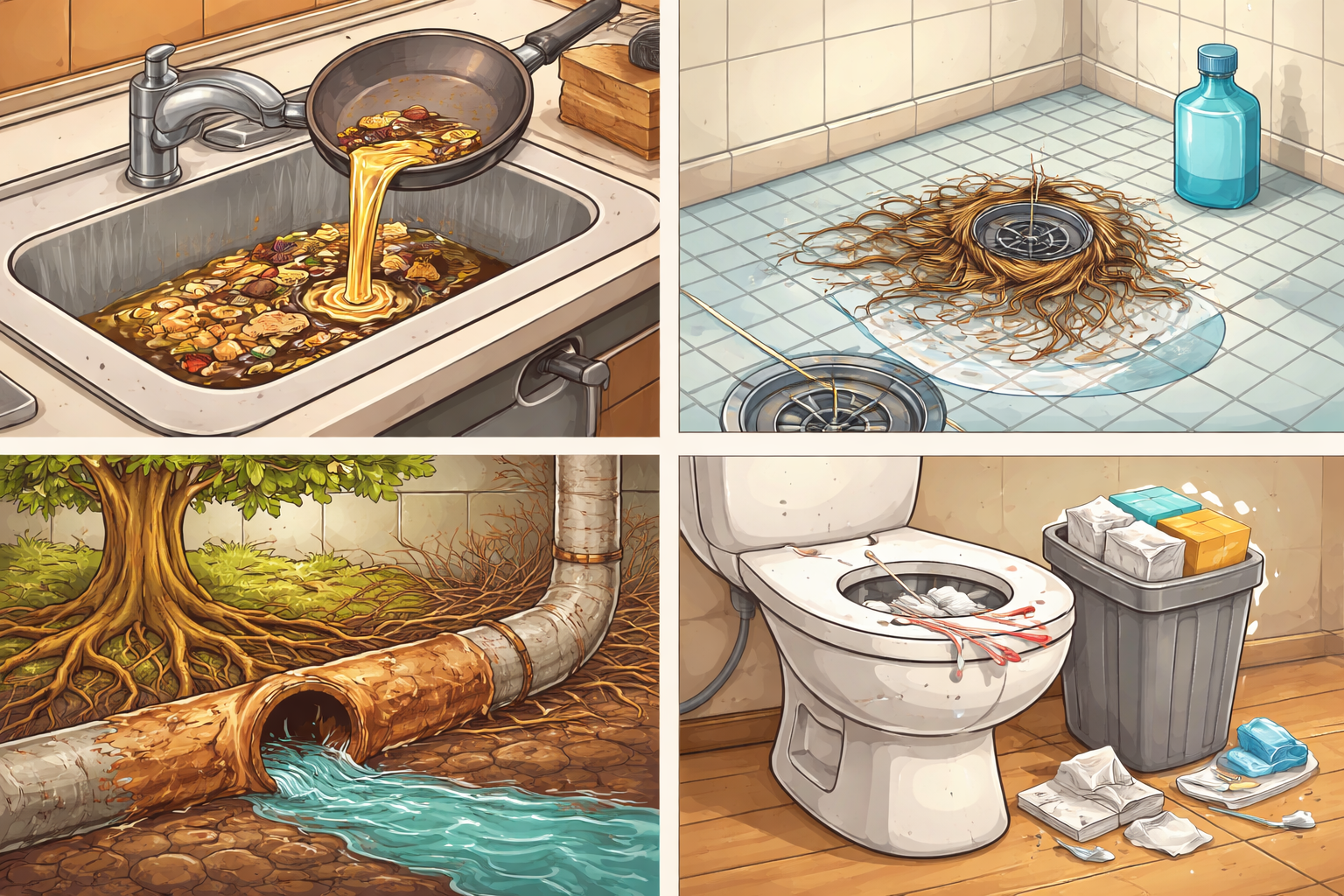
When grease, oil, or fat is poured down the drain, it may seem harmless in liquid form. However, as it cools, it solidifies and sticks to the inside of pipes.
Over time, this sticky layer traps food particles and debris, creating a thick blockage that restricts water flow.
Food Scraps and Residue
Even with a garbage disposal, certain foods should never go down the drain. Items like coffee grounds, rice, pasta, and fibrous vegetables can accumulate and clog pipes.
To avoid these issues, it’s best to dispose of food waste in the trash rather than relying on your sink to handle it.
Hair Buildup in Bathroom Drains
Hair is one of the leading causes of clogged bathroom drains, especially in showers and sinks.
Why Hair Creates Stubborn Clogs
Hair doesn’t dissolve in water. Instead, it binds with soap residue and other debris, forming dense clumps that block pipes.
These clogs often start small but grow over time as more hair gets caught in the same spot.
Prevention Tips
Using drain covers or strainers can significantly reduce hair buildup. Regularly cleaning these covers prevents debris from entering your plumbing system.
If clogs persist, professional clog removal and repairs can help clear blockages safely and restore proper drainage.
Soap Scum and Residue
Soap might seem harmless, but it can contribute to serious drain issues.
How Soap Builds Up in Pipes
Traditional soap contains fats that combine with minerals in water, forming a hard residue known as soap scum.
This residue sticks to pipe walls, gradually narrowing the passage for water.
Where It Happens Most
Soap buildup is especially common in:
- Bathroom sinks
- Showers and tubs
- Laundry drains
Switching to liquid or low-residue soap products can help reduce buildup over time.
Foreign Objects in Drains
Not everything that goes down a drain belongs there.
Common Items That Cause Blockages
Households often experience clogs due to foreign objects such as:
- Cotton swabs
- Paper towels
- Dental floss
- Hygiene products
- Small plastic items
These materials do not break down easily and can quickly cause serious blockages.
Protecting Your Drains
Being mindful of what goes down your drains is one of the simplest ways to prevent clogs. Even small items can create major issues if they accumulate inside pipes.
Tree Root Intrusion in Sewer Lines
Outdoor plumbing systems face a different kind of threat—tree roots.
How Roots Enter Pipes
Tree roots naturally seek moisture and can penetrate small cracks in underground pipes. Once inside, they grow and expand, eventually blocking the flow of wastewater.
Warning Signs of Root Damage
Common signs include:
- Frequent drain backups
- Slow drainage throughout the home
- Gurgling sounds in pipes
- Sewage odors
Advanced camera inspection services allow professionals to locate root intrusion and assess the extent of the damage without invasive digging.
Mineral Buildup in Pipes
Hard water is another major contributor to clogged drains.
What Is Hard Water Buildup?
Hard water contains high levels of minerals like calcium and magnesium. Over time, these minerals accumulate inside pipes, forming scale deposits.
Effects on Plumbing
Mineral buildup can:
- Reduce water flow
- Increase the likelihood of clogs
- Shorten the lifespan of pipes
Regular maintenance and water treatment solutions can help minimize these effects.
Collapsed or Damaged Pipes
In some cases, clogs are not caused by debris but by structural issues within the plumbing system.
Why Pipes Fail
Pipes can crack, collapse, or shift due to:
- Age and corrosion
- Ground movement
- Heavy external pressure
- Poor installation
When pipes become damaged, water flow is restricted or completely blocked.
Identifying Structural Problems
Persistent clogs that return after cleaning often indicate a deeper issue. Professional accurate leak detection services can help identify hidden damage and determine the best solution.
Flushing the Wrong Items
Toilets are designed to handle only human waste and toilet paper. Flushing other materials can quickly lead to blockages.
Items That Should Never Be Flushed
Avoid flushing:
- Wet wipes (even “flushable” ones)
- Paper towels
- Feminine hygiene products
- Cotton balls
- Diapers
These items do not break down easily and can cause severe clogs in both household and municipal systems.
Early Warning Signs of a Clogged Drain
Recognizing early signs of a clog can prevent more serious problems.
What to Watch For
Common warning signs include:
- Slow-draining sinks or tubs
- Gurgling sounds in pipes
- Water backing up in fixtures
- Unpleasant odors from drains
Addressing these issues early can save time, money, and frustration.
How to Prevent Clogged Drains
Preventing clogs is far easier—and more affordable—than dealing with major plumbing repairs.
Practice Smart Drain Habits
Simple changes in daily habits can make a big difference:
- Avoid pouring grease down the drain
- Use drain strainers in sinks and showers
- Dispose of food scraps in the trash
- Limit the use of harsh chemical cleaners
Schedule Regular Maintenance
Routine maintenance helps keep your plumbing system in good condition. Professional inspections can identify buildup, leaks, and early signs of damage.
If you’re dealing with recurring issues or want to prevent future problems, it’s a good idea to request plumbing service estimate and have your system evaluated by experienced professionals.
When to Call a Professional
Some clogs can be resolved with simple methods, but others require professional attention.
Signs You Need Expert Help
Call a plumber if you experience:
- Recurring clogs
- Multiple drains backing up at once
- Sewage smells in your home
- Water backing up into other fixtures
Professional tools and expertise ensure that the root cause of the problem is addressed—not just the symptoms.
Call us at (786) 709-0426
Long-Term Solutions for Drain Health
Maintaining healthy drains involves more than just reacting to problems. It requires a proactive approach that includes regular inspections, proper usage, and timely repairs.
Upgrading old pipes, installing modern fixtures, and addressing minor issues early can significantly reduce the risk of major clogs.
Investing in professional plumbing care not only protects your home but also extends the life of your entire plumbing system.
Conclusion
Clogged drains are a common issue, but they are often preventable with the right knowledge and habits. From grease buildup and hair accumulation to tree roots and mineral deposits, understanding the causes of clogs helps you take control of your plumbing system.
By practicing good drain habits, scheduling regular maintenance, and addressing problems early, you can avoid costly repairs and keep your home running smoothly.
When in doubt, professional support ensures your plumbing system remains efficient, reliable, and free from recurring issues.