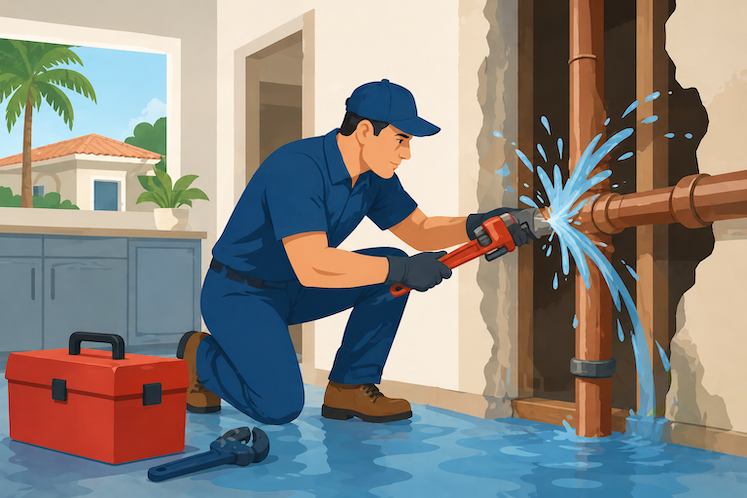
A burst pipe is one of the most stressful emergencies a homeowner can face. In seconds, water can flood floors, damage walls, and ruin personal belongings. Acting quickly is critical to minimize damage and prevent costly repairs. Understanding what to do when a pipe bursts, how to prevent future issues, and when to call a professional can save your home and your wallet.
This guide covers everything you need to know about handling burst pipes safely and effectively. From immediate steps to professional repairs, you’ll be prepared for this common plumbing emergency.
Why Pipes Burst in Residential Homes
Several factors can cause pipes to burst, and homeowners need to be aware of both environmental and household risks.
Common Causes of Pipe Bursts
- High Water Pressure: Excess pressure in pipes can lead to cracks or ruptures.
- Aging Plumbing: Old or corroded pipes are more prone to failure.
- Temperature Fluctuations: Sudden cold snaps or heat can stress water lines.
- Clogs and Blockages: Obstructions increase pressure in certain areas, potentially causing a burst.
- Tree Roots: Roots can infiltrate underground pipes, causing cracks or breaks.
Recognizing these risks helps prevent small issues from turning into major emergencies.
Immediate Steps to Take When a Pipe Bursts
When a pipe bursts, every second counts. Acting fast reduces water damage and protects your property.
1. Shut Off the Main Water Supply
The first and most critical step is to turn off the main water valve. This prevents more water from entering the damaged pipe.
- Locate the main shut-off valve, usually near your water meter or where the line enters your home.
- Turn the valve clockwise to stop water flow.
Knowing the location of this valve beforehand saves valuable time during an emergency.
2. Turn Off Electricity in Affected Areas
Water and electricity are a dangerous combination. If the burst pipe has flooded areas near electrical outlets or appliances, cut power in that section of your home.
- Use your breaker panel to shut off electricity.
- Avoid standing in water if appliances are still connected.
This step reduces the risk of electrical hazards while you manage the situation.
3. Remove Standing Water
After stopping the flow, remove as much water as possible to prevent further damage.
- Use buckets, mops, or wet/dry vacuums.
- Focus on floors, walls, and areas that retain moisture.
- Move furniture, rugs, and personal items to a dry location.
Prompt water removal limits mold growth and structural damage.
Temporary Repairs for Burst Pipes
While a professional plumber should handle the permanent fix, temporary solutions can reduce flooding and water loss until help arrives.
1. Use Pipe Clamps or Rubber Patches
A pipe clamp or rubber patch can temporarily seal the leak.
- Wrap a piece of rubber or cloth around the burst area.
- Secure it tightly with a pipe clamp, hose clamp, or even duct tape for minor leaks.
This provides a temporary fix while waiting for professional assistance.
2. Apply Epoxy or Pipe Sealant
For small cracks, epoxy putty or pipe sealant provides a short-term solution.
- Clean the pipe surface thoroughly.
- Apply the sealant according to instructions.
- Allow it to cure before turning water back on.
Remember, these are temporary measures—permanent repairs are necessary to prevent future bursts.
Why You Should Call a Professional Plumber
Burst pipes can cause complex damage beyond what DIY methods can handle. A licensed plumber ensures the issue is resolved safely, efficiently, and permanently.
Benefits of Hiring Experts
- Accurate Diagnosis: Professionals locate hidden leaks or weak spots in your plumbing system.
- Permanent Repairs: Avoid recurring bursts or leaks with proper pipe replacement or repair.
- Water Damage Prevention: Expert techniques minimize damage to floors, walls, and insulation.
- Insurance Compliance: Professional repairs may be required by insurance for coverage claims.
If a pipe bursts in your home, don’t wait—contact us for fast, reliable service from experienced plumbers.

Preventing Future Pipe Bursts
After a pipe bursts, homeowners should focus on prevention. These tips reduce the risk of future plumbing emergencies.
1. Inspect and Replace Aging Pipes
Old pipes are a common cause of bursts. Schedule inspections to identify corrosion or weak points. Replace outdated plumbing with durable materials like PEX or copper.
2. Monitor Water Pressure
Install a pressure regulator if your home experiences high water pressure. Excess pressure stresses pipes and fixtures, leading to leaks or bursts.
3. Insulate Pipes
Even in warmer climates, insulating pipes exposed to cooler areas can prevent stress and cracking.
4. Schedule Regular Plumbing Maintenance
Routine inspections allow professionals to detect leaks, corrosion, or blockages before they escalate into full-blown emergencies.
Early Warning Signs of Pipe Problems
Not all bursts happen suddenly. Recognizing early warning signs can help you address issues before they become emergencies.
- Dripping or leaking pipes
- Rust or discoloration on metal pipes
- Strange noises like banging or hissing
- Sudden drops in water pressure
- Moisture spots or water stains on walls or ceilings
Addressing these signs promptly reduces the likelihood of a catastrophic pipe failure.
Insurance Considerations
Water damage from burst pipes often qualifies for insurance coverage. To streamline the process:
- Document the damage with photos or videos.
- Keep repair invoices and receipts.
- Use a licensed plumber who can provide detailed repair reports.
Prompt professional repair improves your chances of a smooth insurance claim.
Quick Action Protects Your Home
A burst pipe is stressful, but timely action can save your home from significant damage. Shut off your water, remove standing water, apply temporary fixes, and call a professional plumber immediately.
Fast, expert service ensures the problem is resolved safely and permanently. If a pipe bursts in your home, don’t wait—contact us for reliable, same-day plumbing solutions. Taking preventative measures, maintaining your plumbing, and recognizing early warning signs will help keep your home safe for years to come.