A sewer backup in Hollywood, FL is one of those plumbing problems that can turn stressful fast. One minute your drains are slow, and the next you may have wastewater coming up through a shower, toilet, floor drain, or laundry area.
When that happens, the most important thing is knowing who to call, what to avoid, and what the repair may cost. Sewer backups are more than an inconvenience. They can expose your home to contaminated water, property damage, odors, and deeper sewer line issues that should not be ignored.
Hollywood homes face a mix of plumbing challenges, from older pipes and heavy rainfall to tree roots, shifting soil, and clogged sewer lines. Whether you live near Hollywood Lakes, Emerald Hills, Downtown Hollywood, Driftwood, or closer to the beach, a sewer backup usually means your plumbing system needs immediate professional attention.
This guide breaks down what causes sewer backups in Hollywood, who to call first, what repairs may involve, and what homeowners can expect when it comes to cost.
What Is a Sewer Backup?
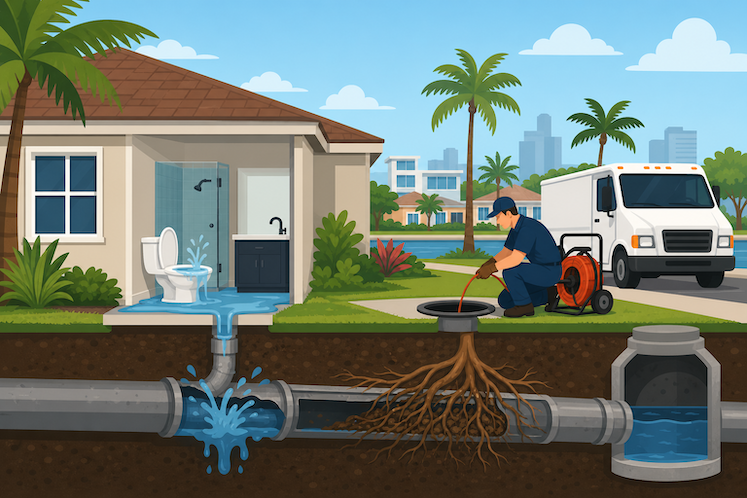
A sewer backup happens when wastewater cannot move properly through your home’s drain or sewer line. Instead of flowing away from the house, it reverses direction and comes back up through drains, toilets, tubs, or other plumbing fixtures.
This is different from a simple clogged sink or shower drain. A sewer backup usually points to a blockage or failure in the main sewer line or a major drain connected to it.
In many cases, the backup may start small. You might notice gurgling sounds, slow drains, or a bad smell before wastewater appears. Other times, it happens suddenly, especially after heavy rain or when a blockage reaches a critical point.
Common Signs of a Sewer Backup in Hollywood Homes
Sewer backups often give warning signs before they become a full emergency. Catching them early can help prevent bigger damage and reduce repair costs.
Watch for these signs:
- Multiple drains are slow at the same time
- Toilets bubble or gurgle when water runs elsewhere
- Water backs up into a tub or shower after flushing
- A strong sewage odor comes from drains
- Floor drains overflow
- Your yard has soggy patches or sewage smells
- Drains make unusual sucking or bubbling sounds
If more than one fixture is acting up, the issue is likely deeper than a single clogged drain.
For example, if your kitchen sink, toilet, and shower are all draining slowly, the main sewer line may be blocked. That is when it is smart to call a licensed plumber instead of relying on store-bought drain cleaners.
Why Sewer Backups Happen in Hollywood, FL
Hollywood’s climate, housing mix, and landscape can all contribute to sewer problems. Some causes are preventable, while others happen naturally over time.
Tree Root Intrusion
Tree roots are one of the most common causes of sewer line backups in South Florida. Roots search for moisture underground, and a small crack in a pipe can attract them.
Once roots enter the sewer line, they expand and trap grease, toilet paper, and debris. Over time, the blockage gets worse until wastewater can no longer pass through.
This issue is especially common in older neighborhoods with mature landscaping. If your home has large trees near the sewer line, it is worth learning the early tree root in sewer warning signs before a backup occurs.
Grease and Debris Buildup
Grease may go down the drain as a liquid, but it cools and hardens inside pipes. Once it sticks to pipe walls, it catches food particles, soap residue, and other debris.
In time, that buildup narrows the pipe and slows the entire system.
Kitchen grease is a major contributor, but bathroom products can also cause trouble. Wipes, feminine hygiene products, cotton swabs, paper towels, and dental floss should never be flushed.
Even wipes labeled as “flushable” can create problems inside sewer lines.
Aging Sewer Pipes
Many Hollywood homes have older plumbing systems. Depending on the property’s age, pipes may be made of cast iron, clay, galvanized steel, PVC, or other materials.
Older pipes can corrode, crack, collapse, or separate at the joints. Once the pipe structure weakens, backups become more likely.
If you are unsure how old your plumbing is, understanding the pipe lifespan can help you decide whether your issue is a one-time blockage or part of a larger aging-pipe problem.
Heavy Rain and Stormwater Pressure
Hollywood gets intense rain during certain parts of the year, and heavy rainfall can put pressure on sewer systems. If stormwater enters sewer lines or overwhelms drainage areas, wastewater may not flow away from homes properly.
This can be especially concerning during hurricane season or after days of repeated storms.
If your backup happens shortly after heavy rain, tell your plumber. That timing can help them identify whether the problem is connected to your private sewer line, drainage conditions, or municipal sewer pressure.
Broken or Bellied Sewer Lines
A sewer line should slope properly so wastewater can move away from your house. If the pipe sinks in one section, that low area is called a belly.
Waste and water collect in the sagging section, creating repeat clogs and backups.
Pipe bellies can happen because of soil movement, poor installation, erosion, or shifting ground. They usually cannot be fixed with basic drain cleaning alone.
Pipe Material Problems
Some older pipe materials are more prone to corrosion, leaks, or root intrusion. Others may perform better in South Florida’s humid, coastal environment.
If your home needs partial or full pipe replacement, your plumber may explain different options. Knowing the basics of pipes can make that conversation easier when repair choices come up.
What to Do Immediately During a Sewer Backup
A sewer backup can feel overwhelming, but a calm first response makes a difference.
First, stop using water in the home. Do not flush toilets, run sinks, use the dishwasher, start laundry, or take showers. Any additional water can worsen the backup.
Next, keep people and pets away from affected areas. Sewer water may contain bacteria, viruses, and other contaminants.
Avoid touching wastewater without proper protection. If you must enter the area briefly, wear gloves, waterproof boots, and protective clothing.
If wastewater is near electrical outlets, appliances, or wiring, stay away and call the appropriate professional. Safety comes first.
Then call a licensed plumber who handles sewer backups and drain line problems. A fast inspection can help determine whether the issue is a clog, root intrusion, collapsed pipe, or something else.
Who Should You Call for a Sewer Backup in Hollywood?
For a sewer backup inside your home, your first call should usually be a licensed plumbing company that offers sewer and drain services.
A qualified plumber can inspect the problem, clear blockages, use a sewer camera when needed, and recommend repairs if the line is damaged.
You may also need a cleanup or restoration company if wastewater has spread across floors, walls, cabinets, or carpets. Plumbing repair stops the source of the problem, while cleanup addresses sanitation and property damage.
In some cases, the City of Hollywood or local utility may need to be contacted if the backup appears related to a municipal sewer issue. However, the plumber can often help determine whether the problem is on your property side or connected to a larger system issue.
If you are dealing with active backup or recurring sewer trouble, it is better to request professional help quickly. You can get estimate before the damage spreads further.
How Plumbers Diagnose Sewer Backups
A good plumber does not just clear the visible mess and leave. They look for the cause of the backup so the problem does not keep coming back.
Initial Drain Assessment
The plumber will usually start by asking what fixtures are affected, when the backup began, and whether this has happened before.
They may run water briefly in specific fixtures to see how the system responds. If several drains are affected, they will likely suspect a main line problem.
Sewer Camera Inspection
A sewer camera inspection allows the plumber to see inside the line. This can reveal roots, grease buildup, cracks, pipe bellies, collapsed sections, or foreign objects.
Camera inspections are especially useful for recurring backups. Without one, it can be hard to know whether the line only needs cleaning or whether structural repair is necessary.
Locating the Blockage
Some equipment can help identify where the blockage or damage is located underground. This matters because it can reduce unnecessary digging if repairs are needed.
Instead of guessing, the plumber can pinpoint the affected area and recommend a targeted solution.
Common Sewer Backup Repair Options
The right repair depends on the cause, severity, and condition of your sewer line.
Drain Snaking
Drain snaking uses a cable to break through blockages. It can work well for certain clogs, especially when the issue is soft debris or a localized obstruction.
However, snaking may not fully remove heavy grease, roots, or buildup coating the inside of the pipe.
Hydro Jetting
Hydro jetting uses high-pressure water to clean the inside of the sewer line. It can remove grease, sludge, mineral buildup, and some roots more thoroughly than basic snaking.
This is often recommended when lines have heavy buildup or repeated clogs.
Hydro jetting is not always appropriate for severely damaged or fragile pipes, so a plumber may inspect the line first.
Root Removal
If roots are blocking the sewer line, the plumber may cut or clear them with specialized equipment. This can restore flow, but roots may return if the pipe has cracks or open joints.
In those cases, pipe repair may be needed to prevent repeat backups.
Sewer Line Repair
If a section of pipe is cracked, separated, bellied, or collapsed, repair may be necessary. Depending on the location and condition, this may involve digging and replacing the damaged section.
Some situations may qualify for less invasive repair methods, but that depends on the pipe and site conditions.
Sewer Line Replacement
If the sewer line is old, badly damaged, or failing in multiple areas, replacement may be the better long-term option.
While replacement costs more upfront, it can prevent repeated emergency calls, water damage, and ongoing sewer problems.
What Does Sewer Backup Repair Cost in Hollywood, FL?
Sewer backup costs in Hollywood can vary widely. The final price depends on what caused the backup, how severe it is, where the blockage is located, and whether cleanup or pipe repair is needed.
A simple drain clearing may cost far less than a sewer line replacement. Camera inspections, hydro jetting, excavation, and restoration can all affect the total.
Here are general cost factors homeowners should expect.
Basic Drain Clearing
If the backup is caused by a clog that can be cleared with standard equipment, the cost is usually on the lower end.
The price may depend on the time of day, location of the cleanout, equipment needed, and how difficult the blockage is to reach.
Emergency service outside regular business hours may cost more.
Sewer Camera Inspection
A sewer camera inspection may be recommended if the backup is recurring, severe, or difficult to diagnose.
This service adds cost but can prevent wasted money on temporary fixes. It helps confirm whether the line has roots, cracks, collapse, or heavy buildup.
Hydro Jetting
Hydro jetting typically costs more than basic snaking because it uses specialized equipment and provides a more thorough cleaning.
It may be worth it for stubborn grease buildup, sludge, or repeat main line clogs.
Sewer Line Repair
Sewer line repair costs depend on the damaged section’s depth, length, material, accessibility, and whether landscaping, concrete, or flooring must be disturbed.
A small accessible repair may be manageable, while a deep or hard-to-reach line can become more expensive.
Cleanup and Restoration
If wastewater enters living areas, cleanup costs may be separate from plumbing repair. Restoration may include water extraction, sanitizing, drying, odor control, drywall removal, flooring removal, and mold prevention.
Insurance may help in some cases, but coverage depends on your policy.
Why You Should Not Ignore a Sewer Backup
It may be tempting to treat a sewer backup as a one-time clog, especially if the water eventually drains. But ignoring it can lead to bigger problems.
Sewer backups can damage flooring, walls, baseboards, cabinets, furniture, and personal belongings. They can also create health risks if contaminated water is not handled properly.
More importantly, backups often return when the underlying issue is not fixed.
A sewer line clogged by roots, grease, or pipe damage will usually continue to worsen. Getting the line inspected early can help you avoid emergency repairs later.
Can You Prevent Sewer Backups?
Not every sewer backup can be prevented, but many risks can be reduced with good habits and maintenance.
Do not pour grease down the drain. Let it cool, place it in a container, and throw it away.
Only flush toilet paper. Avoid wipes, paper towels, feminine products, cotton balls, and other household items.
Schedule professional drain cleaning if you have repeat slow drains. Recurring clogs usually mean something deeper is happening.
Be mindful of tree placement near sewer lines. Mature roots can travel farther than many homeowners expect.
Sewer Backup vs. Regular Drain Clog
A regular drain clog usually affects one fixture. For example, a bathroom sink may drain slowly because of hair and soap buildup.
A sewer backup often affects multiple fixtures. You may flush a toilet and see water come up in the shower. Or you may run the washing machine and notice a floor drain overflowing.
That connection between fixtures is a major clue.
If only one drain is slow, you may have a localized clog. If several drains are slow or wastewater is backing up, treat it as a bigger sewer issue.
Is a Sewer Backup an Emergency?
Yes, a sewer backup should be treated as an urgent plumbing issue.
Even if the backup seems small, wastewater can spread quickly and create unsanitary conditions. The longer it sits, the more damage it can cause.
Call a plumber right away if:
- Wastewater is coming up through drains
- Toilets will not flush properly
- Multiple fixtures are backing up
- You smell sewage inside or outside
- The backup happens after heavy rain
- You have had repeat backups before
Fast action can reduce damage and help identify the cause before the problem gets worse.
What to Ask Before Hiring a Plumber
When calling for sewer backup repair in Hollywood, ask practical questions that help you understand what to expect.
You can ask whether they handle main sewer line backups, whether sewer camera inspections are available, and whether they offer emergency service.
It is also reasonable to ask how pricing works. Some jobs may have a basic service fee, while others require inspection before an accurate estimate can be given.
A reputable plumber should explain the likely next steps clearly. They should not pressure you into major repairs without evidence of the problem.
FAQ About Sewer Backups in Hollywood, FL
What causes sewer backups most often in Hollywood homes?
Common causes include tree roots, grease buildup, aging pipes, heavy rainfall, broken sewer lines, and flushed items that should not go down the toilet.
Older homes and properties with mature landscaping may be more vulnerable to root intrusion and pipe deterioration.
Who should I call first for a sewer backup?
Call a licensed plumber who handles sewer and drain issues. They can inspect the system, clear the blockage, and determine whether the problem is inside your private sewer line.
If wastewater has damaged floors, walls, or cabinets, you may also need a cleanup or restoration company.
How much does sewer backup repair cost?
The cost depends on the cause and severity. A basic clog clearing is usually less expensive than hydro jetting, sewer camera inspection, pipe repair, or full sewer line replacement.
The best way to know the cost is to have a plumber inspect the issue and provide an estimate based on your specific situation.
Is sewer backup water dangerous?
Yes. Sewer water can contain bacteria, viruses, and other contaminants. Avoid direct contact and keep children and pets away from affected areas.
If wastewater spreads into living spaces, professional cleanup may be needed.
Can heavy rain cause a sewer backup?
Heavy rain can contribute to sewer backups, especially when drainage systems are overwhelmed or water enters sewer lines. If your backup happens after a storm, mention that when you call a plumber.
Will drain cleaner fix a sewer backup?
Store-bought drain cleaners are not recommended for sewer backups. They may not reach the main blockage and can damage pipes or create safety risks.
A sewer backup usually needs professional equipment and inspection.
How do I know if my main sewer line is clogged?
Signs include multiple slow drains, gurgling toilets, water backing up into tubs or showers, sewage odors, and floor drain overflow.
If several fixtures are affected at once, the main sewer line may be blocked.
Can tree roots come back after removal?
Yes. Root removal may restore flow temporarily, but roots can return if the pipe has cracks or separated joints.
A camera inspection can show whether pipe repair is needed to keep roots out.
Should I call the city for a sewer backup?
You can contact the city if you suspect a municipal sewer issue, especially if neighbors are also affected. However, most homeowners should call a plumber first to determine whether the blockage is on their property side.
How can I prevent another sewer backup?
Avoid flushing wipes and non-toilet-paper products, keep grease out of drains, schedule inspections for older homes, and address slow drains early.
If backups keep happening, ask for a sewer camera inspection to identify the root cause.
Final Thoughts
A sewer backup in Hollywood, FL is not something to wait out or treat casually. It can damage your home, create unsanitary conditions, and point to a serious sewer line problem.
The right first step is to stop using water, keep the area clear, and call a licensed plumber who can inspect the line and explain your repair options. Whether the problem is grease buildup, tree roots, heavy rain, or aging pipes, a professional diagnosis helps you avoid guesswork and repeat emergencies.
The sooner the issue is handled, the better your chances of limiting damage and keeping repair costs under control.