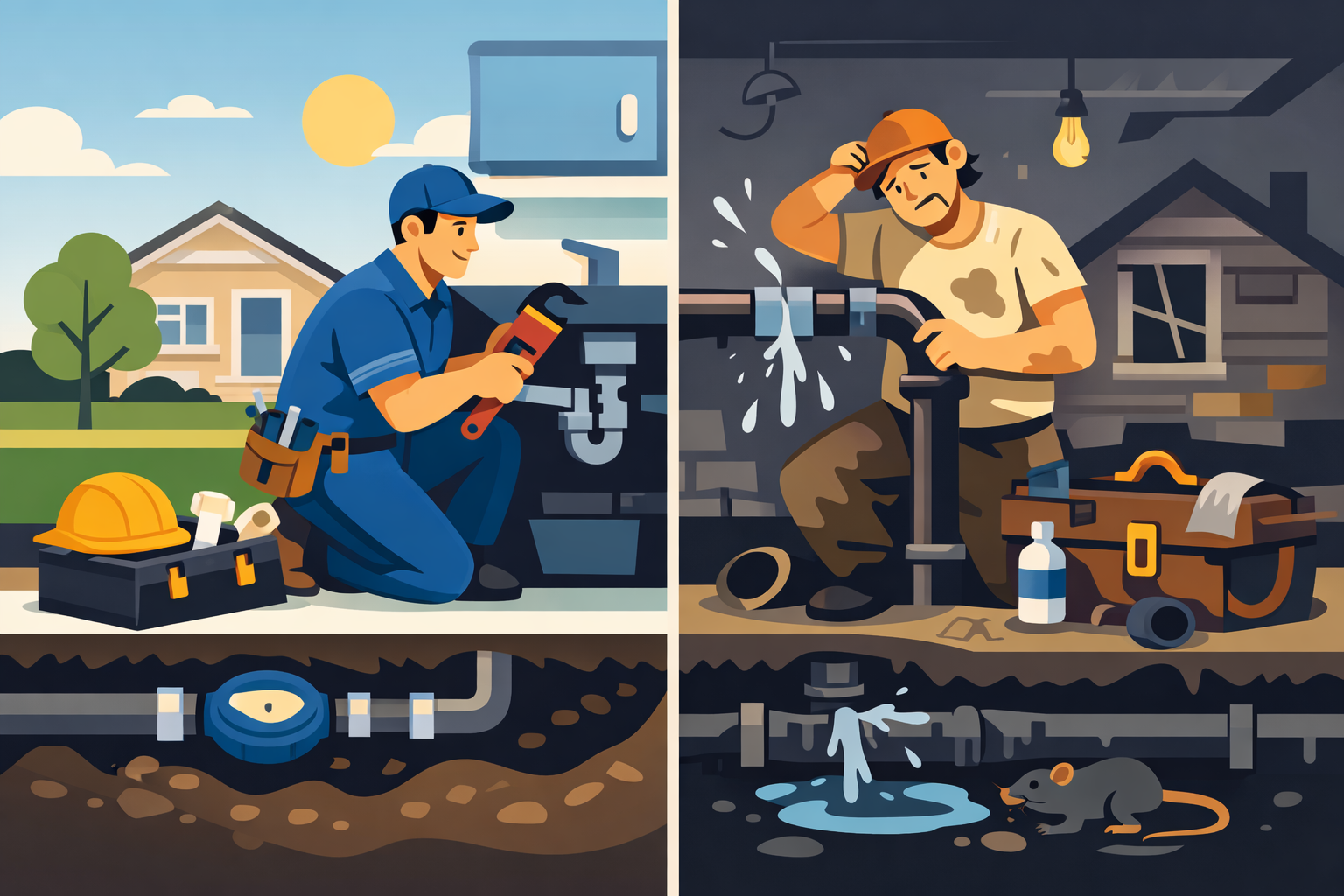
When plumbing problems hit, it’s tempting to go with the cheapest or fastest option available. But choosing between a licensed and unlicensed plumber isn’t just about price—it’s about protecting your home, your safety, and your long-term costs.
Understanding the real risks of hiring an unlicensed plumber can save you from expensive repairs, legal issues, and even property damage. In this guide, we’ll break down the key differences, what’s at stake, and how to make the right choice with confidence.
Why Licensing Matters in Plumbing
A plumbing license isn’t just a piece of paper—it represents verified training, experience, and accountability.
Licensed plumbers are required to:
- Complete formal training and apprenticeships
- Pass state or local certification exams
- Follow building codes and safety regulations
- Carry insurance and bonding
This ensures that the work done in your home meets professional and legal standards.
Unlicensed plumbers, on the other hand, may lack formal training or operate outside regulatory oversight. That’s where the risks begin to stack up.
The Hidden Risks of Hiring an Unlicensed Plumber
At first glance, hiring an unlicensed plumber might seem like a cost-saving decision. But in many cases, it leads to higher expenses and bigger problems down the line.
Poor Workmanship and Short-Term Fixes
Unlicensed plumbers often rely on guesswork or outdated methods. While they may fix the immediate issue, the solution is rarely built to last.
A small leak, for example, might be patched instead of properly repaired—leading to recurring issues that worsen over time.
In contrast, working with professionals who specialize in licensed plumbing services ensures the problem is diagnosed and fixed correctly the first time.
No Insurance Coverage
One of the biggest risks is liability.
Licensed plumbers carry insurance that protects both you and them in case of:
- Property damage
- Accidental flooding
- On-site injuries
If an unlicensed plumber causes damage, you could be responsible for the repair costs. Worse, your homeowner’s insurance may not cover work done by an unlicensed contractor.
Code Violations and Legal Issues
Plumbing work must comply with local building codes. These regulations are designed to ensure safety and proper system function.
Unlicensed plumbers may:
- Skip permits
- Ignore code requirements
- Use substandard materials
If your plumbing doesn’t meet code, you could face fines or be required to redo the work—especially if you plan to sell your home in the future.
Increased Risk of Major Damage
Improper plumbing work can lead to serious consequences, including:
- Water damage behind walls
- Mold growth
- Structural issues
- Sewer line contamination
For example, a poorly installed pipe connection can slowly leak for weeks before being noticed. By then, the damage may already be extensive.
This is where services like professional leak detection become critical in identifying hidden problems early.
Licensed Plumbers: What You’re Really Paying For
It’s easy to focus on upfront cost, but licensed plumbers provide long-term value that often outweighs the initial expense.
Proper Diagnosis and Advanced Tools
Licensed professionals use modern equipment to accurately diagnose issues. This includes tools like camera inspections, which allow plumbers to see inside pipes without unnecessary digging.
If you’re dealing with recurring drain problems, a thorough camera inspection can pinpoint the exact cause—something an unlicensed plumber may overlook.
Guaranteed Work and Accountability
Licensed plumbers stand behind their work. Many offer warranties or service guarantees, giving you peace of mind.
If something goes wrong, you have recourse. With unlicensed plumbers, you often don’t.
Compliance with Safety Standards
From water heaters to sewer lines, plumbing systems can pose serious safety risks if installed incorrectly.
Licensed plumbers ensure:
- Gas lines are properly connected
- Water heaters are safely installed
- Pressure levels are correctly regulated
If you’re considering installing or repairing a unit, it’s worth trusting professionals experienced in water heater services to avoid costly and dangerous mistakes.
Cost Comparison: Cheap Now vs Expensive Later
Hiring an unlicensed plumber might save you money upfront—but it often leads to higher costs over time.
Common Hidden Costs
- Rework due to failed repairs
- Water damage restoration
- Mold remediation
- Increased utility bills from leaks
- Code compliance fixes
In many cases, homeowners end up paying twice: once for the initial repair and again to fix the mistakes.
When Is It Especially Risky to Hire Unlicensed Plumbers?
Some plumbing jobs carry higher stakes than others. Hiring an unlicensed plumber for these tasks can be particularly dangerous:
Major Installations
- Water heaters
- Sewer line replacements
- Whole-home repiping
Emergency Repairs
- Burst pipes
- Severe leaks
- Backups or flooding
Hidden Issues
- Slab leaks
- Underground pipe damage
- Recurring drain problems
These situations require expertise, proper tools, and adherence to safety standards—things only licensed professionals can reliably provide.
How to Verify a Plumber’s License
Before hiring anyone, take a few minutes to verify their credentials. It’s a simple step that can prevent major headaches.
What to Check
- License number and status
- Proof of insurance
- Online reviews and reputation
- Experience with similar projects
Don’t hesitate to ask questions. A legitimate plumber will have no problem providing proof.
Signs You’re Dealing with an Unlicensed Plumber
If you’re unsure about a contractor, watch for these red flags:
- No written estimate or contract
- Cash-only payment requests
- Unusually low pricing
- Lack of online presence
- Refusal to show credentials
These warning signs often indicate shortcuts—and potential problems ahead.
Why Homeowners Still Choose Unlicensed Plumbers
Despite the risks, some homeowners still take the chance. The reasons are understandable:
- Lower upfront cost
- Faster availability
- Recommendations from friends
However, these short-term advantages rarely outweigh the long-term consequences. Plumbing is one area where cutting corners can be especially costly.
Making the Smart Choice for Your Home
Choosing a licensed plumber isn’t just about compliance—it’s about protecting your investment.
A properly installed and maintained plumbing system:
- Lasts longer
- Performs better
- Reduces the risk of emergencies
- Saves money over time
When you factor in the potential risks of unlicensed work, the decision becomes clear.
Final Thoughts
Plumbing issues can escalate quickly, and the quality of the work matters more than most homeowners realize. While an unlicensed plumber might seem like a quick fix, the risks—from poor workmanship to legal trouble—are simply too high.
A licensed plumber brings expertise, accountability, and long-term reliability. In the end, it’s not just about fixing a problem—it’s about doing it right the first time.