Leaking pipes are one of the most common — and frustrating — plumbing problems homeowners face. What starts as a small drip can quickly turn into water damage, mold growth, and costly repairs if ignored. The good news is that knowing what to do when your pipes start leaking can save you time, money, and stress.
In this guide, we’ll walk through the causes, warning signs, immediate actions, and long-term solutions to help you handle pipe leaks with confidence. Whether you’re dealing with a minor issue or a serious emergency, this article will give you a clear, practical plan.
Why Pipes Start Leaking in the First Place
Understanding the root cause of a leak helps you fix it properly — not just temporarily.
Aging Pipes and Corrosion
Over time, pipes naturally wear down. Metal pipes, especially older ones, can corrode from the inside out. This weakens the structure and eventually leads to cracks or pinhole leaks.
If your home is more than 20 years old and still has its original plumbing, aging pipes are a likely culprit.
High Water Pressure
While strong water pressure feels great in the shower, it can strain your pipes. Excess pressure puts constant stress on joints and connections, increasing the risk of leaks over time.
Temperature Changes
Pipes expand and contract as temperatures fluctuate. In extreme cases, this movement can cause joints to loosen or pipes to crack — especially in exposed or poorly insulated areas.
Clogs and Blockages
A clogged pipe doesn’t just slow down water flow. It can also create pressure buildup inside the pipe, which may eventually lead to leaks or bursts.
Early Signs of a Pipe Leak You Should Never Ignore
Catching a leak early can prevent major damage. Here are the most common warning signs to watch for:
Unexplained Increase in Water Bills
If your water usage hasn’t changed but your bill has spiked, you may have a hidden leak somewhere in your system.
Water Stains or Damp Spots
Look for discoloration on walls, ceilings, or floors. These stains often indicate water seeping through from a leaking pipe behind the surface.
Musty Odors
Persistent damp smells can signal hidden moisture buildup — often caused by slow leaks that go unnoticed.
Reduced Water Pressure
A sudden drop in pressure may mean water is escaping through a crack or leak before reaching your fixtures.
Sounds of Running Water
Hearing water when no taps are on is a strong indicator that something isn’t right.
What to Do Immediately When You Notice a Leak
Acting quickly is key to minimizing damage. Here’s exactly what you should do the moment you discover a leak.
Shut Off the Water Supply
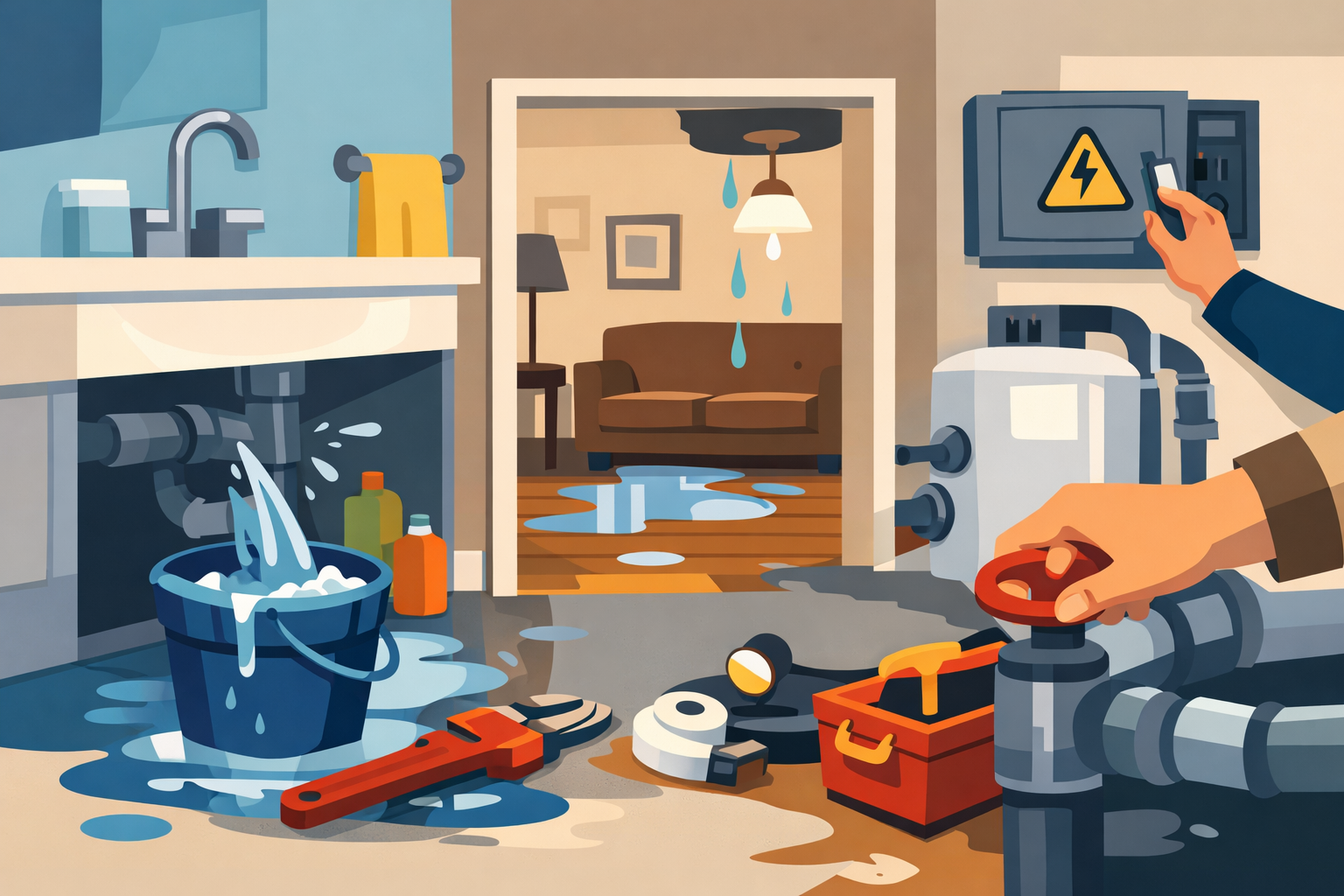
The first and most important step is to stop the flow of water. Locate your main shut-off valve and turn it off immediately.
This prevents further flooding and gives you time to assess the situation.
Turn Off Electricity if Necessary
If the leak is near electrical outlets or appliances, switch off the power in that area. Water and electricity are a dangerous combination.
Contain the Leak
Use buckets, towels, or containers to catch dripping water. This helps protect your floors and furniture while you plan your next move.
Drain Remaining Water
Open faucets to release any remaining water in the pipes. This reduces pressure and minimizes further leakage.
Temporary Fixes You Can Try
While professional repair is often necessary, some quick fixes can help control the situation temporarily.
Pipe Repair Tape or Epoxy
Specialized plumbing tape or epoxy putty can seal small cracks or holes. These solutions are quick and effective for minor leaks.
Pipe Clamps
A pipe clamp can apply pressure over the damaged area, stopping the leak until a permanent repair is made.
Rubber Patch and Hose Clamp
For slightly larger leaks, placing a rubber patch over the hole and securing it with a clamp can provide a short-term solution.
Keep in mind: these fixes are temporary. They buy you time but don’t replace proper repair.
When to Call a Professional Plumber
Not all leaks are DIY-friendly. In many cases, calling a licensed plumber is the smartest and safest choice.
Hidden or Hard-to-Reach Leaks
Leaks behind walls, under floors, or underground require specialized tools and expertise. Attempting to fix them without proper equipment can cause more damage.
For accurate diagnosis, professionals often use advanced methods like advanced leak detection to locate the exact source without unnecessary demolition.
Recurring Leaks
If the same pipe keeps leaking, there may be a deeper issue such as pipe deterioration or pressure imbalance.
Major Water Damage
When water has already caused structural damage, mold growth, or flooding, immediate professional intervention is necessary.
Old or Outdated Plumbing Systems
In older homes, leaks may indicate a system-wide issue. A full inspection — or even partial replacement — might be required.
Long-Term Solutions to Prevent Future Leaks
Fixing the current leak is only half the job. Preventing future issues is just as important.
Schedule Regular Plumbing Inspections
Routine maintenance helps catch small problems before they escalate. A professional check-up can identify weak points in your system.
If you’re unsure where to start, a reliable professional plumbing services can give you a clearer picture of your system’s condition.
Upgrade Old Pipes
Replacing outdated materials with modern options like PEX or PVC improves durability and reduces the risk of leaks.
Install a Pressure Regulator
Maintaining safe water pressure protects your pipes from unnecessary stress.
Insulate Exposed Pipes
Proper insulation prevents temperature-related expansion and contraction, especially in areas prone to extreme conditions.
The Role of Technology in Leak Detection
Modern plumbing solutions have made it easier than ever to detect and fix leaks efficiently.
Camera Inspections
Plumbers can now inspect pipes internally using small cameras. This allows for precise diagnosis without tearing down walls or digging up floors.
If you suspect hidden damage, a detailed in-pipe camera inspection can reveal cracks, blockages, and structural issues.
Smart Leak Detectors
These devices monitor your water system and alert you to unusual activity. Some even shut off your water automatically when a leak is detected.
How Leaks Affect Your Water Heater and Appliances
Leaks don’t just impact your pipes — they can also damage connected systems.
Water Heater Issues
Leaks near your water heater can reduce efficiency, cause corrosion, or even lead to complete failure.
Regular maintenance and timely repairs are essential. If your system shows signs of trouble, a water heater repair options can help you avoid costly replacements.
Appliance Damage
Dishwashers, washing machines, and refrigerators rely on a stable water supply. Leaks can disrupt their performance and shorten their lifespan.
Cost of Ignoring a Pipe Leak
Delaying repairs might seem convenient, but it often leads to higher costs in the long run.
Structural Damage
Water can weaken walls, ceilings, and flooring, leading to expensive repairs.
Mold and Health Risks
Moist environments promote mold growth, which can affect indoor air quality and health.
Increased Utility Bills
Even a small leak can waste gallons of water daily, significantly increasing your monthly expenses.
Act Fast, Fix Smart
When your pipes start leaking, time is your biggest enemy. Acting quickly can mean the difference between a simple repair and a major renovation.
Start by shutting off the water, containing the leak, and assessing the damage. Use temporary fixes only as a short-term solution, and don’t hesitate to call a professional when needed.
More importantly, think beyond the immediate problem. Investing in regular maintenance, modern technology, and system upgrades will protect your home and give you peace of mind.
A well-maintained plumbing system isn’t just about convenience — it’s about safeguarding your property, your finances, and your comfort.