Older homes carry a certain charm that newer properties often lack. From architectural details to solid construction, these houses can be beautiful places to live. However, behind the character and history often lies an aging plumbing system that may struggle to keep up with modern household demands.
Many homeowners discover that plumbing systems installed decades ago begin to show signs of wear, corrosion, and outdated design. Pipes deteriorate, fixtures become inefficient, and hidden leaks can slowly cause damage over time. Understanding the most common plumbing issues in older homes can help you identify problems early and avoid costly repairs.
In this guide, we’ll explore the plumbing challenges older houses frequently face and what homeowners can do to address them before they escalate into serious issues.
Why Plumbing Systems in Older Homes Fail
Plumbing systems are not designed to last forever. Even the most durable materials eventually degrade due to years of water flow, pressure changes, and environmental conditions.
Older homes—especially those built before the 1970s—often rely on outdated materials like galvanized steel or cast iron. These materials were standard decades ago but can corrode, clog, or weaken over time.
Another factor is that modern households place more strain on plumbing systems than in the past. Today’s homes rely on appliances like dishwashers, washing machines, and water filtration systems that older plumbing systems were never designed to handle.
When aging pipes meet increased demand, plumbing problems are almost inevitable.
Outdated Pipe Materials
One of the most significant plumbing concerns in older homes involves the materials used in the original pipe system.
Galvanized Steel Pipes
Many homes built before the 1960s used galvanized steel pipes. While durable at first, these pipes eventually corrode from the inside out.
Over time, rust and mineral buildup narrow the interior of the pipes. This leads to reduced water pressure, discoloration, and increased risk of leaks.
Homeowners may notice:
- Brown or rusty water
- Reduced water pressure
- Frequent pipe leaks
- Visible corrosion on exposed pipes
Once corrosion becomes severe, replacement is often the most reliable solution.
Cast Iron Drain Pipes
Older drainage systems often relied on cast iron pipes. While strong, cast iron is prone to internal rust and eventual deterioration.
When corrosion progresses, these pipes may crack, collapse, or allow leaks that damage surrounding structures.
A professional plumbing service experts evaluation can help determine whether sections of aging pipe should be repaired or replaced.
Low Water Pressure
Low water pressure is another common frustration in older homes.
While it may seem like a minor inconvenience, it often signals deeper plumbing issues that require attention.
Mineral Buildup in Pipes
Over decades, minerals naturally found in water accumulate inside pipes. As buildup increases, the available space for water flow becomes smaller.
This gradually reduces water pressure throughout the home.
Hidden Leaks
Low pressure can also indicate hidden leaks somewhere in the plumbing system. When water escapes through damaged pipes, less water reaches faucets and fixtures.
Using advanced professional leak detection services can help identify leaks behind walls, under floors, or beneath foundations before they cause significant structural damage.
Frequent Drain Clogs
Drain clogs happen in any home, but older homes tend to experience them more frequently.
Decades of buildup inside aging drain pipes can narrow their interior walls. This makes it easier for debris to accumulate and block water flow.
Common Causes of Drain Blockages
Older drainage systems are particularly vulnerable to clogs caused by:
- Grease buildup
- Soap residue
- Hair accumulation
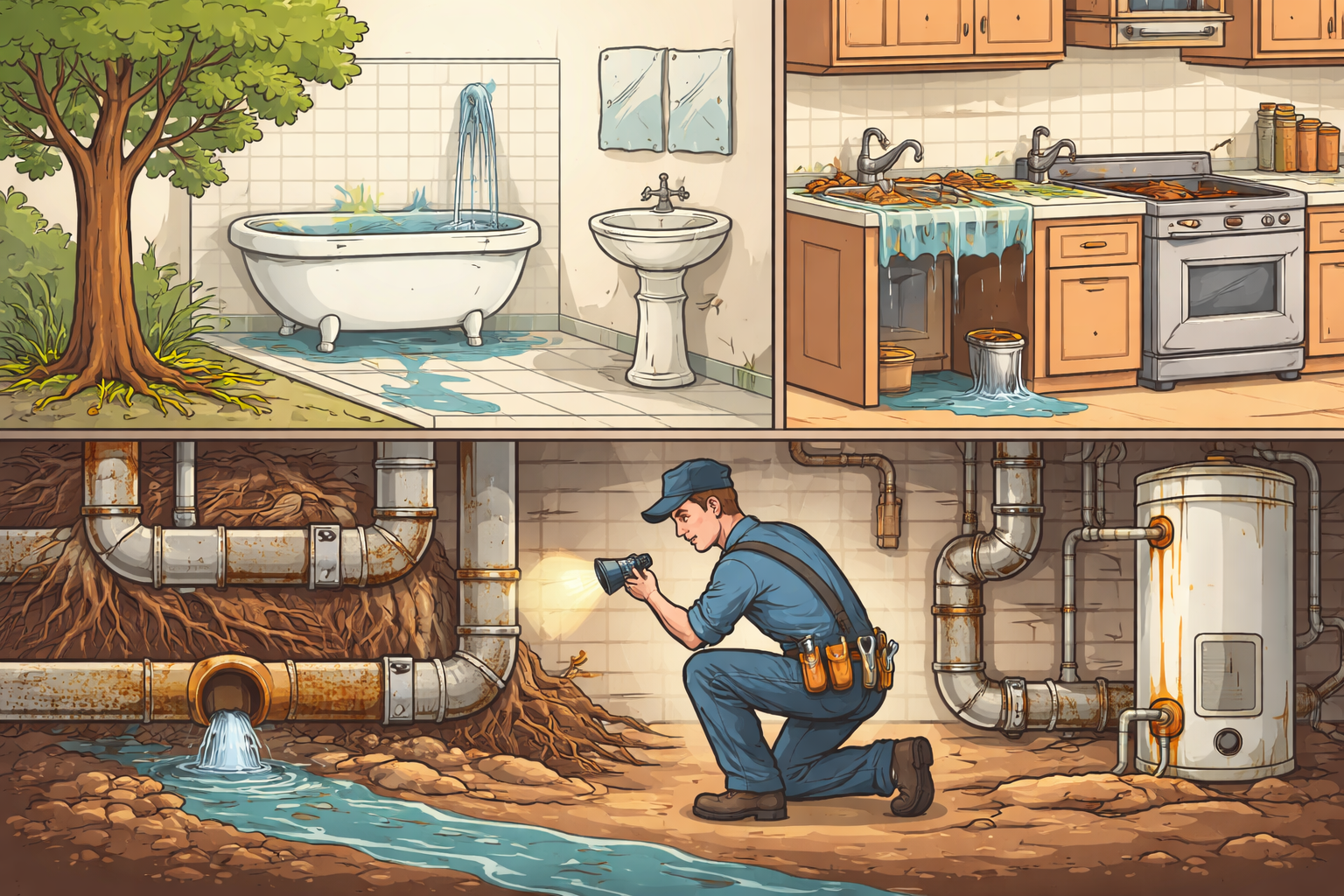
- Tree root intrusion
- Pipe corrosion
These issues can combine over time, turning small slow drains into major plumbing emergencies.
Routine maintenance and professional drain clog removal can restore proper flow and prevent recurring blockages.
Hidden Plumbing Leaks
One of the most dangerous plumbing problems in older homes is hidden leaks.
Because older pipes weaken over time, small cracks or loose fittings can allow water to escape slowly without obvious signs.
Warning Signs of Hidden Leaks
Homeowners should watch for several subtle indicators:
- Unexplained increases in water bills
- Mold or mildew growth
- Musty odors
- Warped flooring or drywall
- Water stains on ceilings
Even minor leaks can cause significant damage if ignored.
Professional inspections using modern camera inspection technology allow plumbers to examine the interior of pipes and identify hidden issues before they worsen.
Aging Water Heaters
Water heaters in older homes are often nearing the end of their lifespan.
Traditional tank water heaters typically last between 8 and 12 years. If your home still has the original water heater from a previous renovation, it may already be operating beyond its recommended service life.
Signs Your Water Heater Needs Attention
A failing water heater may produce several warning signs:
- Inconsistent water temperature
- Discolored hot water
- Strange rumbling or popping sounds
- Water pooling around the tank
When these symptoms appear, it may be time to explore professional water heater solutions that provide more reliable performance and improved energy efficiency.
Sewer Line Problems
Sewer line issues are especially common in older properties.
Many older homes have clay or cast iron sewer lines that degrade over time. Tree roots often penetrate small cracks in these pipes, eventually causing major blockages.
Tree Root Intrusion
Tree roots naturally seek moisture and can grow into tiny pipe openings. Once inside, they expand and block wastewater flow.
This can lead to:
- Frequent drain backups
- Sewage odors
- Slow draining fixtures throughout the home
Professional inspections can determine whether the sewer line requires repair or replacement.
Pipe Leaks and Burst Pipes
Aging pipes are more likely to develop leaks or burst under pressure.
Temperature fluctuations, corrosion, and weakened joints all contribute to pipe failure.
Why Older Pipes Fail
Over time, several factors weaken plumbing pipes:
- Internal corrosion
- Expansion and contraction from temperature changes
- Increased water pressure
- Years of vibration and structural movement
Once a pipe reaches a critical point of deterioration, even minor pressure changes can cause it to crack or burst.
Regular inspections help identify vulnerable sections before they fail.
Outdated Plumbing Fixtures
Older homes often still use original faucets, toilets, and shower systems.
While these fixtures may still function, they typically consume far more water than modern alternatives.
Inefficient Water Use
Older plumbing fixtures can waste significant amounts of water each year.
For example:
- Older toilets may use up to 5 gallons per flush
- Older showerheads use more water per minute
- Worn faucet washers allow slow leaks
Upgrading fixtures improves water efficiency and reduces utility costs.
Poor Plumbing Layouts
Older homes were built in an era when plumbing design standards were different.
As a result, some plumbing systems may include inefficient layouts that contribute to recurring issues.
Common Layout Problems
Older plumbing designs may feature:
- Long pipe runs that reduce water pressure
- Poor venting systems
- Limited drainage capacity
- Pipes installed through hard-to-access areas
Modern plumbing upgrades can improve flow, efficiency, and long-term reliability.
How Professional Inspections Prevent Major Repairs
Routine inspections are one of the best ways to maintain plumbing systems in older homes.
Experienced plumbers can detect small problems before they evolve into expensive repairs.
Professional inspections often include:
- Pipe condition analysis
- Leak detection
- Drain flow evaluation
- Sewer line inspection
- Water heater performance checks
Addressing problems early protects your home from water damage and extends the life of your plumbing system.
When to Call a Professional Plumber
While minor issues like slow drains or dripping faucets may seem manageable, many plumbing problems require professional expertise.
Homeowners should contact a plumber if they notice:
- Persistent drain clogs
- Sudden water pressure changes
- Visible pipe corrosion
- Recurring leaks
- Sewage odors
- Water heater performance issues
Prompt action prevents small problems from becoming costly emergencies.
Protecting the Plumbing System in Your Older Home
Owning an older home doesn’t mean you have to accept constant plumbing problems. With proper maintenance and timely upgrades, these systems can continue to function reliably for many years.
Regular inspections, modern diagnostic tools, and professional repairs make it possible to preserve the integrity of older plumbing systems while improving efficiency and reliability.
If your home shows signs of aging pipes, leaks, or recurring clogs, taking action early is the best way to protect both your property and your peace of mind.
Conclusion
Older homes offer character, craftsmanship, and history—but their plumbing systems often require extra attention. Aging pipes, outdated materials, hidden leaks, and inefficient fixtures are common issues that homeowners should watch for.
By understanding the most common plumbing problems in older homes, you can take proactive steps to maintain your system and avoid major repairs.
Regular maintenance, timely upgrades, and professional inspections ensure your home’s plumbing continues to function safely and efficiently for years to come.