Plumbing systems work quietly in the background of everyday life—until something goes wrong. From leaking pipes to clogged drains and failing water heaters, plumbing problems can quickly turn into costly repairs if they’re not addressed early.
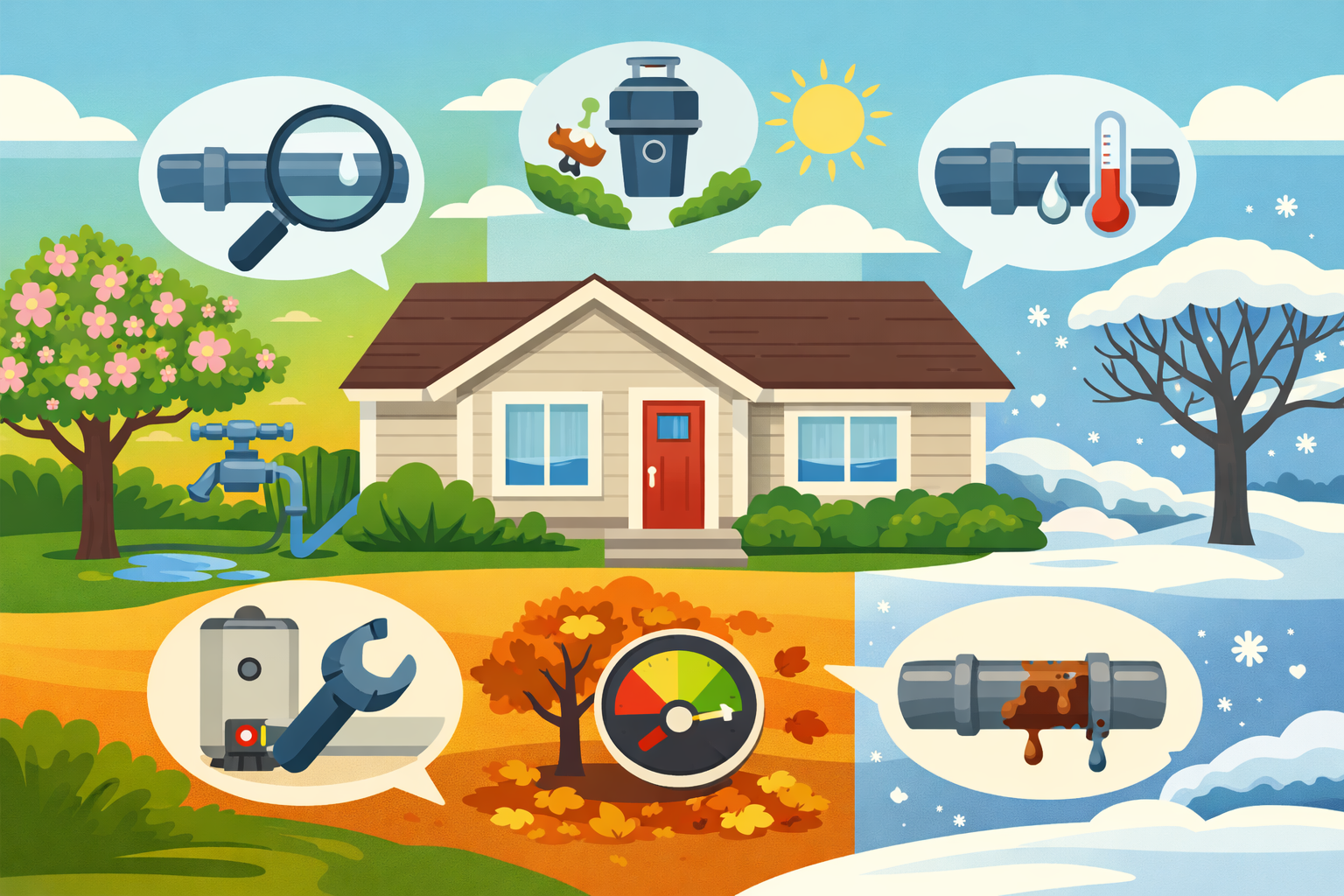
That’s why seasonal plumbing maintenance is so important. Each season brings different challenges for your home’s plumbing system, from heavy rainfall and shifting soil to increased water usage and aging pipes.
A simple seasonal plumbing checklist helps homeowners stay ahead of potential problems, extend the life of their plumbing system, and avoid emergency repairs.
In this guide, we’ll walk through a practical plumbing maintenance checklist for every season so you can keep your home’s plumbing running smoothly all year long.
Why Seasonal Plumbing Maintenance Matters
Many plumbing issues start small and grow worse over time. A slow leak, minor pipe corrosion, or partially clogged drain might not seem urgent today—but over months or years, these problems can lead to serious damage.
Seasonal plumbing inspections help identify problems early and prevent expensive repairs.
Regular maintenance can help homeowners:
- Prevent unexpected plumbing emergencies
- Extend the life of pipes and fixtures
- Improve water efficiency
- Reduce repair costs
- Maintain consistent water pressure
- Protect appliances like water heaters and dishwashers
Homeowners who follow a yearly plumbing checklist typically experience fewer unexpected plumbing failures.
Spring Plumbing Checklist
Spring is one of the most important seasons for plumbing inspections. After months of fluctuating temperatures and heavy winter usage, it’s the ideal time to check your plumbing system for damage or wear.
Inspect for Hidden Leaks
Leaks often develop slowly and remain unnoticed until they cause visible damage. Spring is a great time to check common leak locations around your home.
Look for signs such as:
- Water stains on walls or ceilings
- Mold or mildew growth
- Unusual water bills
- Damp cabinets under sinks
Small leaks can waste hundreds of gallons of water each year, so addressing them early helps protect both your home and your wallet.
Check Outdoor Plumbing Fixtures
Outdoor plumbing systems can take a lot of wear from weather changes. Inspect exterior faucets, hose bibs, and irrigation systems for damage or leaks.
Turn on outdoor faucets and check for:
- Dripping water
- Low pressure
- Cracked fixtures
- Water pooling near the foundation
Outdoor leaks often go unnoticed but can slowly damage foundations and landscaping.
Inspect Your Water Heater
Your water heater works hard year-round, and spring is a great time to ensure it’s functioning efficiently.
Watch for warning signs like:
- Rusty water
- Unusual noises
- Fluctuating water temperatures
- Slow hot water recovery
If your unit is older or showing signs of wear, reviewing your water heater services options can help determine whether maintenance or replacement is the best solution.
Regular inspections can extend the lifespan of your water heater and improve energy efficiency.
Summer Plumbing Checklist
Summer usually brings higher water usage as families travel, host guests, and spend more time outdoors. These changes can put additional pressure on plumbing systems.
Taking time to inspect your plumbing during summer can help prevent unexpected issues.
Check Your Garbage Disposal
Garbage disposals work harder during summer months due to increased cooking and gatherings.
To maintain your disposal:
- Avoid putting grease or oil down the drain
- Run cold water while using the disposal
- Grind small food scraps rather than large pieces
- Clean the disposal regularly to prevent odors
If your garbage disposal starts making unusual noises or clogs frequently, it may need professional attention.
Inspect Washing Machine Hoses
Washing machine hoses can deteriorate over time, especially in homes with heavy laundry use.
Check hoses for:
- Cracks or bulging
- Loose connections
- Signs of leaks
Replacing worn hoses before they fail can prevent major water damage.
Schedule a Drain Inspection
Summer is also an ideal time to check for developing drain blockages before they become serious issues.
Professional inspections often involve specialized tools and cameras that allow plumbers to examine the inside of pipes. If you suspect recurring drain problems, a sewer camera inspection can identify hidden blockages, root intrusion, or pipe damage.
This proactive step can prevent future sewer backups and expensive pipe repairs.
Fall Plumbing Checklist
Fall is the season to prepare your plumbing system for cooler temperatures and increased indoor water usage.
Addressing small issues during fall can prevent serious problems during the colder months.
Test Your Home’s Water Pressure
Low or inconsistent water pressure can indicate hidden leaks or pipe buildup.
Normal residential water pressure should typically range between 40 and 60 psi.
If you notice weak water flow from faucets or showers, it may signal:
- Mineral buildup inside pipes
- Failing pressure regulators
- Hidden plumbing leaks
Early detection helps prevent more serious plumbing issues.
Inspect Sink and Shower Drains
Hair, soap residue, and debris can accumulate in bathroom drains throughout the year.
Signs of developing clogs include:
- Slow draining water
- Gurgling sounds
- Unpleasant odors
Regular cleaning and maintenance help keep drains flowing smoothly.
Check Toilets for Silent Leaks
Toilet leaks are surprisingly common and often go unnoticed for months.
A simple test can reveal hidden leaks:
- Add a few drops of food coloring into the toilet tank.
- Wait about 10 minutes.
- If color appears in the bowl, the toilet is leaking.
Fixing toilet leaks early can save thousands of gallons of water annually.
Winter Plumbing Checklist
Winter can place significant stress on plumbing systems. Increased indoor water use and colder temperatures can expose weaknesses in pipes, fixtures, and appliances.
Preventive maintenance during winter helps reduce the risk of plumbing emergencies.
Monitor Your Water Heater Performance
Hot water demand increases during winter as showers, laundry, and dishwashing become more frequent.
Signs your water heater may need attention include:
- Insufficient hot water
- Discolored water
- Strange noises from the tank
Addressing water heater issues early can prevent unexpected breakdowns during colder months.
Inspect Pipes for Corrosion
Older homes often contain aging plumbing pipes that may corrode over time.
Common signs of pipe corrosion include:
- Rust-colored water
- Metallic taste in water
- Visible corrosion on exposed pipes
Replacing damaged pipes before they fail can prevent major water damage.
Watch for Sewer Backup Warning Signs
Winter plumbing issues sometimes involve sewer line problems caused by blockages or aging pipes.
Common warning signs include:
- Multiple drains clogging at once
- Sewage odors inside the home
- Water backing up in tubs or sinks
If you notice these symptoms, it’s best to address the issue quickly to avoid larger plumbing repairs.
Warning Signs Your Plumbing Needs Professional Attention
Even with regular maintenance, plumbing systems can develop issues that require professional repair.
Contact a professional plumber if you notice:
- Persistent drain clogs
- Low water pressure throughout the home
- Sudden spikes in water bills
- Water stains or moisture around fixtures
- Strange noises coming from pipes
Scheduling routine inspections and maintenance through trusted professional plumbing services can help identify issues before they become major problems.
Experienced plumbers can inspect pipes, drains, fixtures, and appliances to ensure your entire plumbing system remains in good working condition.
Benefits of Following a Seasonal Plumbing Checklist
Homeowners who perform regular plumbing maintenance often enjoy long-term benefits.
A seasonal plumbing routine can:
- Reduce emergency plumbing repairs
- Extend the lifespan of pipes and fixtures
- Improve water efficiency
- Protect appliances like water heaters and dishwashers
- Prevent water damage inside the home
Taking a proactive approach to plumbing care saves both time and money over the life of your home.
Keep Your Plumbing System Running Year-Round
Plumbing systems are essential to daily life, yet they’re often overlooked until problems arise. By following a simple seasonal plumbing checklist, homeowners can identify potential issues early and prevent unexpected plumbing emergencies.
Regular inspections of pipes, drains, water heaters, and fixtures help ensure everything continues to work efficiently.
When in doubt, professional plumbing inspections can provide peace of mind and help catch hidden issues before they become expensive repairs.
Staying proactive with plumbing maintenance is one of the best ways to protect your home and keep your water systems running smoothly throughout every season.