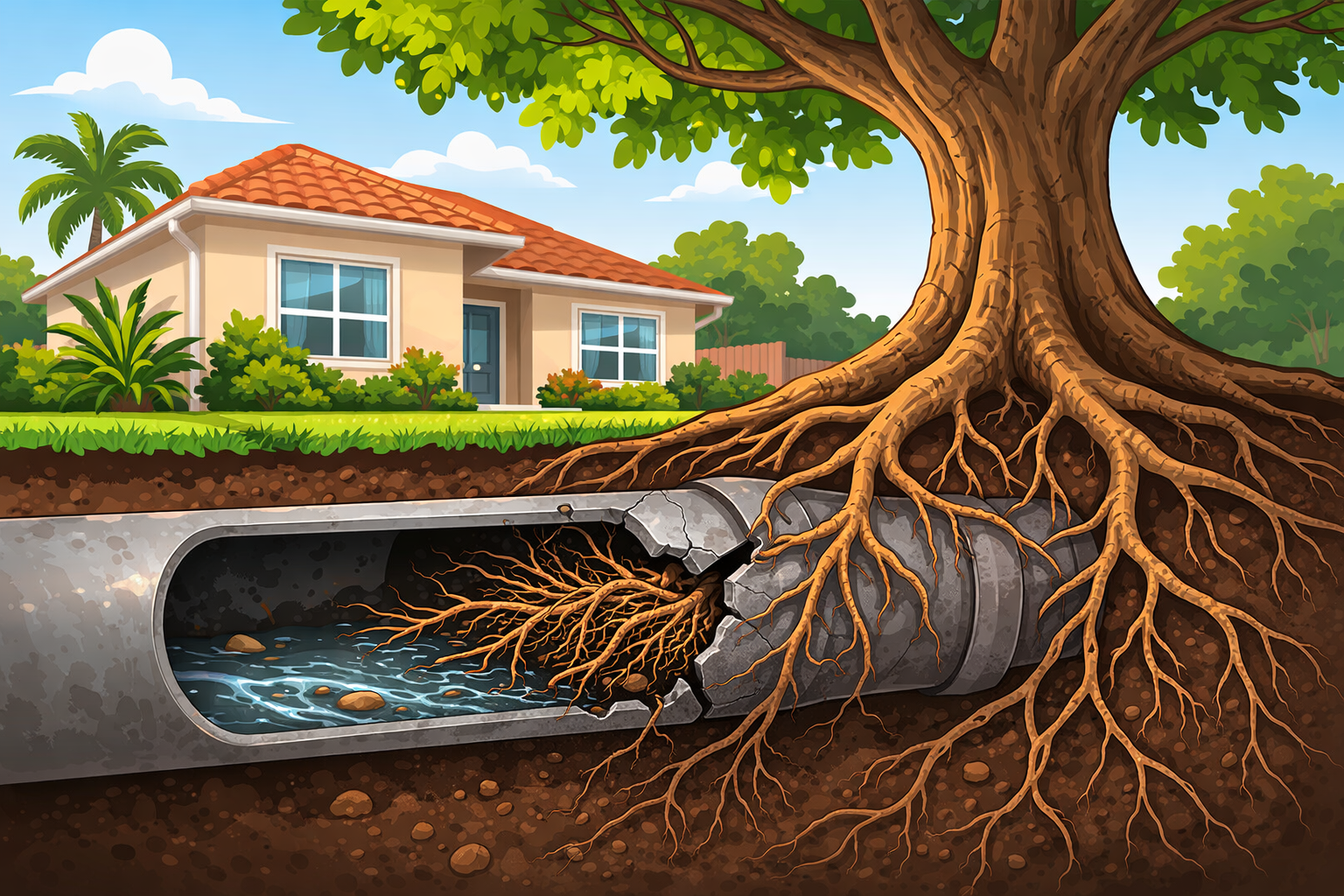
Tree-lined neighborhoods are part of what makes South Florida so beautiful. Mature palms, ficus trees, and large shade trees add curb appeal and help keep homes cool in the Florida heat. Unfortunately, those same trees can create a serious issue underground: tree roots invading sewer lines.
Tree root intrusion is one of the most common causes of sewer line blockages and pipe damage in South Florida homes. Many homeowners don’t realize there’s a problem until drains slow down, sewage backs up, or unpleasant odors appear. Understanding why this happens and how to address it can save you from costly plumbing repairs.
In this guide, we’ll explain how tree roots get into sewer pipes, the warning signs to watch for, and the best solutions to prevent long-term damage.
Why Tree Roots Target Sewer Pipes
Tree roots naturally grow toward moisture and nutrients. Underground sewer pipes provide both.
Even the smallest crack in a pipe can release moisture into the surrounding soil. Once roots detect that water source, they grow aggressively toward it and begin pushing into the pipe through tiny openings.
Over time, the roots expand inside the pipe, trapping debris and creating blockages that disrupt wastewater flow.
South Florida Conditions Make the Problem Worse
Several regional factors make root intrusion particularly common in South Florida:
- Sandy soil allows roots to spread quickly
- High water tables encourage root growth
- Year-round warmth promotes continuous plant growth
- Older plumbing systems with clay or cast iron pipes
Because many homes in South Florida were built decades ago, aging sewer lines are especially vulnerable.
How Tree Roots Enter Sewer Lines
Most sewer pipes are buried several feet underground, which may seem protected. However, pipes naturally develop weak points over time.
Roots can enter through:
- Pipe joints that loosen with age
- Small cracks caused by ground movement
- Corroded cast iron pipes
- Broken clay pipes
- Poor pipe installation
Once a root finds an opening, it slowly grows inside the pipe. Eventually, the roots create a dense web that catches waste, grease, and toilet paper, forming a major blockage.
Warning Signs of Tree Roots in Sewer Lines
Root intrusion usually develops slowly. Many homeowners ignore early warning signs until the situation becomes urgent.
Here are some of the most common indicators.
Recurring Drain Clogs
If your drains keep clogging even after you clear them, roots may be obstructing the main sewer line.
You might notice:
- Toilets backing up
- Multiple drains clogging at once
- Slow draining sinks and tubs
Unlike typical clogs, root blockages return repeatedly.
Gurgling Sounds in Pipes
When roots partially block a sewer line, air gets trapped inside the pipe.
This can create unusual noises such as:
- Gurgling toilets
- Bubbling drains
- Air sounds when flushing
These sounds often indicate restricted water flow.
Unpleasant Sewage Odors
Tree root damage can cause cracks or breaks in sewer pipes. When this happens, sewage gases may escape through drains or even through the yard.
A persistent sewer smell inside or outside your home should never be ignored.
Soggy or Sunken Yard Areas
If tree roots break a sewer pipe completely, wastewater can leak into the surrounding soil.
You might notice:
- Unusually green patches of grass
- Wet or soggy ground
- Sunken areas in the yard
- A sewage smell outdoors
These signs indicate a serious sewer line problem that requires immediate attention.
Why Root Intrusion Is a Serious Plumbing Problem
Tree roots are surprisingly strong. As they grow thicker inside a pipe, they can cause major structural damage.
Complete Pipe Blockages
Roots eventually create dense masses that stop wastewater from flowing. When this happens, sewage can back up into sinks, bathtubs, and toilets.
This creates both a health hazard and a major inconvenience.
Pipe Cracking and Collapse
As roots expand, they push outward against the pipe walls. This pressure can cause:
- Pipe fractures
- Collapsed sewer lines
- Severe leaks underground
Once pipes reach this stage, full replacement may be necessary.
Expensive Repairs
The longer root intrusion goes untreated, the more damage it causes.
A simple root removal can turn into a costly sewer replacement if the pipe structure fails.
That’s why homeowners should address warning signs early and schedule professional inspections when problems appear.
How Plumbers Detect Tree Roots in Sewer Lines
Identifying root intrusion used to require digging up large sections of the yard. Fortunately, modern plumbing technology makes detection far easier.
One of the most reliable methods is a sewer line camera inspection.
During this process, a small waterproof camera is inserted into the sewer line through an access point. The camera sends real-time footage to a monitor, allowing plumbers to locate blockages, cracks, and root intrusions precisely.
This technology helps identify:
- The exact location of the root blockage
- The severity of pipe damage
- Whether repairs or replacement are necessary
It also eliminates unnecessary digging and guesswork.
Professional Solutions for Tree Root Intrusion
Once tree roots are confirmed inside a sewer line, several solutions may be used depending on the severity of the damage.
Mechanical Root Cutting
Specialized root cutting tools can break apart root masses inside pipes.
These tools spin rapidly and cut through roots, clearing the blockage and restoring water flow.
However, this method removes the roots temporarily. Without further treatment, roots may eventually grow back.
Hydro Jetting
Hydro jetting uses high-pressure water to blast away roots, grease, and debris inside sewer pipes.
This method is extremely effective for clearing buildup and restoring pipe capacity.
Hydro jetting also helps clean pipe walls, which can slow down future root growth.
Pipe Repair or Replacement
If roots have severely damaged the pipe, repairs may be necessary.
Solutions may include:
- Pipe lining
- Sectional pipe replacement
- Full sewer line replacement
A professional plumbing assessment helps determine the most effective approach.
For homeowners experiencing recurring sewer problems, working with experienced professionals who specialize in professional plumbing services ensures the issue is handled properly the first time.
How to Prevent Tree Root Damage
While root intrusion is common, there are several ways homeowners can reduce the risk.
Schedule Routine Sewer Inspections
Routine inspections help identify problems before they become severe.
A camera inspection every few years can detect:
- Early root growth
- Small cracks in pipes
- Partial blockages
Early detection often prevents major repairs.
Avoid Planting Trees Near Sewer Lines
Many homeowners unknowingly plant trees directly above sewer pipes.
Roots from trees such as ficus, banyan, and oak can extend dozens of feet underground.
When landscaping, avoid planting large trees near sewer lines or underground utilities.
Replace Aging Sewer Pipes
Older pipes made of clay or cast iron are more vulnerable to root intrusion.
Modern PVC pipes are more durable and resistant to cracks.
If your home has older plumbing infrastructure, upgrading sewer lines can prevent recurring problems.
Use Root Barriers
Physical root barriers can be installed underground to redirect root growth away from pipes.
These barriers are especially helpful for properties with large trees close to plumbing lines.
Call us at (786) 709-0426
Why Tree Roots Are Especially Problematic in Older Homes
Many South Florida homes built in the 1950s through the 1980s still rely on aging sewer systems.
Older materials are more susceptible to root damage.
Clay Pipes
Clay pipes were widely used in older construction. While durable, they are brittle and prone to cracking.
Once cracked, they create ideal entry points for roots.
Cast Iron Pipes
Cast iron sewer pipes corrode over time. Corrosion weakens the pipe walls and eventually creates holes where roots can enter.
This is why many South Florida homes experience sewer problems after decades of use.
When to Call a Plumber
Tree root intrusion rarely resolves itself. If you notice signs of sewer problems, it’s important to act quickly.
Contact a plumber if you experience:
- Multiple clogged drains
- Sewage odors inside the home
- Frequent toilet backups
- Slow drains throughout the house
- Wet or sunken areas in the yard
Early intervention can prevent major damage and expensive repairs.
Call us at (786) 709-0426
Protecting Your Sewer System Long-Term
Tree root damage is a common but manageable plumbing issue. With proper inspections, professional maintenance, and smart landscaping choices, homeowners can significantly reduce the risk of sewer line failures.
Ignoring early signs often leads to severe blockages, pipe damage, and costly repairs. By staying proactive and addressing potential problems early, you can keep your home’s plumbing system running smoothly.
If you suspect tree roots may be affecting your sewer line, a professional inspection can provide clear answers and prevent further damage.