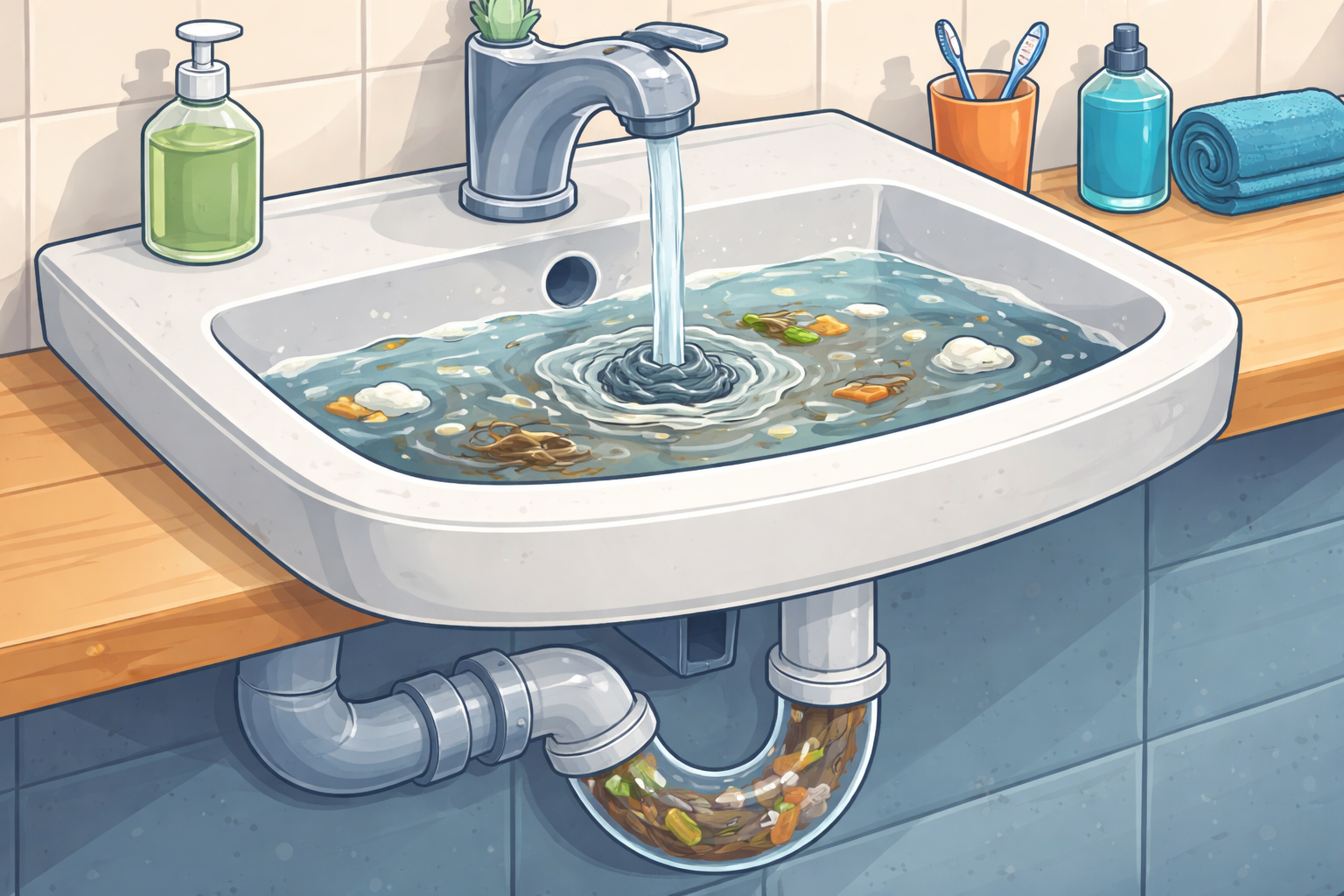
A slow-draining sink is one of the most common plumbing frustrations homeowners face. You turn on the faucet, wash your hands or dishes, and watch the water pool around the drain instead of flowing away quickly. While it may seem like a minor inconvenience, a slow drain is often the early warning sign of a deeper plumbing issue.
Understanding why your sink drains slowly can help you prevent bigger problems like pipe damage, severe clogs, or even sewer backups. In many cases, the cause is something simple that can be resolved quickly. In other situations, the issue may require professional attention to protect your plumbing system.
In this guide, we’ll explore the most common causes of slow sink drainage, how to identify the problem, and what you can do to fix it before it turns into a costly repair.
What Causes a Sink to Drain Slowly?
A slow drain typically means something is restricting the flow of water somewhere in your plumbing system. This obstruction may occur close to the drain opening, deeper in the pipes, or even in the main sewer line.
Let’s look at the most common reasons sinks begin draining slowly.
Hair and Soap Buildup
One of the most frequent causes of slow sink drainage is the gradual accumulation of hair and soap residue inside the drainpipe.
Why Hair Causes Blockages
Hair easily binds together inside pipes, especially when mixed with soap, toothpaste, shaving cream, or other bathroom products. Over time, these materials form a thick mass that narrows the pipe’s interior and slows water movement.
Bathroom sinks are particularly vulnerable because they are used daily for grooming activities that produce loose hair.
Signs Hair Is the Problem
You may notice several indicators when hair is responsible for the clog:
- Water drains slowly but still moves gradually
- The drain occasionally smells unpleasant
- The sink may clog temporarily before draining again
In many cases, removing the drain stopper and clearing the debris manually can solve the problem.
Grease and Food Residue
Kitchen sinks often develop slow drainage due to grease buildup.
How Grease Affects Pipes
Cooking oils, fats, and grease may appear harmless when poured down the drain in liquid form. However, once they cool inside the pipes, they solidify and cling to the pipe walls.
Food particles stick to this greasy surface, gradually forming a thick blockage that restricts water flow.
Common Kitchen Drain Culprits
Several substances contribute to this problem, including:
- Cooking oil
- Butter and animal fats
- Coffee grounds
- Rice and pasta
- Food scraps
Preventing grease buildup is as simple as disposing of oils in a sealed container instead of pouring them down the drain.
Mineral Buildup Inside Pipes
In many regions, hard water contains high levels of minerals such as calcium and magnesium. Over time, these minerals accumulate inside plumbing pipes.
How Hard Water Restricts Drainage
Mineral deposits form a rough coating on the interior walls of pipes. As this buildup thickens, it narrows the available space for water to flow.
This type of blockage develops gradually and may not be immediately noticeable until the drainage slows significantly.
Warning Signs of Mineral Deposits
You might notice:
- Consistently slow drainage
- White or chalky residue around fixtures
- Reduced water pressure in multiple fixtures
Addressing mineral buildup often requires specialized cleaning techniques that restore normal pipe flow.
Blocked or Dirty P-Trap
The P-trap is the curved section of pipe beneath your sink. It serves an important purpose: trapping debris and preventing sewer gases from entering your home.
However, because it catches debris, it is also a common location for clogs.
Why the P-Trap Gets Clogged
The P-trap collects many materials, including:
- Food particles
- Soap residue
- Hair
- Grease
Over time, these materials accumulate and restrict water flow.
How to Check the P-Trap
If you suspect the P-trap is clogged, you may notice that the sink drains slowly even after cleaning the drain opening.
Cleaning the trap often restores proper drainage quickly.
Vent Pipe Problems
Your plumbing system relies on vent pipes to regulate air pressure and allow wastewater to flow smoothly through the pipes.
What Happens When a Vent Is Blocked
If a vent pipe becomes clogged with debris, leaves, or bird nests, the system cannot maintain proper airflow. This creates negative pressure in the pipes, slowing the movement of water.
Signs of a Vent Issue
Vent problems can cause several symptoms:
- Slow drainage in multiple fixtures
- Gurgling sounds from drains
- Water backing up unexpectedly
Because vent pipes usually run through the roof, diagnosing these issues often requires professional inspection.
Sewer Line Blockage
Sometimes the issue isn’t located in the sink itself but deeper within the plumbing system.
When the Main Line Is the Problem
If your home’s main sewer line becomes partially blocked, wastewater from multiple fixtures may drain slowly.
This type of problem often develops due to:
- Tree root intrusion
- Pipe corrosion
- Grease accumulation
- Debris buildup
A detailed pipe evaluation using professional camera pipe inspection equipment can identify hidden blockages deep within the plumbing system without invasive digging.
Signs Your Slow Drain Is Getting Worse
A slow drain may seem manageable at first, but ignoring it can lead to larger plumbing failures. Watch for these warning signs that indicate the problem is escalating.
Water Pooling Around the Drain
If water begins collecting around the drain and takes longer than usual to disappear, the blockage may be growing.
Recurring Clogs
If you frequently clear the same drain but the problem keeps returning, the obstruction is likely deeper in the pipe.
Unpleasant Odors
Persistent smells from the drain can signal decomposing debris trapped inside the plumbing.
Multiple Slow Drains
When several sinks, tubs, or toilets drain slowly, the issue may involve the main sewer line.
At this stage, professional diagnosis becomes essential to prevent larger plumbing failures.
Simple Steps to Prevent Slow Drains
Preventing slow drains is much easier than dealing with severe plumbing clogs. A few routine habits can keep your pipes flowing freely.
Use Drain Screens
Drain strainers catch hair, food scraps, and other debris before they enter the plumbing system.
Avoid Pouring Grease Down the Drain
Dispose of cooking oil and grease in containers rather than washing them into the pipes.
Flush Drains With Hot Water
Occasionally flushing drains with hot water helps dissolve soap residue and grease buildup.
Schedule Regular Inspections
Routine plumbing inspections allow professionals to identify developing problems before they escalate.
When to Call a Professional Plumber
Some slow drains can be resolved with simple cleaning methods, but others indicate more serious plumbing issues.
You should consider contacting a plumber if:
- The drain continues to clog repeatedly
- Multiple fixtures are affected
- Water backs up into other drains
- DIY methods fail to solve the problem
Professional plumbers have specialized tools and experience to locate and remove deep clogs safely.
If your sink drainage problem persists, scheduling expert plumbing services can restore proper flow and prevent damage to your pipes.
Call us at (786) 709-0426
Why Ignoring a Slow Drain Can Lead to Bigger Problems
Many homeowners postpone addressing slow drains because the sink still eventually empties. However, the obstruction inside the pipes rarely disappears on its own.
Over time, the blockage can worsen and cause:
- Complete pipe clogs
- Water backups
- Pipe corrosion
- Sewer line damage
- Expensive emergency repairs
Treating a slow drain early is one of the simplest ways to avoid costly plumbing emergencies.
Keeping Your Plumbing System Flowing Smoothly
Your plumbing system works quietly in the background every day, making modern life comfortable and convenient. When a sink begins draining slowly, it’s often the first signal that something inside the pipes needs attention.
Whether the cause is hair buildup, grease accumulation, mineral deposits, or a deeper sewer line issue, identifying the problem early can save time, money, and frustration.
Routine maintenance, mindful habits, and timely inspections are the best ways to keep your drains flowing freely and your plumbing system functioning efficiently.
If a slow drain continues to cause problems despite your efforts, professional help can quickly identify the root cause and restore proper drainage.