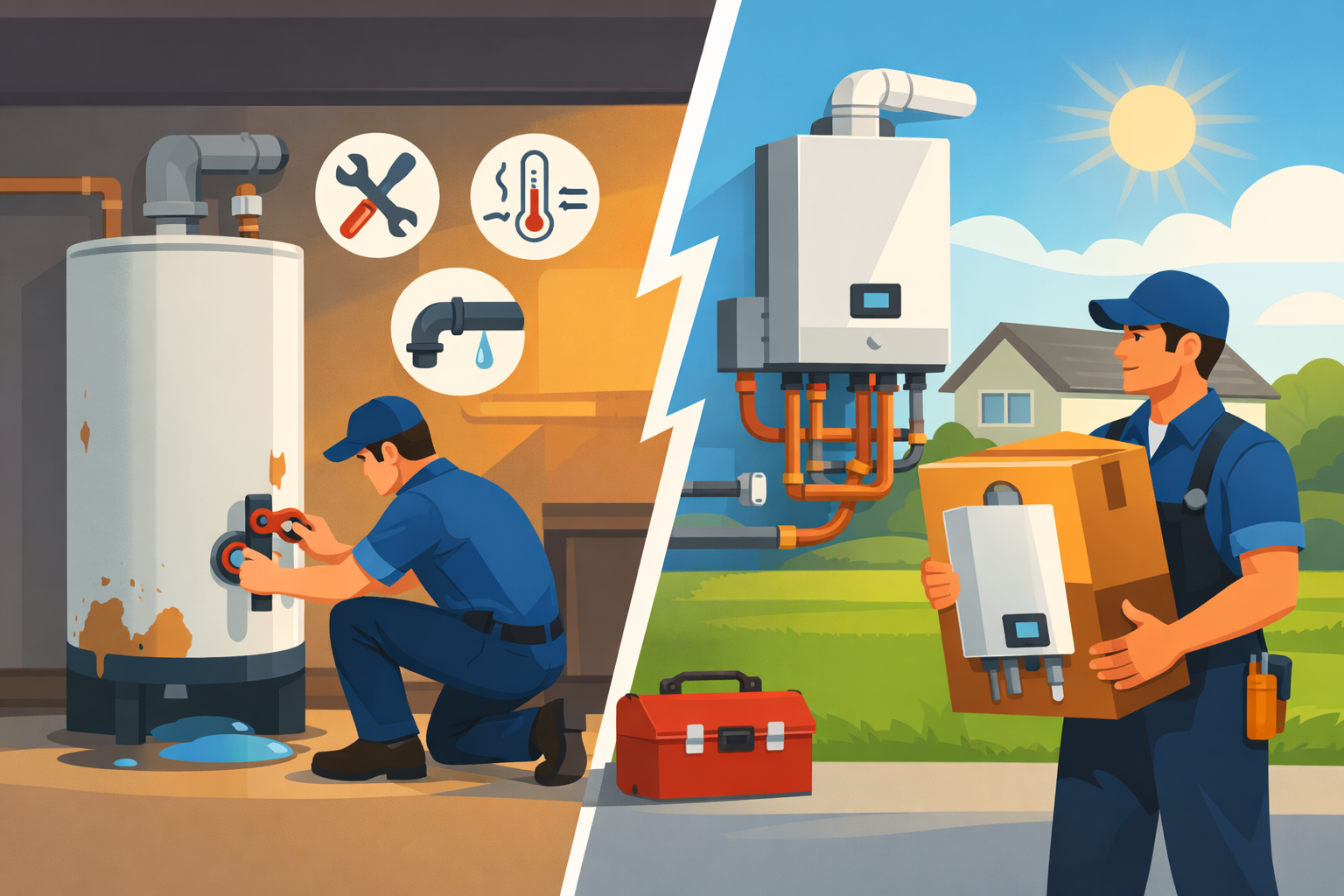
Few home systems work as hard—and get overlooked as often—as your water heater. From morning showers to dishwashing and laundry, hot water is part of daily life. When something goes wrong, it’s not just inconvenient; it disrupts your routine and can even cause property damage.
If you’re noticing inconsistent temperatures, strange noises, or rising energy bills, you’re likely asking the same question many homeowners do: should you repair your water heater or replace it entirely? The answer depends on age, condition, efficiency, and long-term cost.
This guide breaks it down clearly so you can make the right decision for your home and budget.
How Long Does a Water Heater Typically Last?
Before deciding whether to repair or replace your water heater, it helps to know its expected lifespan.
Traditional Tank Water Heaters
Standard tank water heaters generally last 8–12 years. Factors like water quality, maintenance, and usage patterns can shorten or extend that range.
If your unit is approaching the 10-year mark and starting to show issues, replacement is often the smarter financial move.
Tankless Water Heaters
Tankless systems can last 15–20 years, sometimes longer with proper maintenance. Because they have fewer corrosion-related issues (no standing tank of water), they typically outlast traditional models.
However, repairs on tankless systems can be more complex and costly depending on the component involved.
Signs Your Water Heater May Only Need Repair
Not every problem means the end of your water heater. In many cases, targeted repairs can restore performance and extend its life.
Inconsistent Water Temperature
If your hot water fluctuates between warm and cold, the issue could be:
- A failing thermostat
- A heating element problem (electric models)
- Sediment buildup inside the tank
These are often repairable issues, especially if the unit is under 8 years old.
Minor Leaks from Connections
Water pooling around the base doesn’t always mean the tank is cracked. Sometimes the leak comes from:
- Loose fittings
- A faulty temperature and pressure relief valve
- Corroded inlet/outlet pipes
These are usually affordable fixes.
Strange Noises
Popping or rumbling sounds often indicate sediment buildup. Flushing the tank can sometimes resolve this issue and improve efficiency.
If the tank itself is structurally sound, repair makes sense.
Signs It’s Time to Replace Your Water Heater
Some problems go beyond repair. Continuing to fix an aging or deteriorating unit can become more expensive than replacing it.
Age Over 10 Years
Even if it’s still running, a water heater over 10 years old is nearing the end of its expected lifespan. Internal corrosion weakens the tank over time, increasing the risk of sudden failure.
If you’re frequently calling for service, replacement is likely more cost-effective.
Rust-Colored Water
Discolored hot water can signal internal corrosion. If flushing doesn’t solve the issue, the tank lining may be deteriorating.
Once corrosion affects the tank itself, replacement is the only long-term solution.
Tank Leaks
A leaking tank cannot be repaired. When the internal lining cracks, the unit must be replaced immediately to prevent flooding and structural damage.
Rising Energy Bills
Older water heaters lose efficiency over time. If your utility bills are climbing without increased usage, your system may be working harder than it should.
Upgrading to a modern unit often reduces energy costs significantly.
Repair vs Replace: Cost Comparison
Understanding the financial side is crucial.
Average Repair Costs
Common water heater repairs may range from:
- Thermostat replacement
- Heating element repair
- Valve replacement
While repairs may cost a few hundred dollars, repeated service calls can quickly add up.
Replacement Costs
A new water heater installation typically costs more upfront but offers:
- Improved efficiency
- Warranty protection
- Lower monthly utility bills
- Reduced risk of emergency leaks
If repair costs exceed 50% of the price of a new unit, replacement is usually the better investment.
Energy Efficiency Considerations
Modern water heaters are far more efficient than models made a decade ago.
Benefits of Upgrading
- Faster heating recovery
- Lower standby heat loss
- Improved insulation
- Smart thermostat controls
Tankless systems add even more efficiency by heating water only when needed.
If your current unit struggles to meet demand or constantly runs out of hot water, upgrading can dramatically improve performance.
Should You Switch to Tankless?
If you’re replacing your unit, you might consider upgrading to a tankless system.
Advantages of Tankless Water Heaters
- Endless hot water
- Longer lifespan
- Space-saving design
- Energy efficiency
However, installation costs are typically higher due to electrical or gas line upgrades.
A professional evaluation will determine whether your home’s infrastructure supports tankless conversion.
Water Quality and Maintenance Factors
In areas with hard water, mineral buildup accelerates wear and tear inside water heaters.
How Hard Water Impacts Your System
- Sediment accumulation
- Reduced heating efficiency
- Increased corrosion
- Shortened lifespan
Regular flushing and annual inspections help extend the life of your system.
If your unit hasn’t been maintained and is showing advanced sediment damage, replacement may be more practical.
When Emergency Replacement Is Necessary
Sometimes there’s no time to weigh options.
Immediate Replacement Scenarios
- Major tank rupture
- Flooding around the unit
- Complete system failure
- Electrical or gas safety hazards
In these cases, delaying replacement can cause significant property damage.
Why Professional Inspection Matters
Water heaters involve gas lines, electrical wiring, pressure systems, and plumbing connections. Misdiagnosing the issue can lead to unnecessary expenses—or safety risks.
A licensed plumber can:
- Assess internal tank condition
- Test heating elements and thermostats
- Check pressure relief valves
- Evaluate overall efficiency
If you’re unsure whether to repair or replace, scheduling a professional evaluation can clarify your next step.
For homeowners in South Florida considering an upgrade, our team provides expert diagnostics and full-service installations. You can explore your options for professional water heater installation services and receive a detailed assessment tailored to your home.
Call us at (786) 709-0426
Long-Term Value: Thinking Beyond Today
While repair may seem cheaper in the short term, replacement often delivers better value over time.
Consider These Questions:
- How old is the unit?
- How often has it needed repairs?
- Are energy bills increasing?
- Does it meet your household’s hot water demand?
- Are you planning to sell your home soon?
A new water heater can increase buyer confidence and prevent inspection delays during real estate transactions.
Making the Right Decision for Your Home
There is no one-size-fits-all answer. The right choice depends on age, condition, repair history, and long-term cost efficiency.
Repair Makes Sense If:
- The unit is under 8 years old
- The issue is minor
- Repair costs are low
- There’s no tank corrosion
Replacement Is Better If:
- The unit is 10+ years old
- The tank is leaking
- Repairs are frequent
- Efficiency has declined
- You want lower utility bills
When in doubt, a professional assessment gives you clarity and confidence.
Final Thoughts
Your water heater is essential to daily comfort and safety. Waiting too long to address problems can lead to costly damage, higher energy bills, or emergency replacements.
If your system is showing signs of failure, evaluating repair versus replacement now can save money and stress later. Whether it’s a simple fix or a full upgrade, taking action early protects your home and keeps your hot water running reliably.