
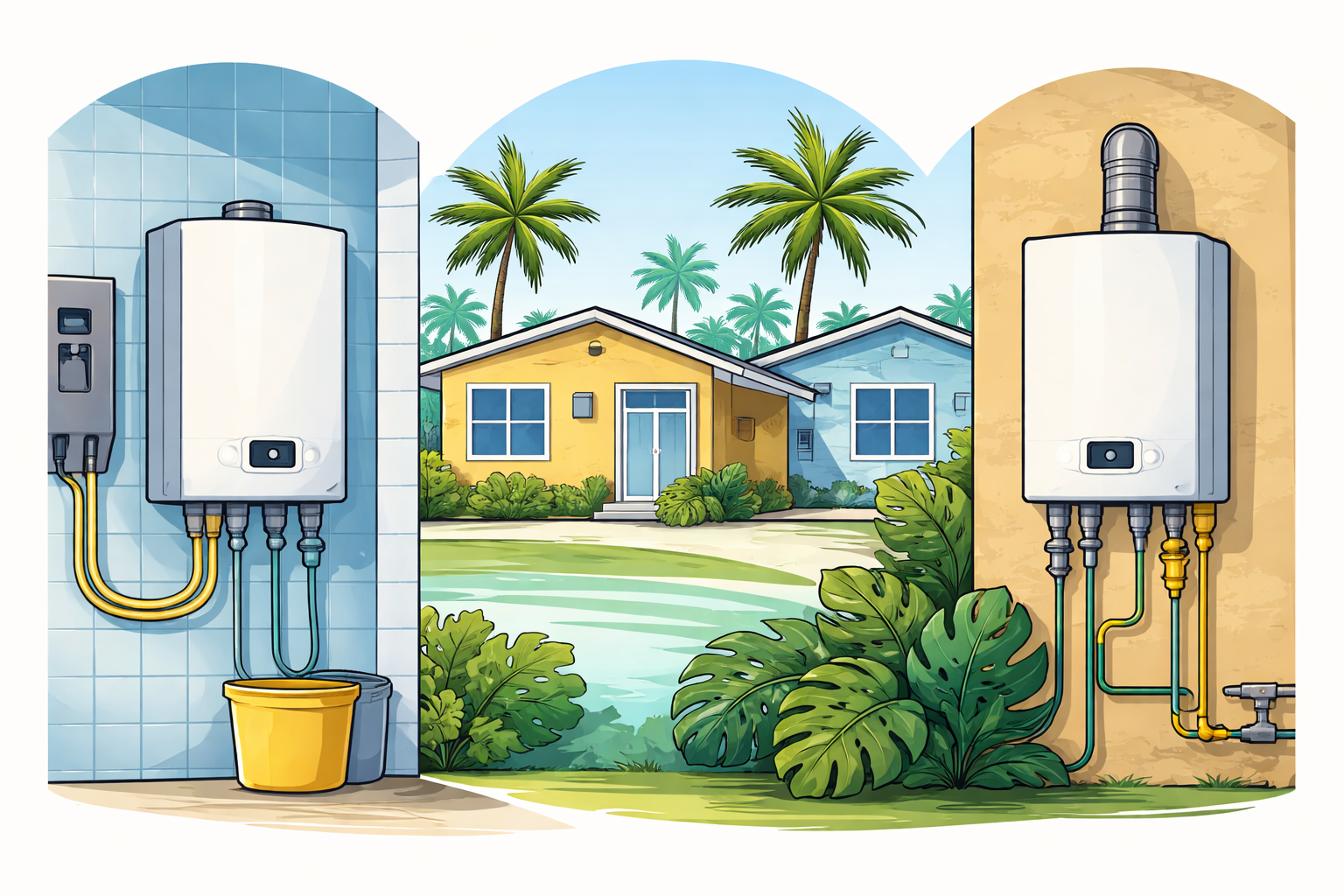
Upgrading your home’s hot water system is one of the most practical ways to improve daily comfort while reducing long-term utility costs. Many Miami homeowners are moving away from bulky storage tanks and switching to modern tankless systems. If you’re researching water heaters, you’ll notice tankless technology consistently ranks among the most efficient options available.
Tankless systems heat water on demand instead of storing heated water in a tank. That means less wasted energy, lower standby heat loss, and a more compact installation footprint. In Miami, where space can be limited and energy costs fluctuate, this efficiency matters.
If you’re comparing installation or replacement options for water heaters, tankless systems are often the first recommendation because they balance energy savings, longevity, and performance.
Beyond efficiency, tankless units also deliver continuous hot water, which is especially useful for multi-bathroom homes or families with high daily water demand.
Why Tankless Systems Make Sense for Miami
Miami’s climate and infrastructure create a unique environment for hot water systems. Unlike colder regions, incoming groundwater temperatures are higher, meaning tankless heaters require less energy to raise water to comfortable temperatures.
Key Benefits for Local Homeowners
Lower Energy Consumption
Tankless systems can reduce energy usage by up to 34% for smaller households because they only operate when hot water is needed.
Unlimited Hot Water Supply
You can run showers, washing machines, and dishwashers simultaneously without running out of hot water.
Space Efficiency
Wall-mounted units work well in condos, townhomes, and compact utility spaces.
Long Equipment Lifespan
Most tankless systems last between 15 and 20 years when maintained properly, which is significantly longer than traditional tank models.
These advantages make tankless systems a strong upgrade option for both older homes and new construction properties across Miami-Dade County.
Electric vs Gas Tankless Water Heaters: Core Differences
While both technologies deliver on-demand hot water, they operate differently and perform better under different household conditions.
Electric Tankless Water Heaters
How They Work
Electric units use high-powered heating elements that activate when water flows through the system. Sensors detect water movement and immediately begin heating.
Advantages
Exceptional Efficiency
Electric units convert nearly all incoming electricity into heat, often reaching 98–99% efficiency.
Simpler Installation
No gas lines or ventilation systems are required, reducing installation complexity.
Lower Maintenance Requirements
With fewer mechanical components, electric units typically require less servicing.
Quiet Operation
No combustion means virtually silent operation.
Limitations
Lower Flow Rate Capacity
Most electric systems provide between 2–5 gallons per minute, which may be limiting for larger households.
Higher Operating Cost in Miami
Electricity averages around 16–17 cents per kWh locally, increasing monthly operating costs.
Electrical Panel Upgrades
Many older homes require breaker panel upgrades to support high-demand electric systems.
Gas Tankless Water Heaters
How They Work
Gas units use natural gas or propane burners to rapidly heat water as it passes through the heat exchanger. Exhaust gases exit through a ventilation system.
Advantages
Higher Output Capacity
Gas systems typically deliver 5–10 gallons per minute, supporting multiple fixtures simultaneously.
Lower Long-Term Operating Cost
Natural gas rates in Miami are generally lower than electricity on a per-energy basis.
Extended Service Life
Gas units frequently exceed 20 years with proper maintenance.
Limitations
Higher Installation Complexity
Gas lines, ventilation, and combustion safety requirements increase setup costs.
Higher Upfront Equipment Cost
Gas tankless units and required infrastructure cost more initially.
Routine Maintenance Needed
Burner systems require periodic cleaning and inspection.
| Feature | Electric Tankless | Gas Tankless |
|---|---|---|
| Energy Efficiency | 98–99% | 80–98% |
| Hot Water Flow Rate | 2–5 GPM | 5–10 GPM |
| Installation Cost | $800–$1,500 | $1,000–$2,500 |
| Estimated Annual Operating Cost | ~$590 | ~$170 |
| Maintenance Needs | Low | Moderate |
| Average Lifespan | 10–15 Years | 20+ Years |
Which Tankless Option Works Best for Miami Homes?
Choosing between electric and gas systems depends on several local and household-specific factors.
Home Size and Usage Patterns
Large households with multiple bathrooms typically benefit from gas systems due to higher flow rates. Smaller homes or condos with lower water demand often perform well with electric units.
Energy Cost Considerations
Miami electricity pricing tends to be higher relative to natural gas. For families with heavy hot water usage, gas systems typically provide lower lifetime operating costs.
Gas Line Availability
If your home already has gas infrastructure, installation becomes significantly more cost-effective. If not, electric units may provide easier installation.
Hurricane Preparedness
Power outages can affect electric systems immediately. Gas systems may continue functioning if gas supply remains active, which can be beneficial during severe weather events.
Downsides of Electric Tankless Systems
Electric tankless heaters are efficient but not perfect for every scenario.
High Power Demand
Units may require 18–36 kW electrical capacity, often requiring service panel upgrades.
Limited Simultaneous Usage
Running multiple showers at once may exceed capacity in larger households.
Higher Long-Term Utility Costs
High local electricity pricing can offset efficiency benefits.
Why Some Miami Homeowners Choose Gas Instead
Many homeowners prioritize long-term operating savings and higher water output capacity.
Better for High Usage Homes
Gas systems maintain stable temperatures even during simultaneous water use.
Lower Annual Energy Cost
Gas energy rates typically produce lower annual operating costs.
More Resilient During Power Interruptions
Some gas units continue operating during electrical outages depending on ignition type.
When Electric Tankless Still Makes Sense
Electric tankless units remain excellent choices under certain conditions.
Ideal Scenarios
• Condos and apartments
• Smaller families or couples
• Homes without gas infrastructure
• Supplemental point-of-use heating
For homes using under 40 gallons of hot water daily, electric systems often deliver excellent performance and energy efficiency.
Professional Installation Matters
Correct system sizing, electrical load calculations, gas pressure validation, and venting design all directly impact performance and lifespan.
Professional installation ensures:
• Code compliance
• Maximum efficiency
• Safe operation
• Manufacturer warranty protection
Improper installation can lead to inconsistent water temperatures, premature component failure, or safety risks.
How Professional Plumbing Services Help
Working with experienced local plumbers ensures system selection matches your home’s real usage patterns, not just theoretical specs.
Professional teams typically provide:
System Sizing Analysis
Based on fixture counts, usage patterns, and household size.
Energy Cost Forecasting
Helping homeowners estimate long-term cost differences between electric and gas options.
Permit and Code Compliance
Critical for Miami building requirements.
Maintenance Planning
Extending lifespan and maintaining efficiency.
Water Heater Repair & Installation
Pinpoint leaks fast—before they cause major damage.
Call (786) 709-0426
Tankless Water Heater FAQs
Is Gas Always Better Than Electric?
Not always. Gas works best for high-demand households. Electric systems work well for smaller households or properties without gas lines.
Are Electric Units More Efficient?
Yes in pure energy conversion terms. However, local energy pricing affects real-world operating cost.
How Long Does Installation Take?
Typical installations range from 4–8 hours depending on infrastructure upgrades.
Can Older Miami Homes Install Tankless Systems?
Yes, but electrical panels or gas line upgrades may be required depending on system type.
What Size Tankless System Does a Family of Four Need?
Most families of four benefit from gas units delivering at least 5–6 GPM output capacity.
Choosing the Right Tankless Heater
Both electric and gas tankless water heaters offer major efficiency improvements over traditional tank systems. The right choice depends on:
• Household size
• Energy cost priorities
• Existing infrastructure
• Installation budget
• Long-term operating goals
Gas systems typically provide better performance for large Miami households, while electric systems offer simpler installation and excellent efficiency for smaller homes.